
Deputy Minister of Hajj and Umrah Explains "War Ticket" Hajj Scheme Mechanism
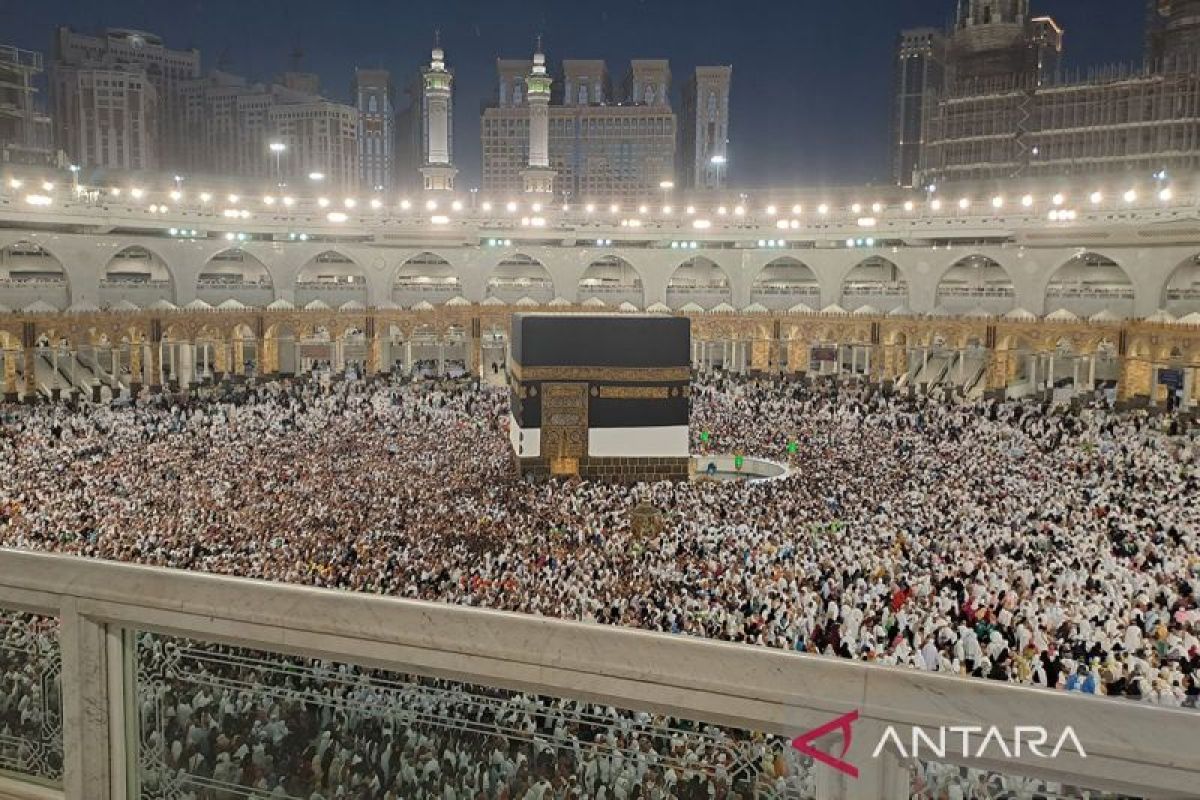
Jakarta (ANTARA) - Deputy Minister of Hajj and Umrah (Wamenhaj) Dahnil Anzar Simanjuntak has explained the mechanism of the war ticket scheme in organising the Hajj pilgrimage, although it is currently still in the study or conceptual stage.
At the closing of the National Coordination Meeting of the Ministry of Hajj and Umrah (Kemenhaj) in Tangerang, Banten, on Friday, Wamenhaj Dahnil stated that the scheme is projected to operate alongside the long-standing Hajj waiting list mechanism.
“In the future, if Saudi Arabia opens a large quota, we will introduce two schemes. The first is the existing waiting list scheme. The second scheme, as termed by the Minister (Irfan Yusuf), is the war ticket,” said Wamenhaj Dahnil.
Wamenhaj Dahnil said the term war ticket emerged as a formulation for transforming Hajj management so that the government can shorten the Hajj waiting period, which currently averages 26.4 years.
He explained that the government, together with the House of Representatives (DPR RI), will later set the Hajj Organisational Cost (BPIH) based on real calculations without subsidies from Hajj financial management funds.
For pilgrims choosing the waiting list route, he said, they will still receive subsidies or benefit values. He emphasised that pricing determination is under state authority, so there will be no liberalisation or free market mechanism in Hajj organisation.
According to him, the quota for the war ticket scheme could come from two sources. First, from additional quotas provided by the Saudi Arabian Government, not from the regular annual quota given by Saudi Arabia.
Second, based on Saudi Arabia’s Vision 2030 projection. The kingdom’s authorities aim to increase the global Hajj quota from around two million to more than five million people by 2030.
If the number of prospective Hajj participants rises to 500,000, the funding needs are estimated to exceed Rp40 trillion.
“A figure that large is unlikely to be fully supported by the current Hajj finances (managed by BPKH),” said Wamenhaj Dahnil.
To ease the financing burden, the war ticket becomes one option, besides the hope of shortening the Hajj queue in Indonesia.
Furthermore, the additional quota will be managed through a transparent and accountable system designed by Kemenhaj.
Unlike regular Hajj, he said, this scheme does not use subsidies from the benefit value of managed Hajj funds. All costs are borne directly by pilgrims according to the real value of the organisation or the Hajj cost set by the government.
“Everything is paid in full by the pilgrims, without benefit values as in the regular scheme,” said Wamenhaj Dahnil.
On the other hand, regular pilgrims who are already on the waiting list can also opt for the war ticket scheme, but they will have to pay the real Hajj cost without subsidies from the benefit values managed by the Hajj Financial Management Agency (BPKH).