
Deputy Minister of Food: Importance of Implementing Research for Coastal Communities
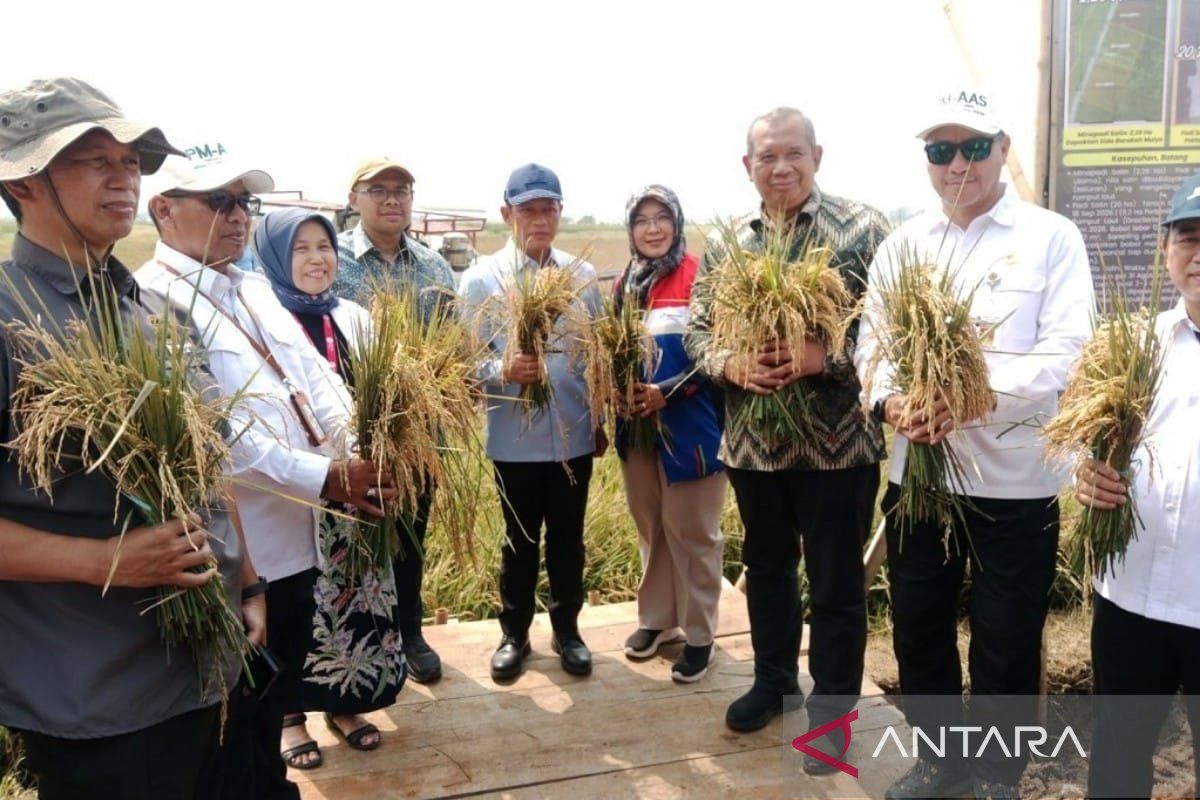
Batang (ANTARA) - The Deputy Coordinating Minister for Food, Hanif Finesol Nurofiq, stated the importance of integrated steps in applying research results to ensure prosperity in coastal areas.
“The development of technologies, such as the Biosalin rice variety and the conversion of plastic waste into fuel (Petasol) by BRIN in collaboration with PGN, must specifically target the right communities to provide real and sustainable benefits,” he said in Batang, Central Java, on Friday, during the harvest of Biosalin rice and the trial of Petasol for agricultural machinery.
According to him, processing plastic waste into fuel (Petasol) serves as a concrete solution to reduce marine plastic waste while simultaneously addressing the demand for non-subsidised fuel for the operation of heavy machinery, such as rice harvesting machines.
Regarding the Biosalin rice harvest in Kasepuhan Village, Batang District, Hanif requested that the harvest in Batang Regency should not be sent directly to mills, but rather developed as a source of salinity-resistant rice seeds.
Hanif noted that seed development is a priority that requires immediate attention, as the Biosalin Agritan 1 and Biosalin Agritan 2 rice varieties are still relatively new and seed supplies are limited.
Meanwhile, the Regent of Batang, M. Faiz Kurniawan, stated that the Biosalin rice harvest was able to produce 6-7 tonnes per hectare over a three-month period.
The planting of Biosalin rice across 25 hectares was conducted by the local government in coastal areas that were previously abandoned due to saltwater flooding.
“We are optimistic that the target expansion to 400 hectares can be realised in the future. The agriculture and fisheries sectors contribute almost 20 per cent to the regional economy,” he said.
Regarding Petasol, a member of the BRIN Advisory Board, Tri Mumpuni Wiyanto, stated that research must not stop in the laboratory but must be balanced with high empathy so that the impact is directly felt by the wider community.
He explained that low-value plastic waste has been successfully utilised as raw material for renewable fuel to support agricultural activities during the peak Biosalin rice harvest in Batang Regency.
He revealed that the fuel, known as Petasol, is produced through a pyrolysis process using the FASPOL Gen 5.0 machine, an innovation by the National Research and Innovation Agency (BRIN).
The use of Petasol is part of the Green Manufacturing programme developed through a collaboration between BRIN, PT Perusahaan Gas Negara Tbk (PGN), and the Batang Regency Government.
During the event, plastic waste-to-fuel technology was introduced to support the operation of agricultural tools and machinery.
Source: jawawa.id (https://jawawa.id/newsitem/deputy-minister-of-food-importance-of-implementing-research-for-coastal-communities-1789750759)
Originally published by Antara (Indonesian) (https://www.antaranews.com/berita/5748301/wamen-pertanian-pentingnya-penerapan-riset-untuk-warga-pesisir), translated from Indonesian