
Deputy Minister of Food Encourages HSS Chilli Hub to Curb South Kalimantan Inflation
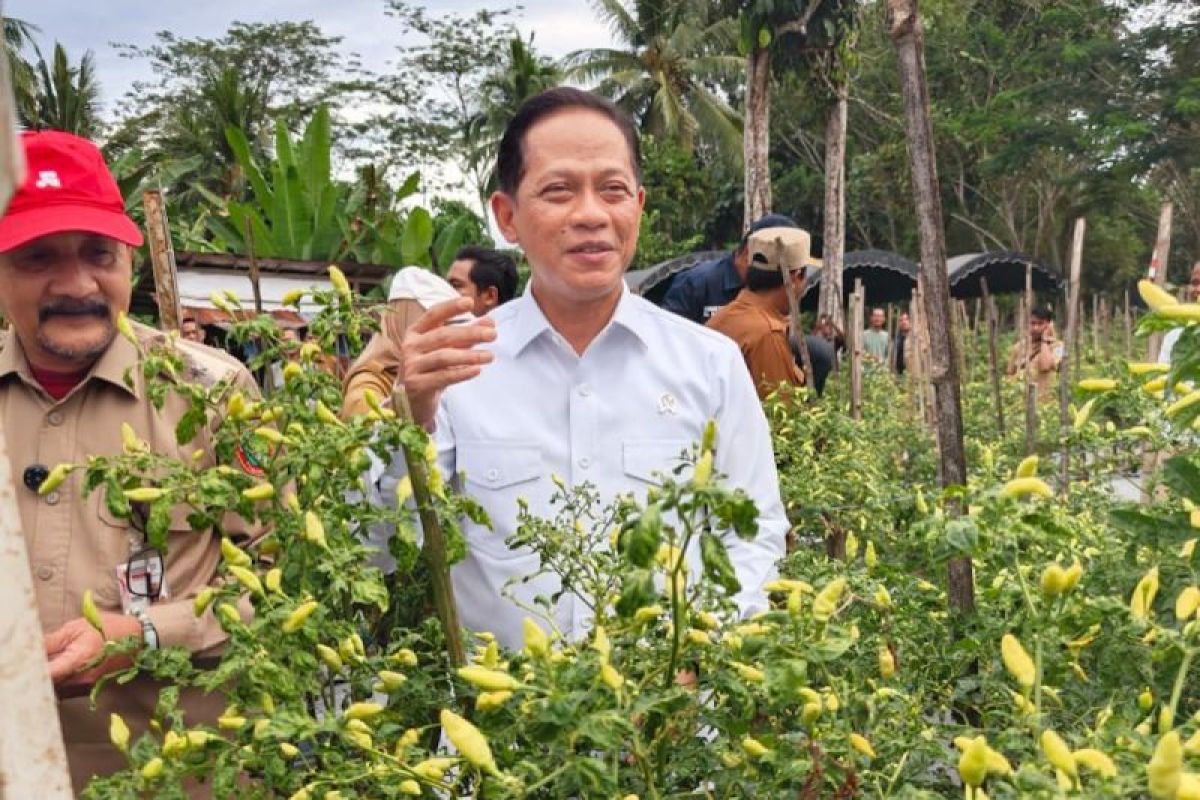
Deputy Coordinating Minister for Food Hanif Faisol Nurofiq has assessed that Hulu Sungai Selatan Regency plays a crucial role in maintaining chilli supplies and price stability to support inflation control in South Kalimantan Province. “Chilli is one of the commodities that has a significant influence on the inflation rate in South Kalimantan,” Hanif said in a statement from Padang, West Sumatra, on Thursday. Hanif emphasised this during a chilli harvest event on land managed by the Gawi Bersama Farmers Group in Tawia Village, Angkinang District, Hulu Sungai Selatan Regency. The event was also attended by Hulu Sungai Selatan Regent Syafrudin Noor, Deputy Regent Suriani, members of the Regional Leadership Coordination Forum, heads of regional apparatus within the Hulu Sungai Selatan Regency, and several heads of regional apparatus from the South Kalimantan Provincial Government. The chilli harvest is part of the National Food, Energy, and Water Self-Sufficiency Area (KSPEAN) priority programme, a government initiative to strengthen food security while maintaining the price stability of strategic commodities. He stated that Hulu Sungai Selatan Regency’s contribution to maintaining chilli supply and price stability is considered very important. “Chilli is one of the contributors to inflation in South Kalimantan. Hulu Sungai Selatan’s contribution is very significant in maintaining the price stability of this commodity,” he said. He explained that chilli price fluctuations occur very rapidly, requiring good supply chain management from the farmer level to the market. According to him, prices from downstream to upstream must be continuously monitored so that neither farmers nor consumers are disadvantaged. “We know that chilli prices can rise and fall very quickly. The price can even change every hour. Therefore, information must be managed together so that the supply chain runs well and farmers are not harmed,” he said. Beyond market issues, Hanif also highlighted the characteristics of the chilli plant, which requires intensive care. The plant is quite sensitive to weather conditions, especially high rainfall, thus demanding diligence in cultivation. Tawia Village is one of the villages proposed for inclusion in the KSPEAN programme. The area is planned for the development of 20 hectares of chilli farmland. Currently, around 5 hectares of land have been planted with chilli by the Gawi Bersama Farmers Group. Hanif expressed hope that the development of the chilli farming area in Tawia Village could increase regional agricultural production, strengthen food security, and support inflation control efforts through the sustainable availability of chilli supply in South Kalimantan.