
Deputy Minister of Creative Economy Collaborates with China to Open Global Markets for Local Talent
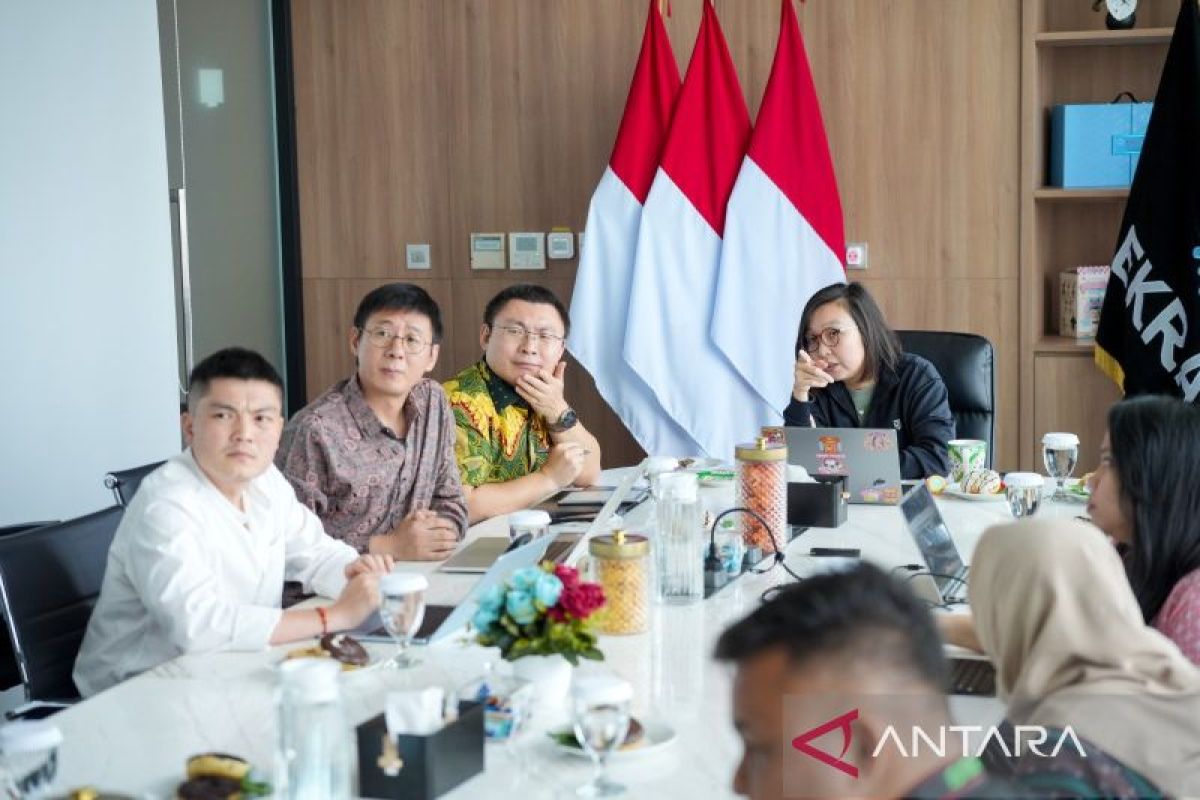
Jakarta (ANTARA) - The Deputy Minister of Creative Economy/Deputy Head of the Creative Economy Agency (Ekraf), Irene Umar, is encouraging the strengthening of Indonesia’s creative economy cooperation with China through PT Panda Investama Semesta to expand access for Indonesian talent and intellectual property (IP) to the global market.
Irene stated that this cooperation should be directed not only towards technology exchange but also towards talent capacity building, content production, certification, and opening access to international markets.
“We want Indonesian talent to not only be part of the global ecosystem but to serve as primary creators who bring Indonesian stories, culture, and IP to the world stage,” Irene said in a statement received on Thursday.
In exploring this cooperation, the Ministry of Creative Economy identifies three main potential areas for development with China: the internationalisation of Indonesian talent and IP, the development of creative content based on artificial intelligence (AI), and the building of an esports ecosystem.
According to Irene, efforts to expand the market for Indonesian creative talent must begin with more specific needs mapping. Clarity regarding the criteria and competencies required of talent will assist the matchmaking process with international partners in being more targeted.
“It is important to clarify the criteria for the talent we wish to develop. This way, the matchmaking process can be executed precisely, as every country coming to Indonesia certainly has very specific needs,” she noted.
Amidst the rapid development of AI, Irene also emphasised the importance of ensuring that such technology is used to enhance the capacity and productivity of creators without neglecting the protection of their works and identities.
According to her, the protection of rights regarding the works, faces, voices, and identities of Indonesian talent must be part of the discussions in every AI-based cooperation exploration.
“AI must be utilised as a tool to strengthen the abilities of creators and increase productivity, but at the same time, the rights and protection of Indonesian talent must be ensured,” she said.
However, these opportunities are deemed to require support from talent management, market strategies, and the appropriate industry partners.
A producer from Walker, who was also present at the meeting, stated that China could serve as a gateway for Indonesian talent and IP to reach the global market.
“China can certainly act as an international accelerator. We want to see how Indonesia can become a base for creators and IP exports, as well as a centre for production and content distribution to the global market,” they remarked.
They added that such global expansion must still maintain Indonesia’s identity as the primary strength of its creative products.
In addition to the internationalisation of talent and IP, the exploration of cooperation also includes the development of training and content production certification, IP hubs, and global distribution access.
Irene welcomed these opportunities and emphasised the importance of translating cooperation into concrete and measurable programmes. To this end, the Ministry of Creative Economy will continue discussions through technical teams with relevant partners to map out forms of collaboration that can be realised immediately.
Source: jawawa.id (https://jawawa.id/newsitem/deputy-minister-of-creative-economy-collaborates-with-china-to-open-global-markets-for-local-talent-1788419060)
Originally published by Antara (Indonesian) (https://www.antaranews.com/berita/5723889/wamenekraf-kolaborasi-dengan-tiongkok-buka-pasar-global-talenta-lokal), translated from Indonesian