
Deputy Minister of Basic and Secondary Education: Cross-Sector Synergy Strengthens President's Mission in People's School Program
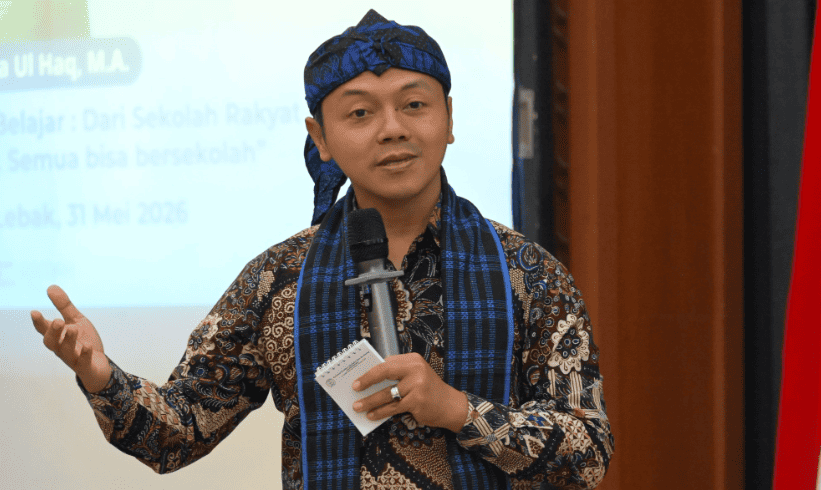
Deputy Minister of Basic and Secondary Education, Fajar Riza Ul Haq, visited the Education Quality Assurance Agency (BPMP) of Banten Province and engaged directly with students and education staff at SMA 34 Lebak People’s School (SR). During the meeting, he stressed the importance of cross-sector collaboration to ensure the sustainability and quality of the People’s School programme as part of efforts to expand education access for disadvantaged communities.
According to Fajar, the People’s School programme is one of President Prabowo Subianto’s priority initiatives to expand access to quality, equitable education, aiming to provide quality learning opportunities for children from low-income families. He emphasised that education is a vital instrument for improving living standards and breaking the cycle of intergenerational poverty.
“Education is the path to a better future. Through the People’s School, the state is present to offer equal opportunities for every child to achieve their aspirations,” he said in an official statement on Monday (1 June).
Candra Lestiantara Budiharja, head of SMA 34 Lebak People’s School, stated that the school currently supports 100 students from various districts in Lebak Regency, most from the lowest economic decile group who previously faced significant barriers to education access. He also noted that the school ranked second nationally for governance among People’s Schools in Indonesia, achieved through support from the Ministry of Education’s Technical Implementation Unit (UPT), Banten BPMP, local government, and stakeholders.
Fajar shared his childhood experiences of economic hardship, recounting how he helped his mother sell fried snacks door-to-door and witnessed her struggles as an Indonesian Migrant Worker to fund his siblings’ education. He urged students to remain optimistic and make the most of available learning opportunities. “Economic background should not hinder aspirations. What matters most is the willingness to learn, hard work, and consistent effort,” he said.
The government is committed to ensuring educational continuity for People’s School graduates up to university level. During the dialogue, the Deputy Minister explained that the government has prepared various scholarship schemes tailored to students’ needs and achievements. “The government has established several scholarship options, including the Indonesia Smart Card (KIP), Garuda Scholarship, Ministry of Education’s Premier Scholarship, and other programmes to support further education,” Fajar said.
He further stressed that People’s School graduates will receive guidance in preparing for higher education through affirmative action and merit-based pathways. “There are affirmative admission pathways, scholarships, and merit-based routes. Students from People’s Schools will also receive support when pursuing higher education,” he explained.
According to Fajar, ensuring educational continuity up to university level is part of the government’s directive to maximise the long-term benefits of the People’s School programme. Students are encouraged to pursue the highest possible education. “The President has instructed that the People’s School programme should extend to university. Opportunities and scholarships are available,” he stressed.
As motivation, Fajar shared his own scholarship experiences during his studies. He urged students to make the most of national opportunities and aim for the highest educational achievements. “After graduating from People’s School, pursue a bachelor’s degree, excel, seek scholarships for master’s and PhD programmes, and complete them,” he advised.
In addition to engaging with students, Fajar also listened to feedback from education staff regarding the People’s School programme. In response, he explained that the government is continuously coordinating across ministries and agencies to improve administrative and operational aspects.
Fajar explained that the People’s School programme is implemented through collaboration among ministries according to their respective roles. The Ministry of Social Affairs manages the programme, while the Ministry of Basic and Secondary Education supports curriculum development, teacher preparation, and education quality enhancement.
Beyond academics, he stressed the importance of character building, leadership, and social skills through extracurricular activities. He noted that teamwork, discipline, and leadership are crucial for young people to tackle future challenges.
He expressed hope that People’s Schools would continue producing high-achieving, character-driven graduates capable of contributing to society and national development. He also wished for graduates to become change agents who help break the cycle of poverty within their families and communities.
Deputy Minister of Social Affairs Agus Jabo Priyono thanked President Prabowo Subianto, stating that the People’s School programme is a key initiative to eradicate poverty.
Finance Minister Sri Mulyani Indrawati confirmed a significant budget increase for the People’s School programme in 2026. “In Magelang, for the initial phase, we (have) d