
Deputy Minister of Agriculture stresses reducing food imports through domestic production
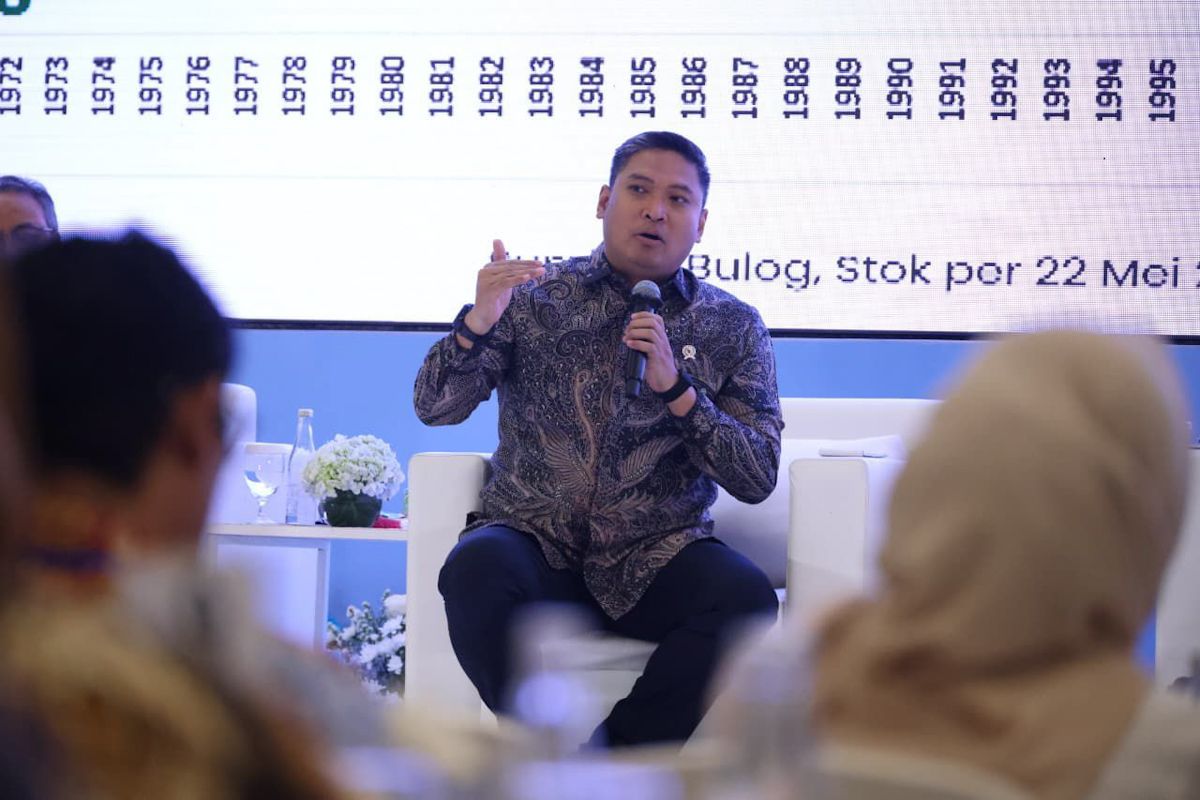
Deputy Minister of Agriculture Sudaryono has stressed that the government continues to reduce reliance on food imports through increased domestic production, strengthened agricultural productivity, and optimal land use to bolster national food security.
“Previously, our money was used to enrich other countries through imports. Now, the same money circulates among our own farmers. This is what drives regional economies,” Sudaryono said in a statement in Jakarta on Tuesday.
He made the remarks during the National Conference on Regional Economic Development themed Accelerating Regional Economic Growth through Cross-Sectoral Policy Synergy held at Balai Kartini, Jakarta.
Indonesia previously relied heavily on food imports, particularly rice, which reached around 3 million tonnes in 2023 and increased to approximately 4 million tonnes in 2024.
However, with rising domestic production, the government has decided to fully close the rice import tap throughout 2025 as part of efforts to strengthen national food independence and security.
The Ministry of Agriculture notes that government rice reserves managed by Perum Bulog have reached 5.3 million tonnes as of the third week of May 2026, the highest in history.
Sudaryono emphasised that the agricultural sector is now a key driver of regional economic growth, following the government’s success in boosting national food production and reducing imports of strategic commodities.
Deputy Minister Sudaryono, commonly known as Mas Dar, stated that policies to increase food production and reduce imports directly impact rural economic circulation.
He explained that agriculture has extensive economic effects, directly absorbing labour, creating new business opportunities, and boosting local economic activity.
He cited Indonesia’s success in halting medium-consumption rice imports in 2025 and achieving self-sufficiency in corn and sugar as having created new domestic production spaces previously filled by imports.
“This means new job opportunities and previously disadvantaged communities becoming empowered due to increased production,” Sudaryono said.
He added that national food production increases have been achieved through various acceleration programmes such as pump-based irrigation, pipeline irrigation, irrigation improvements, optimising swamp land, and distributing superior seeds and agricultural machinery.
The Ministry of Agriculture has distributed around 70,000 pumps to increase cropping intensity from one to two or three harvests per year.
“The secret is simple: plant more to harvest more,” said Sudaryono, who is also the Chairman of the Indonesian Farmers’ Unity Association (HKTI).
He also explained that agriculture is the most accessible economic sector for rural communities and can directly create local economic activity.
“Agriculture can reach all rural communities. When production rises, businesses grow, labour is absorbed, and the local economy moves,” he stated.
Deputy Minister Sudaryono also highlighted the impact of the Nutritious Meals Free (MBG) programme, seen as a new market for national agricultural and livestock commodities.
He noted that dairy cattle investments are now growing in various regions due to rising domestic milk demand.
The government continues to promote strategic commodities such as milk, beef, garlic, and soybeans to gradually reduce import dependency.
Beyond meeting domestic needs, Sudaryono said strengthening agriculture is also driving export growth.
According to data from the Central Statistics Agency (BPS), agricultural exports from January to December 2025 amounted to Rp756.59 trillion, an increase of Rp166 trillion, while imports fell by approximately Rp41 trillion.
“If our exports rise, farmers benefit from added value through dollar payments. This presents opportunities for regions to strengthen agricultural export commodities,” he added.
Furthermore, Sudaryono revealed that the government is expanding new rice fields outside Java as a long-term strategy to maintain food security and create new economic hubs in the regions.
“New rice fields are not just about today’s food, but preparing Indonesia’s food and economy for the next 50 to 100 years,” he stressed.
He added that agriculture is currently one of the largest contributors to the national gross domestic product (GDP), according to BPS data.
Therefore, the government continues to strengthen support through subsidies for fertiliser, agricultural machinery, and low-cost financing for farmers and…