
Deputy Minister of Agriculture pushes cooperatives to boost sugarcane farmers' welfare and national sugar self-sufficiency
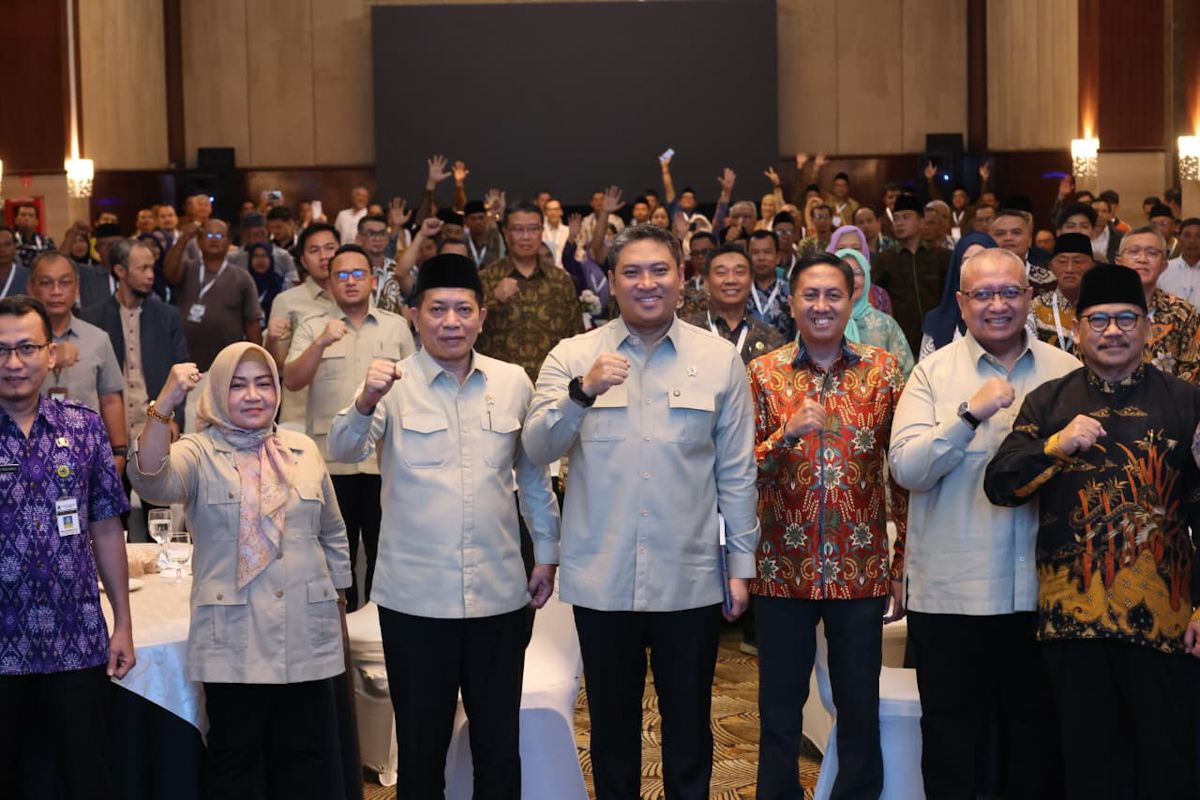
Medan, North Sumatra (ANTARA) - Deputy Minister of Agriculture Sudaryono is pushing for strengthened cooperative governance as a pillar of sugarcane farmers’ welfare, aiming to raise productivity, reinforce partnerships, and support national sugar self-sufficiency.
“At present, our focus is on achieving high productivity and prosperous farmers. Then, the business side can be managed through cooperatives, so that goods can flow better from villages to cities and vice versa,” Sudaryono said in a statement confirmed in Medan, North Sumatra, on Wednesday.
The Deputy Minister conveyed this commitment while attending the “Socialisation of the Revolving Fund of the Revolving Fund Management Institution (LPDB) for Cooperatives” alongside Cooperatives Minister Ferry Juliantono in Semarang on Tuesday (14/7/2026).
According to Sudaryono, who is familiarly known as Mas Dar, cooperatives not only make financing more accessible for farmers but also provide certainty of harvest absorption, strengthen bargaining positions, and drive increases in national sugar production towards sustainable self-sufficiency.
He said cooperatives play a strategic role in strengthening the agricultural business ecosystem.
He noted that the government, under the direction of President Prabowo Subianto, continues to encourage farmers’ business activities to be managed through cooperative institutions so that greater benefits accrue to their members.
He explained that strengthening cooperatives will create market certainty for farmers because harvests can be absorbed more effectively.
At the same time, cooperatives open up access to financing, strengthen farmers’ bargaining positions, and make business chains more efficient, so that farmers’ welfare continues to improve.
Sudaryono added that improving sugarcane farmers’ welfare is also being pursued through efforts to raise crop productivity and sugar yield.
According to him, Indonesia’s success in achieving self-sufficiency in consumption sugar owes much to the productivity improvements continually carried out by the government together with farmers.
“We continue to raise productivity per hectare and sugar yield. If productivity rises and the yield is high, sugar production increases, making production costs more efficient. The hope is that sugar prices become more competitive going forward without reducing farmers’ welfare,” he said.
He further explained that Indonesia is currently self-sufficient in consumption sugar.
However, sugarcane production still needs to be increased through intensification to meet demand for refined sugar and industrial sugar, including for biofuel or bioethanol needs.
Besides sugarcane, bioethanol is also produced from maize and cassava.
Meanwhile, Cooperatives Minister Ferry Juliantono said the strengthening of sugarcane farmers’ cooperatives is being carried out not only through LPDB financing but also through mentoring and governance improvements to make cooperatives more professional.
“Today is part of strengthening and transforming sugarcane farmers’ cooperatives so that their governance improves. LPDB does not only provide financing but also carries out mentoring and technical guidance, so that cooperatives can increase their production and business scale,” Ferry said.
He explained that farmers’ harvests collected through cooperatives will be absorbed by sugar factories to be processed into consumption sugar.
The product will then be marketed, including through village cooperative networks, so that the supply chain becomes more efficient and farmers gain market certainty.
Ferry added that the Ministry of Cooperatives will continue to strengthen synergy with the Ministry of Agriculture in building modern, professional, and competitive farmers’ economic institutions.
Through this collaboration, cooperatives are expected to become an engine for improving farmers’ welfare while reinforcing national food security.