
Deputy Minister Nezar Patria: Key to Digital Economy is Ecosystem Collaboration, Not Just a Large Market
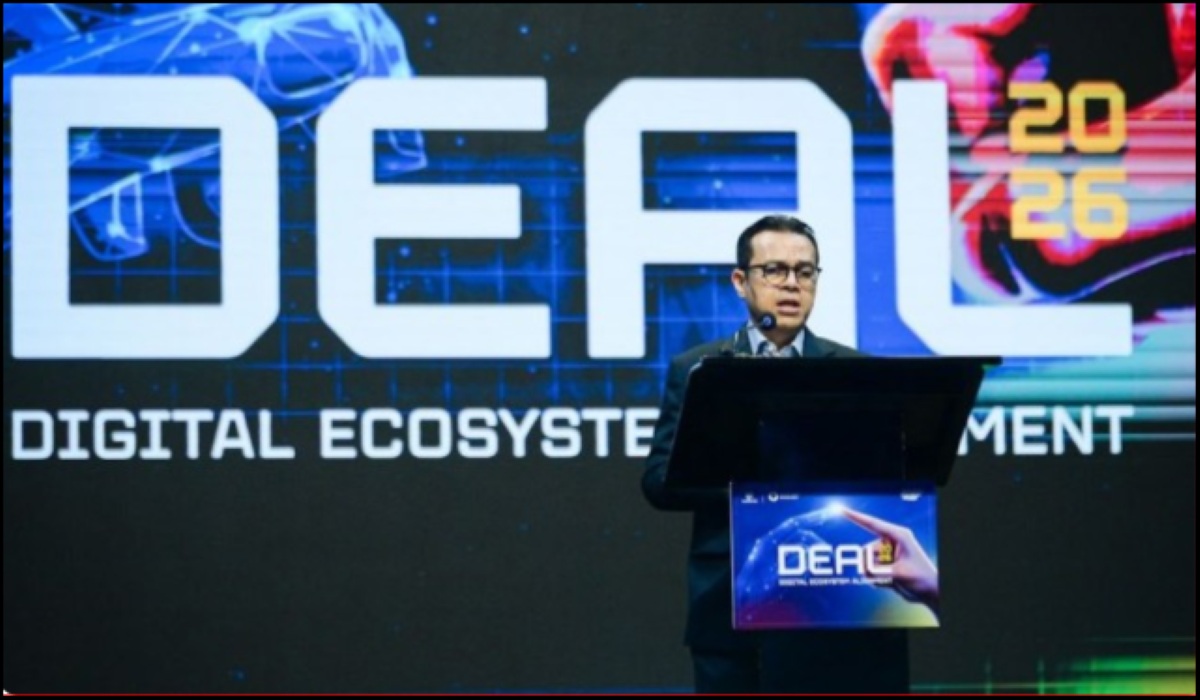
Indonesia currently controls around 40 percent of the digital economy market share in the Southeast Asian (ASEAN) region. With a projected economic value reaching US$360 billion in the coming years, Indonesia has significant capital to become a major player. However, Deputy Minister of Communication and Digital Affairs (Wamenkomdigi) Nezar Patria has cautioned that the size of the market alone is not enough to automatically make Indonesia a global technological powerhouse.
According to Nezar, the future of the national digital economy depends heavily on the ability of all stakeholders to build an integrated ecosystem. This includes strengthening infrastructure, developing talent, fostering industrial growth, and ensuring sustainable technological innovation.
“We have explored eight priorities for developing the digital ecosystem in Indonesia with a fairly broad spectrum, ranging from increasing the added value of the telecommunications industry to national logistics cost efficiency. At every layer, there are many things we can do to strengthen the national ecosystem,” Nezar Patria said at the Digital Ecosystem Alignment (DEAL) 2026 event in South Jakarta on Tuesday (23/06/2026).
The development of this digital ecosystem is a crucial pillar in the Indonesia Digital 2045 strategy. Nezar emphasised that the strategic steps taken today will determine whether Indonesia can achieve technological independence by the centenary of its independence.
“The phase we are going through now will determine whether by 2045 we can achieve the national strategic goal of technological independence. Strengthening collaboration is the most important keyword that we must internalise and execute together,” he stated.
Beyond strengthening domestic foundations, Indonesia is encouraged to improve its position in the global supply chain, particularly in cutting-edge technologies such as artificial intelligence (AI). Despite having a massive market potential, Indonesia is acknowledged to still be in the early stages of AI development and has not yet secured a strategic position in the global value chain.
“We need to pay attention to how, with the national strengths we possess, we can penetrate the global market chain, especially in the adoption of emerging technology like AI. The commitment to building a national digital ecosystem must have a clear north star or strategic objective,” Nezar asserted.
Data shows that Indonesia’s digital economy potential is estimated to reach US$105 billion in 2025 and could surge to a range of US$260 billion to US$360 billion in the future. As the largest contributor in ASEAN, Indonesia plays a vital role in the region’s growth.
“If the ASEAN region grows by US$1 trillion, we contribute around US$365 billion. This large share is very much determined by the collaboration we build within this digital ecosystem,” he added.
Concluding his remarks, Nezar expressed optimism that Indonesia has capable human resources to compete on the global stage. “Indonesia does not lack talent, ideas, or spirit. What we need is the courage to move forward together,” he concluded.