
Deputy Minister: KBLI Transformation Aims to Perfect Business Licensing System
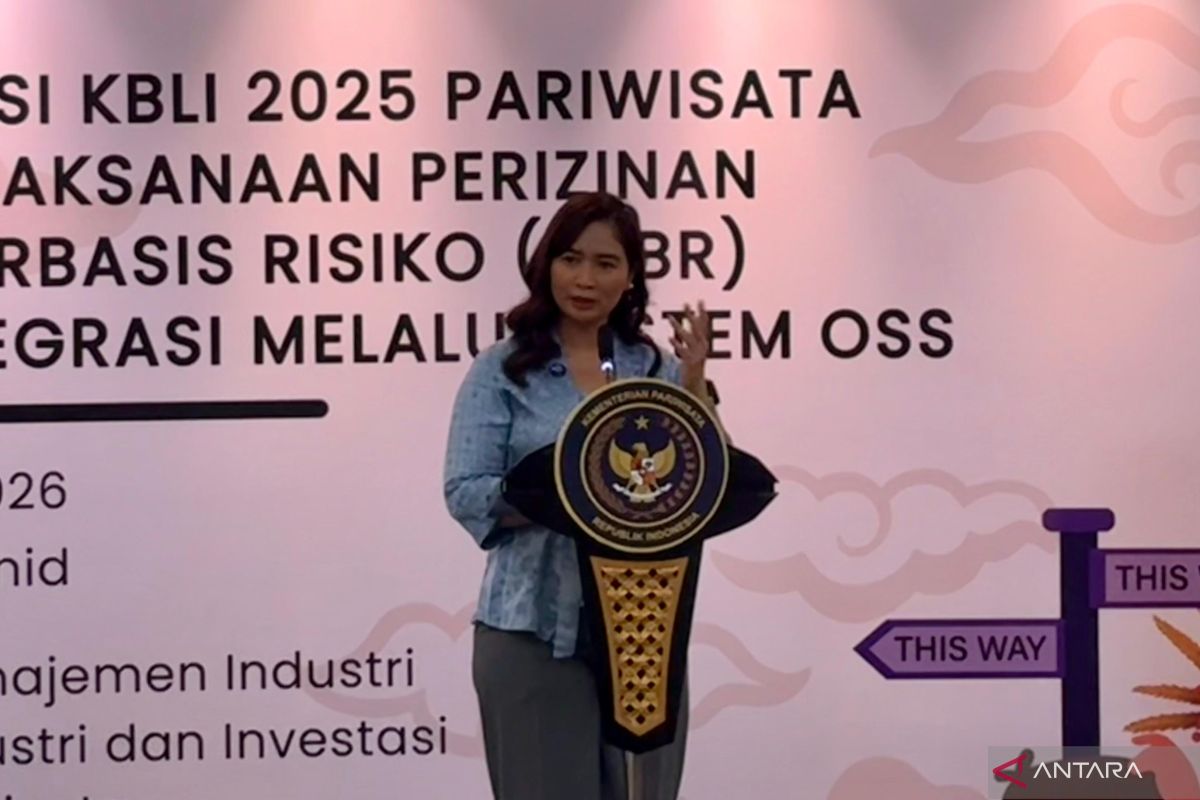
Jakarta (ANTARA) - Deputy Minister of Tourism Ni Luh Puspa stated that the transformation of the Indonesian Standard Industrial Classification (KBLI) aims to perfect the existing business licensing system in Indonesia. “The KBLI 2025 transformation is an important part of the government’s efforts to perfect the integrated risk-based business licensing system through Online Single Submission (OSS),” Ni Luh said during a press conference in Jakarta on Wednesday. Ni Luh conveyed that the update to the system is not merely a change in classification codes for business actors. It also serves as a foundation for realising an integrated data system, increasing legal certainty, strengthening the quality of licensing services, and ensuring that developments in business models within the tourism sector can be accommodated more accurately. According to her, if implemented effectively and consistently, the KBLI 2025 will provide tangible benefits for both the business world and the government sector. This regulation is also considered to help create a tourism business ecosystem that is more orderly, transparent, and competitive. “I invite all ministries, institutions, and local governments joining today online, as well as associations and business actors who are our strategic partners, to create higher quality and sustainable tourism,” she said. On that occasion, Ni Luh also emphasised that the government is currently targeting national economic growth of 8 percent. The tourism sector is deemed to have a significant and strategic role in driving economic growth through increased investment, job creation, and strengthening the community economy. “For this reason, we need better governance, including a licensing system that provides legal certainty, is easily accessible, adaptive to business developments, and able to encourage a healthy investment climate,” she added. With a more adaptive classification structure, aligned with international standards, and fully integrated with the Online Single Submission Risk-Based Approach (OSS RBA) system, KBLI 2025 serves as an important foundation for business actors to conduct their activities legally, orderly, and sustainably. The refinement of the KBLI is carried out periodically every five years. KBLI 2025 was developed in response to various dynamics, including the emergence of new business sectors due to digital transformation, such as content creators, digital platforms, and crypto assets, changes in business models including the concept of factory-less goods producers, the strengthening of environmental agendas such as carbon capture and storage activities, and changes in the national and global economic structure. In general, KBLI 2025 introduces a number of adjustments to the structure and substance of business classifications. These changes include one-to-many splits, where one KBLI code is divided into several new codes to make the scope of activities more specific, many-to-one mergers to simplify classification, adjustments to titles and activity descriptions to clarify the scope of business, the relocation of codes to more appropriate categories based on activity characteristics, and the deletion or addition of new KBLI codes. The implementation of KBLI 2025 has direct implications for business legality aspects, such as the legality of business entities because KBLI is recorded and integrated in the Legal Entity Administration System (AHU), business licensing legality as KBLI serves as the basis for issuing Business Identification Numbers (NIB), standard certificates, and business permits, as well as minimum investment requirements, particularly for KBLI codes that have undergone splits or structural changes.