
Deputy Minister Invites Kadin to Invest in Developing Transmigration Areas
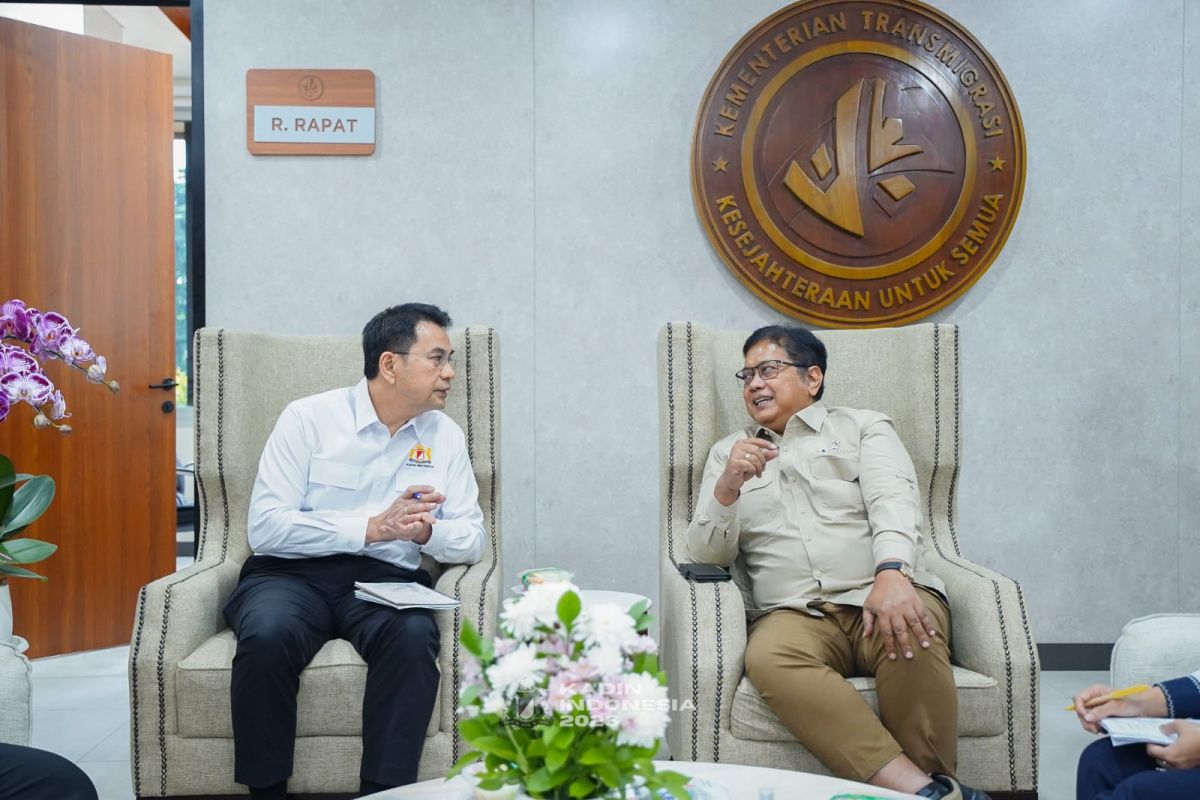
Investment is needed so that existing commodities do not stagnate.
Jakarta (ANTARA) - Deputy Minister of Transmigration Viva Yoga Mauladi has invited the Indonesian Chamber of Commerce and Industry (Kadin) to invest in developing 154 priority transmigration areas in order to increase the value added of flagship commodities, expand exports, and create new centres of economic growth.
He said each transmigration area has different flagship potential, and therefore requires investment support so that it can develop into a production centre and add value to the regional economy.
“Investment is needed so that the existing commodities do not stagnate,” said Viva in an official statement received in Jakarta on Wednesday.
He made these remarks while receiving the Deputy General Chairperson Coordinating Legal Affairs, Human Rights and Infrastructure of Kadin Indonesia, M Azis Syamsuddin, in Jakarta.
He cited the example of a transmigration area in Bungo Regency, Jambi, which has palm oil potential, whilst Banyuasin in South Sumatra has rice as its flagship commodity.
Meanwhile, transmigration areas in Central Sulawesi produce cocoa, coffee, nutmeg and durian. In addition to plantation commodities, transmigration areas in coastal regions also have fisheries potential that has developed from small and medium-scale enterprises up to export level.
According to Viva Yoga, one flagship commodity from a transmigration area has been exported to China in the amount of 459 tonnes, worth around Rp42.5 billion.
In addition, the Ministry of Transmigration has also facilitated the export of around 16 tonnes of crab valued at Rp14 billion to Rp15 billion to the United States. The crab came from transmigration areas in Southeast Sulawesi, West Sulawesi, North Maluku and West Papua.
Viva said investment is needed to increase production capacity, strengthen processing of produce, and expand market access for the flagship commodities produced by transmigration communities.
According to him, Kadin has business networks reaching provincial and regency/municipal level which can be used to bring together business actors, investors, processors and buyers with producers in transmigration areas.
“The Ministry of Transmigration has established synergies with PNM, businesspeople from China, and various offtakers. Now Kadin needs to do the same to help develop transmigration areas,” he said.
The Deputy Minister explained that the implementation of the transmigration programme today differs from the past, because it uses a bottom-up approach based on proposals from regional governments.
“In the past, the transmigration programme was determined directly by the central government. Today the transmigration programme is implemented in a decentralised, bottom-up manner. Transmigration happens when there is a request from regions that need it,” he said.
He noted that the Ministry of Transmigration has received 61 proposals from regents proposing the establishment of new transmigration areas. A number of regions that already have transmigration areas have also submitted proposals for developing new areas.
According to Viva, the high number of proposals shows that the transmigration programme is still needed as an instrument for equalising development, developing regional potential, and creating centres of economic growth outside Java Island.
Collaboration with Kadin is expected to bring investment that matches local potential, strengthen community enterprises, open up employment, increase the value added of commodities, and accelerate the development of transmigration areas as new centres of economic growth.
Azis Syamsuddin said many islands in Indonesia still have land that has not been optimally utilised for the agricultural sector or other economic activities, so that the needs of local communities still depend on supplies from Java Island.
He assessed that developing transmigration areas could be a solution for building new production centres whilst optimising regional economic potential.