
Deputy Minister Highlights University Research Often Ends as Academic Manuscripts
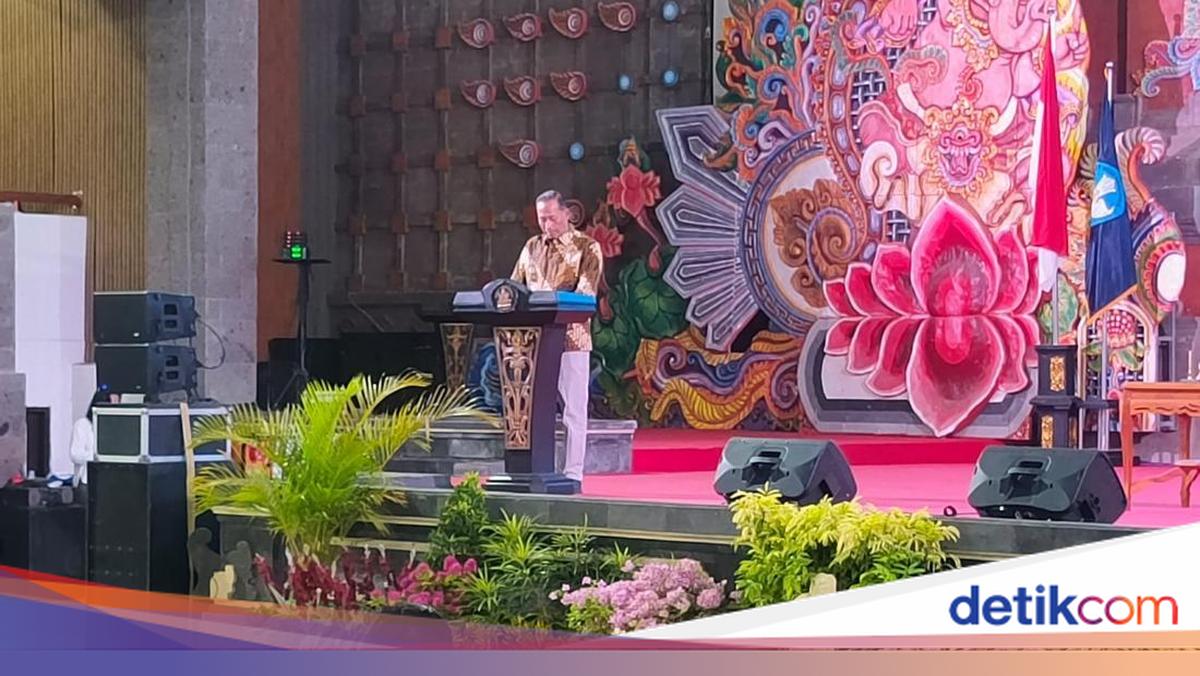
Deputy Minister of Higher Education, Science, and Technology (Wamendiktisaintek) Fauzan has highlighted the large volume of university research that merely ends up as academic manuscripts. As a result, various research findings are never implemented to address issues in society. This was stated by Fauzan during the inauguration of the Bali Higher Education Consortium at Ganesha University of Education (Undiksha) in Singaraja, Bali, on Monday (15/6/2026). Fauzan initially touched on the intellectual capacity within campuses that has not yet fully delivered an impact for the community. “All this time, universities have been inhabited by those with formidable intellectual capacity. When we talk about expertise, it is at the universities. When we talk about research, it is at the universities. But so far, all of that has only ended with prototypes,” said Fauzan. According to him, the main problem does not lie in the quality of the research, but rather in the lack of synergy among higher education institutions in implementing research results. Consequently, many innovations do not develop into concrete solutions for society or the education sector. “What is more disheartening is that they operate independently. Even though they possess extraordinary research product commodities,” he added. Fauzan believes that consortiums are the answer to this problem. Through this collaborative platform, he said, various research results and expertise scattered across universities can be united to address educational challenges in a more measured and sustainable manner. He stated that university research results must not stop as academic reports or prototypes. Research results, he continued, must be capable of being applied and providing tangible benefits. “This nation needs it. So there is no other choice, once again, consortiums are the answer,” he stressed. Undiksha Rector I Wayan Lasmawan acknowledged that universities in Bali have not yet optimally built synergy in solving various educational problems. According to him, each campus has tended to move independently, so the resulting impact has not been maximised. Lasmawan expressed hope that the consortium inaugurated today can become a collaborative space involving universities, regional governments, and the industrial sector through a triple helix scheme. In this way, he said, various educational problems can be handled in a more integrated manner. “We hope this consortium is truly able to provide colour in solving educational problems and deliver real work, not just discussions around the table,” said Lasmawan.