
Deputy Minister: Free Nutritious Meals Programme a Golden Opportunity to Boost Milk Consumption
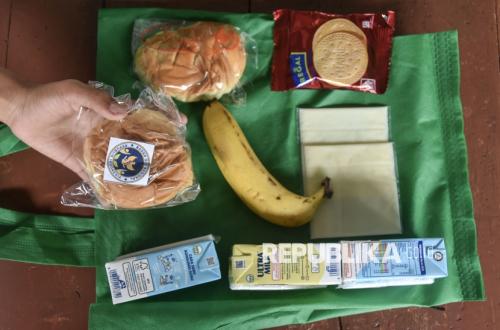
Deputy Coordinating Minister for Food Hanif Faisol Nurofiq stated that the Free Nutritious Meals (MBG) programme is a strategic platform to increase milk consumption while strengthening the quality of the nation’s generation towards Indonesia Emas 2045. Speaking at the 2026 Nusantara Milk Day commemoration in Jakarta on Sunday, Hanif said the MBG programme has an important role in building a stronger milk consumption culture in society. “This is precisely where we want to strongly entrust our colleagues at MBG that this opportunity is a golden opportunity. With this MBG programme, milk should at least be mandated to be present. Ideally every day, not just twice a week,” Hanif said. According to him, the programme is a golden opportunity to increase milk intake for Indonesian children to support better, sustainable nutritional fulfilment. He hopes milk can become an important part of the MBG programme’s implementation so that the benefits of nutritional fulfilment can be felt more widely by the younger generation. Hanif revealed that milk consumption among Indonesians is currently still relatively low, at around 16.2 to 16.8 litres per capita per year nationally. “Because our daily average is only one tablespoon per day. So, one person in one day, we can only consume one tablespoon of milk. How can that affect us if we do not continue to increase it,” he said. This figure indicates that there is still a large opportunity to increase milk consumption as part of efforts to strengthen the quality of Indonesia’s human resources in the future. He emphasised that milk contains important nutrients such as protein, calcium, potassium, vitamin A, vitamin B12, and vitamin D that the body needs. These nutrients are considered to play an important role in supporting bone health, strengthening muscles, and helping optimal and sustainable brain development in the younger generation. Hanif stressed that strengthening milk consumption must become a collective movement because the quality of the productive generation will greatly determine the success of national development in the future. According to him, increasing milk consumption cannot be done alone, thus requiring support from the government, businesses, academics, media, and the community through continuous collaboration. Besides encouraging consumption, the government is also working to strengthen the national dairy ecosystem through the preparation of a milk independence roadmap covering upstream to downstream sector development. This step is expected to strengthen domestic production while increasing the added value of the national dairy sector to support sustainable food security. “In ASEAN alone, we are ranked sixth or seventh. Still below Vietnam, still below Singapore, still below Malaysia. So the most important thing is to continue socialisation so that significant interest grows, build a good climate, and complete the roadmap,” he explained. Hanif assessed that downstream processing, industry integration, and strengthening investment are important factors in accelerating the growth of a more resilient and competitive national dairy sector. “Downstream processing and integration are very important. Everything must be done through mutual cooperation, we cannot do it alone,” Hanif added. He is optimistic that strengthening milk consumption through the MBG programme and accelerating national milk independence will produce a healthy generation towards Indonesia Emas 2045.