
Deputy Minister for the Creative Economy says campuses can help develop the creative economy to have a real impact
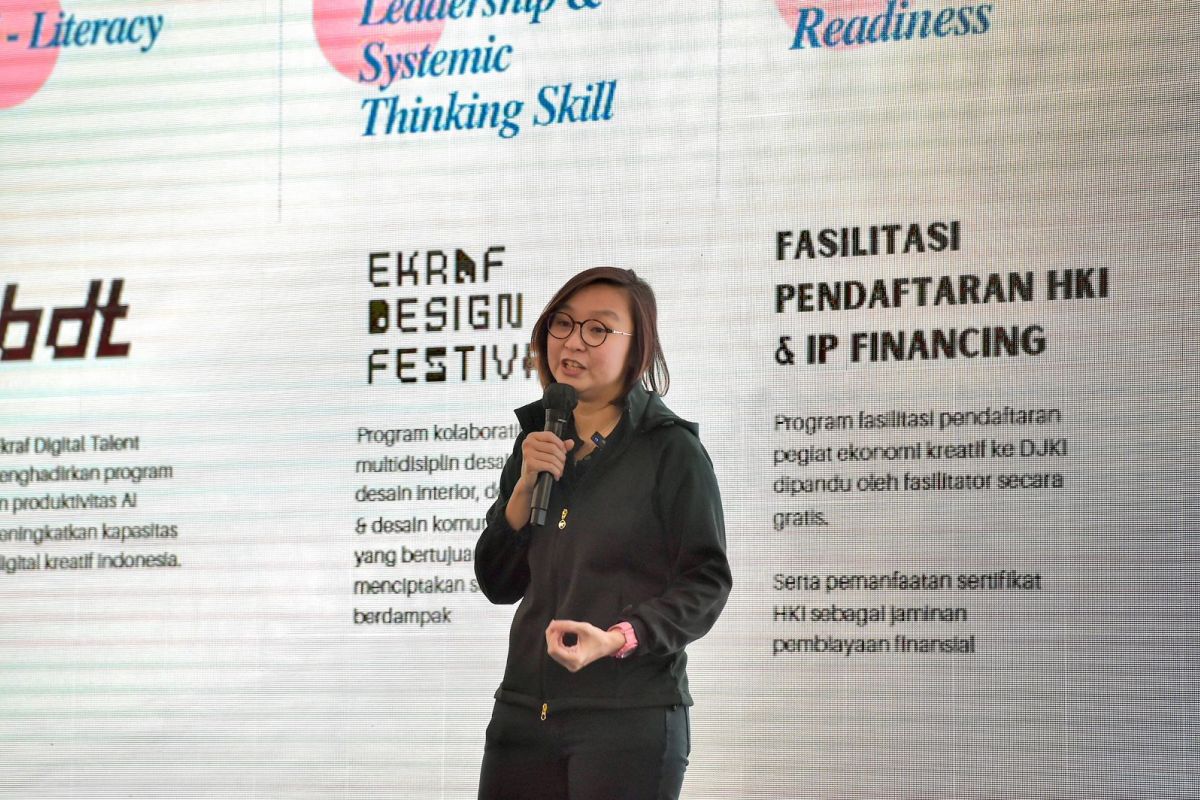
Jakarta (ANTARA) – Deputy Minister for the Creative Economy (Wamenekraf)/Deputy Head of the Creative Economy Agency Irene Umar said that higher education institutions can play a role in developing the creative economy so that it is able to generate real economic and social impacts. “For me, the creative economy is what matters most when it is able to create something with financial value while also delivering real impact. Campuses can become a sandbox to directly engage with real life and lecturers can become mentors for students,” Irene said in a statement received in Jakarta, on Saturday.
Irene stressed the importance of the role of higher education as a space to develop creative talents ready to meet the needs of future industries. She also encouraged strengthening collaboration between government, campuses, and industry so that the outcomes of creative education can deliver direct impacts for regions and become spaces for the realisation of young creators.
Strengthening practice‑based creative education and cross‑sector collaboration forms an important foundation in building a high‑calibre workforce, Irene said. Through this approach, young talents will not only be able to produce aesthetically oriented works but also create creative solutions that have added economic value.
Rector of Dian Nuswantoro University, Pulung Nurtantio Andono, said that advances in technology are guiding society into an era of immersive experiences, artificial intelligence, virtual interactions, digital replicas, and even new meta ecosystems. The university has introduced the concept of an AI‑based digital campus and a virtual ecosystem that brings learning, creativity, interaction, and the university experience to life in a more vivid, interactive, and enjoyable way, named Udinus First.
Using the Roblok platform, the university has created a digital campus in the form of game‑based learning. Andono cited that students can take attendance via the platform, which is connected to real life.
“If a student achieves, for example a basketball player who becomes national champion, then the champion emblem will appear on their avatar,” Andono said.
The characters within the platform can become a digital portfolio that will be converted into NFTs and stored using blockchain technology.