
Deputy Minister for Food Affairs encourages ULM to become model campus for waste management
National waste management still faces three main challenges that need to be addressed in an integrated manner.
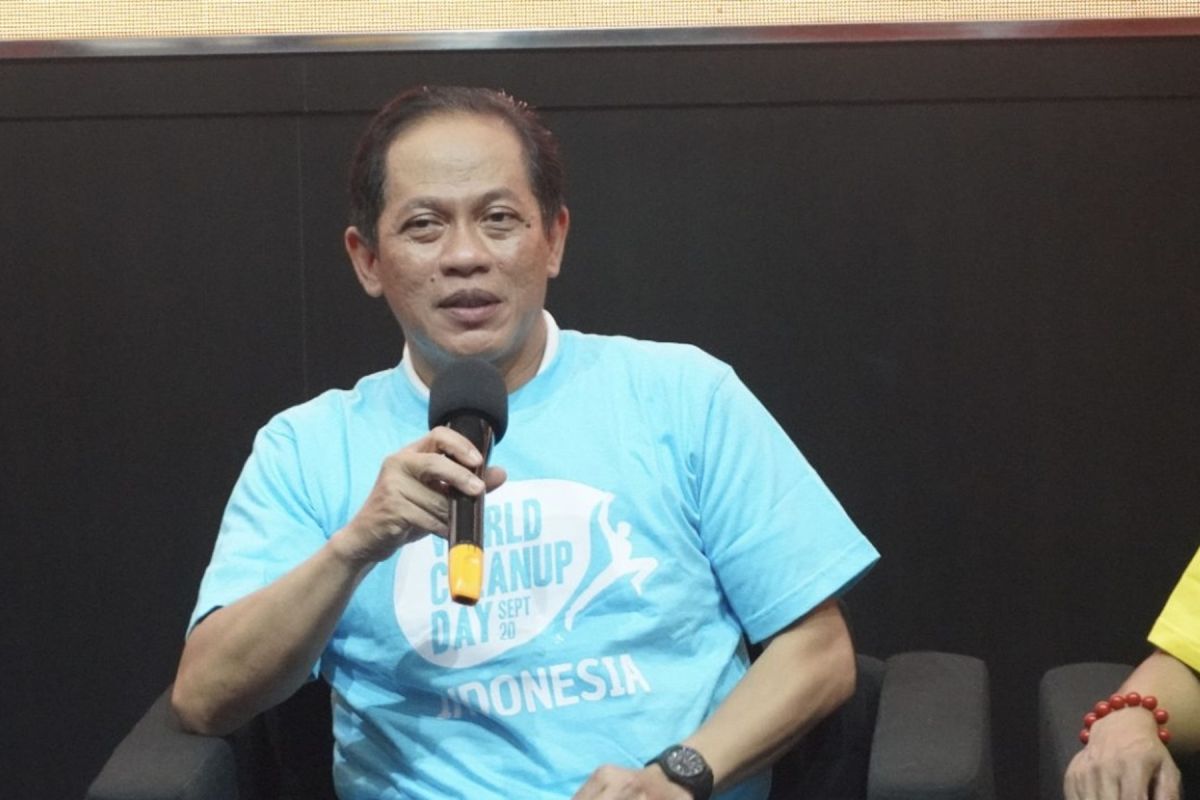
Deputy Coordinating Minister for Food Affairs Hanif Faisol Nurofiq is encouraging Lambung Mangkurat University (ULM) in South Kalimantan to become a model campus capable of managing its waste independently up to 100 percent through strengthening systems, education, research, and cultural change.
Hanif said waste management cannot rely solely on the government because the issue requires the involvement of all elements of the pentahelix, namely government, universities, communities, businesses, and the media, to build a sustainable management system.
“Waste management cannot be maximised and optimised unless it is carried out jointly through the pentahelix approach, especially the media,” he said while attending a series of World Cleanup Day 2026 activities at ULM, Banjarmasin, on Tuesday.
The series of World Cleanup Day activities, he said, serves as a momentum to build a culture of waste management from the upstream level, so that handling does not stop at cleaning up visible waste but touches on changes in public behaviour in reducing and managing waste.
Deputy Minister Hanif hopes ULM will take on a strategic role through education, research, and community service by directing various student activities, including thematic community service programmes, to strengthen education as well as waste management practices within the campus and the wider community.
According to him, ULM has the opportunity to become one of the first universities capable of implementing independent waste management up to 100 percent if supported by strong leadership and a system that is planned, measurable, and consistently applied across the entire campus environment.
“With a sufficiently strong leader, and then building a highly capable systematic approach, I am confident that ULM will be able, in a relatively short time, to become a university that successfully manages its waste independently at 100 percent,” he said.
He expressed hope that successful waste management in Banjarmasin could become a barometer for other areas in South Kalimantan and the wider Kalimantan region, because resolving the waste problem in the city is seen as demonstrating that serious and integrated waste management can be applied in areas with similar characteristics.
“If waste in Banjarmasin can be handled seriously, I hope it will become an example for others. If the City of Banjarmasin can do it, then others should be able to as well,” said Deputy Minister Hanif.
Source: jawawa.id (https://jawawa.id/newsitem/deputy-minister-for-food-affairs-encourages-ulm-to-become-model-campus-for-waste-management-1787072192)
Originally published by Antara (Indonesian) (https://www.antaranews.com/berita/5700631/wamenko-pangan-dorong-ulm-jadi-kampus-percontohan-kelola-sampah), translated from Indonesian