
Deputy Minister Fajar Reviews Prabowo's Priority Education Programmes in Gorontalo
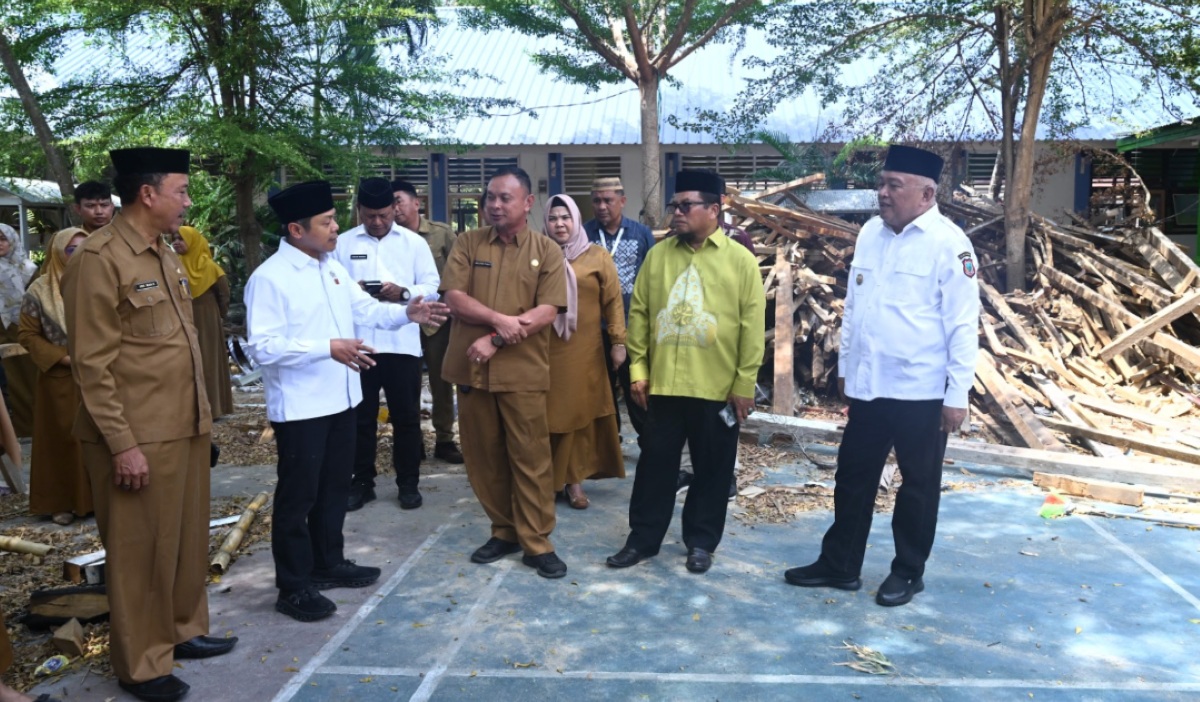
A day after the 81st anniversary of the Republic of Indonesia, Deputy Minister of Primary and Secondary Education (Wamendikdasmen) Fajar Riza Ul Haq conducted a working visit to Gorontalo Province on Tuesday (18/8/2026). The visit aimed to directly review the implementation of several priority education programmes under the leadership of President Prabowo Subianto.
One of the main agendas was inspecting the revitalisation progress at SDN 1 Limboto. The school received a 2026 state budget allocation of Rp852,646,867 with a completion target of 4 December 2026. Fajar stressed that this project is part of President Prabowo’s Best Quick Results Programme (PHTC).
“Revitalising educational units is not only about repairing buildings, but ensuring children learn safely and comfortably and that the benefits are felt by the surrounding community,” said Fajar.
In addition to infrastructure, Deputy Minister Fajar paid special attention to the competence and welfare of teaching staff. During a visit to Universitas Muhammadiyah Gorontalo (UMGO), he held a dialogue with Teacher Professional Education (PPG) students and appreciated the campus’s role in producing professional teachers.
He outlined the government’s breakthrough regarding the distribution of Teacher Professional Allowance (TPG), which is now sent directly to teachers’ accounts. Starting in 2026, TPG distribution for regional civil servant teachers will be strengthened to a monthly basis to improve efficiency.
“Teacher competence and welfare must improve together. PPG prepares their professionalism, while TPG is the government’s effort to improve welfare. Both must lead to higher quality learning,” he explained.
In a dialogue at the Gorontalo Province Teacher and Education Personnel Office, Fajar emphasised the importance of addressing out-of-school children (ATS) through distance education (PJJ). This programme is a follow-up to Presidential Regulation Number 3 of 2026.
“I was directly asked by Minister Abdul Mu’ti to oversee the implementation of PJJ. This is the state’s solution to reach children who face barriers to attending regular schools. PJJ is a second path, not a second-class service,” Fajar asserted.
In Gorontalo, PJJ services are supported by SMAN 1 Gorontalo, SMAN 2 Limboto, and SMAN 1 Gorontalo Utara. In addition, the government is also working to reduce teachers’ administrative burden so they can focus more on student mentoring.
Closing the series of visits, the Deputy Minister inspected the Bone Bolango Integrated National School (SNT). This SNT is one of 17 similar schools that began operating in the 2026/2027 academic year.
Fajar expressed hope that SNT would not become exclusive, but rather serve as a quality centre and innovation laboratory accessible to other schools in the surrounding area. According to him, all policies from revitalisation, teacher welfare, to PJJ are a unified whole to realise President Prabowo’s Asta Cita.
“The meaning of independence in education is when every child has the opportunity to learn and achieve their future. We go directly to the field to ensure the benefits of these priority programmes reach every corner of the country,” he concluded.