
Deputy Minister Fajar: Buya Syafii Exemplified Criticism Without Enmity
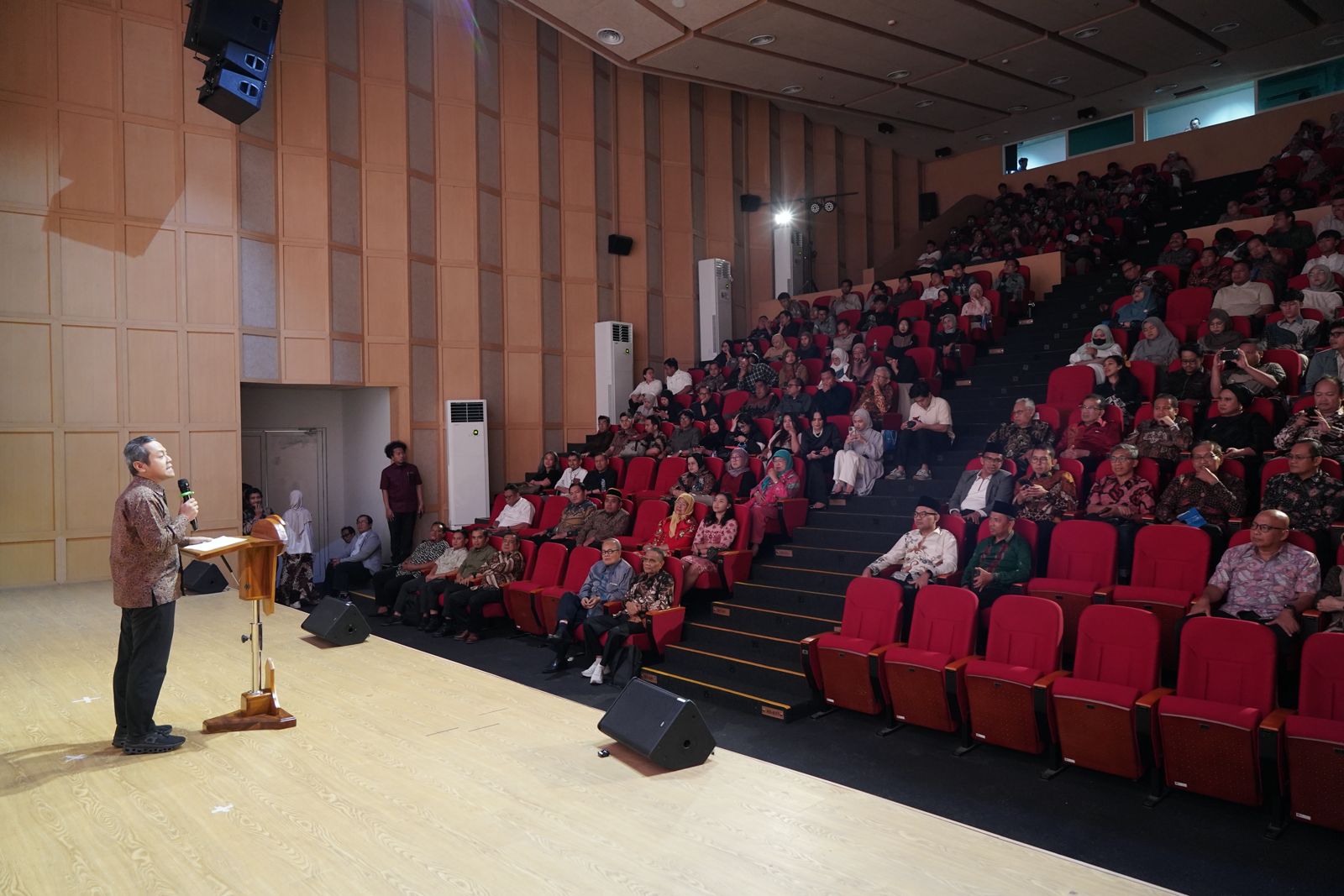
Deputy Minister of Basic and Secondary Education Fajar Riza Ul Haq has emphasised that one of the most important legacies of the late Buya Syafii Maarif was his exemplary way of conveying criticism without losing respect, severing communication, or turning differences into hostility. He made the remarks at a Tadarus Pemikiran Ahmad Syafii Maarif forum with the theme ‘Guarding the Torch, Caring for the Nation’s Conscience’, organised by the Maarif Institute and the Muhammadiyah Young Intellectuals Network in Jakarta on Friday (19/6).
‘Buya taught that one can remain critical without severing the bonds of national brotherhood. Criticism must be a path to improve collective life, not to sharpen divisions and breed hatred,’ said Fajar, who served as Executive Director of the Maarif Institute from 2010 to 2016. Fajar assessed that Buya Syafii’s strength lay in his ability to maintain a balance between idealism, common sense, and political reality. Buya kept open spaces for dialogue with various parties, but never traded away the principles of justice, humanity, and nationalism he believed in.
In his presentation, Fajar discussed Buya Syafii’s position among Indonesia’s Islamic reformers, whom Abdurrahman Wahid (Gus Dur) once called the ‘Three Warriors from Chicago’, namely Nurcholish Madjid, Amien Rais, and Ahmad Syafii Maarif. According to Fajar, the three figures brought a powerful wave of Islamic reform to Indonesia’s intellectual and national life, albeit through different approaches. Amien Rais chose the path of practical politics by founding the National Mandate Party, while Buya Syafii opted for a different struggle. He did not plunge directly into practical politics but actively influenced the nation’s direction through thought, education, cadre development, public advocacy, and civilised criticism.
‘Buya was not anti-power, but he also never dissolved into power. He was able to maintain communication with leaders across sectors, yet possessed the moral courage to voice criticism when he saw injustice,’ Fajar stated. He added that Buya Syafii not only spoke about change but also encouraged young cadres with capacity and integrity to enter strategic spaces, including government, hoping the values of justice, humanity, and nationalism could be translated into policies that benefit the wider community.
In the context of current policy, Fajar noted that President Prabowo Subianto’s administration is paying significant attention to equity and siding with vulnerable groups. At the Ministry of Basic and Secondary Education, Minister Abdul Mu’ti is translating this spirit through strengthening quality education for all, improving teacher competence, and building a deeper and more equitable learning culture. ‘Therefore, we do not think that every change of leadership must be followed by a curriculum change. What is more important is ensuring policies run sustainably, teachers have good competence, and every Indonesian child receives quality education to the farthest reaches of the country,’ Fajar stressed. He said one of these efforts is being realised through the development of Deep Learning as a transformative educational approach, encouraging students not only to master knowledge but also to develop critical and reflective thinking skills and connect knowledge to real-life realities. ‘Deep learning is essentially transformative education. Education that does not stop at knowledge, but gives birth to awareness, character, and actions that bring benefit,’ he said. Fajar concluded that Buya Syafii’s greatest legacy is not merely his writings or speeches, but his exemplary conduct in maintaining common sense, conscience, and moral courage in public life. ‘This nation needs more people who dare to think clearly, act justly, and still be able to build bridges amidst differences. That is one of the greatest lessons I received from Buya, which we must nurture together and pass on in all lines of service,’ he concluded.