
Deputy Minister Discusses the Future of Coastal Residents, Urges Action on Marine Spatial Plans
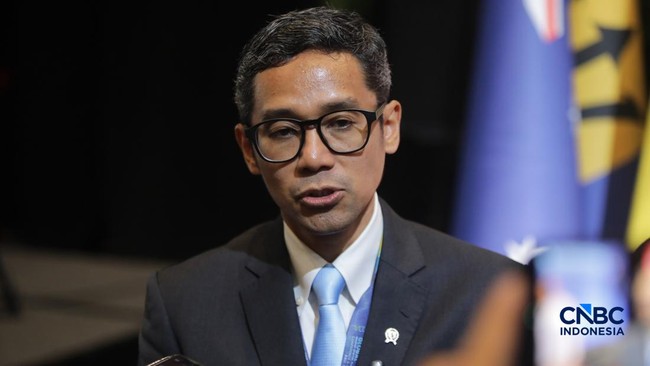
Nusa Dua, Bali — Deputy Maritime Affairs and Fisheries Minister Irwan Meilano has stressed that marine spatial planning must not stop at policy-making and the allocation of maritime zones. The next step, he said, is to ensure the plans are put into practice through concrete action and supported by sustainable investment.
Irwan made the remarks after attending a dialogue session at the Global Marine Spatial Planning (MSP) Conference & Expo 2026 at the Bali Nusa Dua Convention Centre on Wednesday (25 November). The session was attended by 11 countries, including Australia, China, Norway, the United Kingdom, Timor-Leste and Kenya.
Through the international conference, which runs until Friday (27 November), Indonesia aims to promote MSP not merely as a tool for planning and zoning maritime areas, but also as a means of providing certainty over marine space, strengthening governance, reducing conflicts over its use, protecting ecosystems, supporting responsible investment and generating benefits for communities.
The dialogue focused on ensuring marine spatial planning progresses beyond the planning stage to concrete action that benefits the environment and coastal communities.
Irwan said the session gave participating countries an opportunity to exchange experiences of implementing MSP. The discussion revealed a shared view that marine spatial plans should underpin improvements in people’s welfare, particularly for those living in coastal areas.
“At this high-level dialogue this afternoon, attended by representatives of friendly countries, we shared experiences of how marine spatial planning is used in various countries,” Irwan said, as quoted on Thursday (26 November).
“We all agree that planning must form the basis for the greatest possible improvement in welfare, especially for people living in coastal areas. Marine spatial planning cannot stop at policy-making and the regulation of zones. The next step is to ensure those plans are implemented through concrete action and supported by sustainable investment,” he added.
In Indonesia, he said, blue-economy investment opportunities under development include expanding conservation areas and blue-carbon reserves, including mangrove and seagrass ecosystems.
The government is also promoting the revitalisation of fish ponds, salt self-sufficiency, quota-based fishing and the development of aquaculture.
The Ministry of Maritime Affairs and Fisheries is also developing the Bali Investable Ocean Space initiative as a follow-up to the forum. However, reaching an agreement through the initiative was not on the agenda for this dialogue.
Source: jawawa.id (https://jawawa.id/newsitem/deputy-minister-discusses-the-future-of-coastal-residents-urges-action-on-marine-spatial-plans-1795679528)
Originally published by CNBC Indonesia (https://www.cnbcindonesia.com/news/20261126131103-4-788715/wamen-kp-bicara-nasib-warga-pesisir-ingatkan-soal-rencana-ruang-laut), translated from Indonesian