
Deputy Minister Confident Samota SEZ Will Attract New Investment, NTB Increasingly Strategic
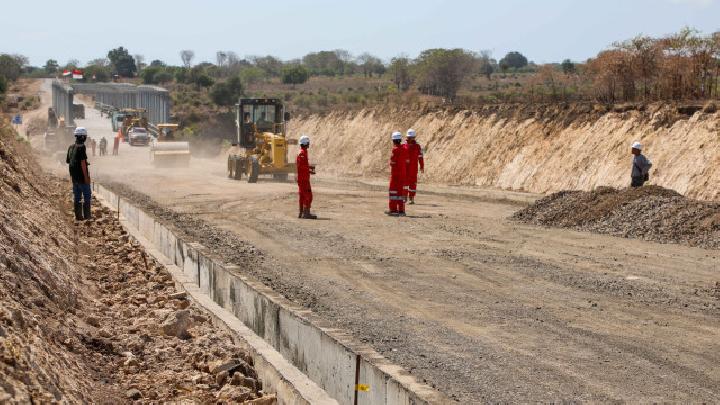
Deputy Minister for Investment and Downstreaming/Deputy Head of BKPM, Todotua Pasaribu, has expressed confidence that the Saleh-Moyo-Tambora (Samota) Special Economic Zone (SEK) in Sumbawa, West Nusa Tenggara (NTB), will become a new investment magnet, particularly in the tourism and blue economy sectors. He stressed the importance of a ready investment ecosystem, from land certainty and infrastructure to the presence of investors prepared to realise projects. This optimism comes amid fairly solid national investment achievements: realisation in the first half of 2026 reached Rp1,040.6 trillion, equivalent to 49.5 per cent of the annual target of Rp2,041.3 trillion. The government also claims that investment distribution is becoming more even, with 50.2 per cent of realisation occurring outside Java, in line with the 8 per cent economic growth target for 2029, which requires total investment of Rp13,032.8 trillion during 2025–2029.
NTB province itself recorded cumulative investment realisation of Rp216.7 trillion from 2021 to the second quarter of 2026. Specifically for the tourism sector, cumulative investment from 2023 to the first half of 2026 reached Rp190 trillion, making NTB one of the top five provinces for tourism investment destinations nationally. The development of the Samota SEZ is also supported by the NTB Provincial Spatial Plan Regulation 2024–2044, which has designated the area, as well as Sumbawa’s geographical position near the Indonesian Archipelagic Sea Lane (ALKI) II, providing a maritime logistics advantage. However, this optimism needs to be tested by on-the-ground readiness: clear land status, basic infrastructure, and regulatory certainty remain homework that will determine investor interest.
The impact of the Samota SEZ’s development will not be felt in NTB alone. The tourism sector is the primary driver, but the multiplier effect on MSMEs, hospitality, transportation, and supporting services is also significant. With Samota’s position in Eastern Indonesia, the zone also has the potential to strengthen inter-regional economic connectivity and reduce the investment gap between Java and the rest of the country. Yet, the current macro conditions are not entirely supportive: the rupiah is at Rp17,935 per US dollar, the Jakarta Composite Index (IHSG) at 6,196, and Brent crude oil prices above $96 per barrel—pressures on operational costs and limited consumer purchasing power could hinder the acceleration of investment realisation. Additionally, the 2026 state budget deficit, which had already reached Rp240 trillion (0.93 per cent of GDP) early in the year, limits the fiscal space for supporting infrastructure spending, which is crucial for a new SEZ.
The Samota SEZ is not just an ordinary tourism project—it is a real test of the government’s strategy to distribute investment outside Java and build a blue economy ecosystem. If successful, this zone could become a model for other SEZs in Eastern Indonesia, creating new jobs and strengthening NTB’s position as a tourism and marine hub. However, failure to realise the project due to land or infrastructure uncertainty would only reinforce investor scepticism about the effectiveness of SEZ policies in remote areas. The tourism sector in NTB and surrounding areas will be the first to enjoy the multiplier effects—hotels, restaurants, travel agencies, and local MSMEs could see a significant increase in demand if the SEZ becomes operational. However, businesses must be prepared for a wait-and-see period during infrastructure preparation. Construction companies and property developers, especially those with exposure to Sumbawa and NTB, could secure contracts for infrastructure projects and facility construction. The maritime logistics and transportation sector also stands to benefit due to Samota’s location near ALKI II, presenting opportunities for shipping and port service companies, though high logistics costs due to fuel prices and the rupiah exchange rate pose a margin risk. What needs to be monitored is the official announcement of the first publicly committed investor—without a concrete investor, the Samota SEZ remains merely a discourse. It is important to note whether the investor is domestic or foreign, as this affects risk perception. A key risk to watch is the realisation of the 2026 state budget, which is in deficit; if infrastructure spending is cut, the construction of roads, electricity, and water in the Samota area could be delayed, hampering investment appeal.
Source: jawawa.id (https://jawawa.id/newsitem/deputy-minister-confident-samota-sez-will-attract-new-investment-ntb-increasingly-strategic-1785063016)
Originally published by feedberry.com (https://feedberry.com/artikel/wamen-bkpm-yakin-kek-samota-tarik-investasi-baru-ntb-makin-strategis), translated from Indonesian