
Deputy Minister: CNG Gas Networks Accelerate Energy Access in Unpiped Regions
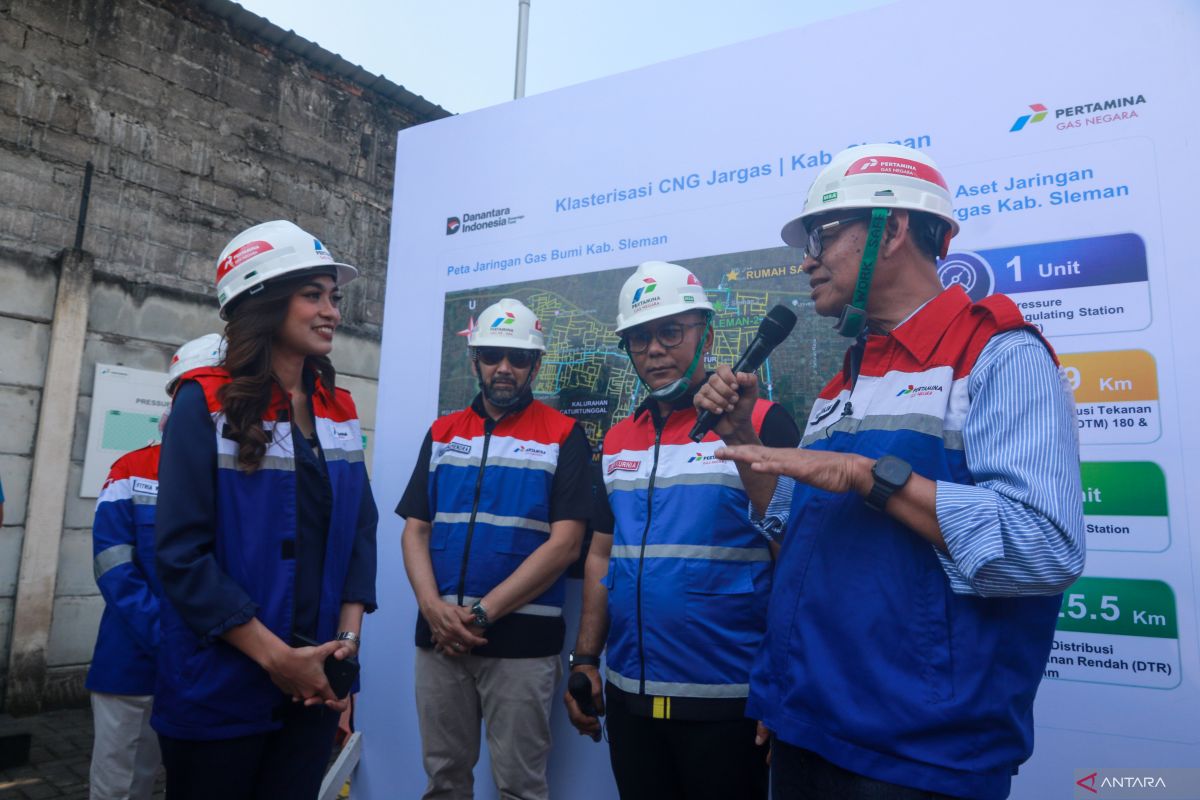
Deputy Minister of Energy and Mineral Resources (ESDM) Yuliot Tanjung has stated that compressed natural gas (CNG)-based gas networks can accelerate clean energy access for communities in areas not yet reached by gas pipeline networks. Speaking during a visit to the CNG network implementation in Sleman Regency, Yogyakarta Special Region, on Friday, he explained that the government is targeting 160,000 household gas connections for 2026 across various cities in Java, Sumatra, and Kalimantan. “For 2026, the target of 160,000 household connections in various cities will be accelerated. The tender will be conducted at the end of July. So technically, there is a readiness assessment for each city currently being finalised,” he said. He added that the development is tailored to regional readiness and proximity to gas sources that will be distributed via the CNG scheme. According to Yuliot, CNG-based or beyond-pipeline gas network development is a solution for equitable energy access without waiting for the construction of gas transmission pipelines, which requires significant time and investment. He added that the government is also preparing to increase the number of household connections in the following year through state budget financing. “And next year, we will increase the total to one million household connections through state budget support. So we are currently preparing the budget for 2027. For 2028, one million household connections will be realised,” he said. In Sleman Regency, the CNG-based gas network currently serves 4,545 household connections, six small commercial customers, and four commercial customers. The distribution network spans more than 141 kilometres. PGN President Director Arief K. Risdianto stated that CNG Clustering is an effective innovation for expanding gas access to communities not yet reached by main transmission pipelines. “The public need not worry about safety, as the high-pressure CNG has been adjusted through a cluster system to flow safely to household kitchens,” he said. He emphasised that with strict supervision and reliable pressure regulation systems, the gas flow to kitchens is guaranteed safe for daily use. The presence of the gas network is part of the government’s efforts to expand energy access for the public while reducing dependence on imported LPG.