
Deputy Minister: Beyond-pipeline gas networks a solution to expand clean energy access
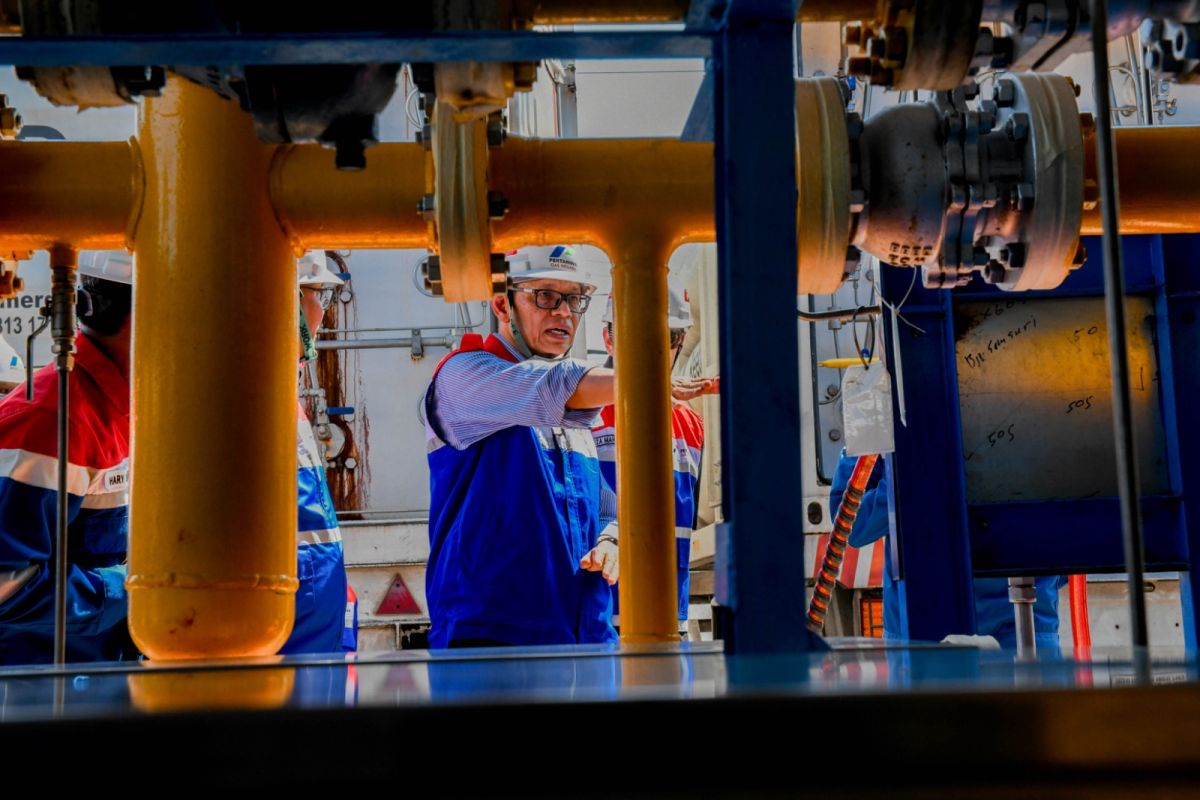
Deputy Minister of Energy and Mineral Resources (ESDM) Yuliot stated that innovation in utilising natural gas networks without pipelines, or beyond-pipeline solutions, is a way to expand access to clean and affordable energy for the public. According to him, access to clean energy is now increasingly easy for the public to experience. Through compressed natural gas (CNG) clustering or beyond-pipeline innovation, natural gas can be distributed to areas not yet reached by pipeline networks. “This innovation is an example of the successful utilisation of natural gas to meet the community’s energy needs more efficiently, affordably, and in an environmentally friendly manner,” he said while reviewing the successful implementation of CNG-based gas networks in Sleman, Special Region of Yogyakarta, on Friday (19/6). The review is part of the government’s commitment to promoting the use of natural gas as a cleaner, more efficient transition energy sourced from domestic resources to strengthen national energy security. According to Yuliot, what has been developed in Sleman demonstrates that equitable energy access does not have to wait for the construction of natural gas transmission pipelines. The CNG-based beyond-pipeline innovation is a solution to accelerate the provision of clean energy for communities in areas not yet connected to the main pipeline network. “So, for 2026, we have a target of 160,000 household connection units in various cities. This will be accelerated. The tender will only be conducted at the end of this July. Technically, there is a study on the readiness of each city that we are currently finalising. And these 160,000 household units are in Java, Sumatra, and Kalimantan, and also depend on the proximity of the gas source to the respective area,” Yuliot said. In Sleman, the implementation of CNG-based gas networks has served 4,545 household connections, six small customers, and four commercial customers. The infrastructure supporting this service includes a gas distribution network spanning more than 141 kilometres, enabling the safe and reliable distribution of natural gas to the public. The average distribution of natural gas to gas network customers in Sleman reaches 84,000 cubic metres per month, equivalent to the utilisation of approximately 64 metric tonnes of LPG per month. The use of natural gas in the Sleman area is not only targeting the household sector. Going forward, gas network services will continue to be expanded to support productive sectors such as MSMEs, restaurants, hotels, and health facilities. One commercial customer, Rumah Makan Payakumbuah in Yogyakarta, reported being able to save energy costs by between 30 and 33 per cent compared to before. “Next year, using state budget financing, we will increase the total to 1 million household connection units. So, we are also preparing this for the 2027 budget. By 2028, the 1 million household connection units can be realised. So, the 160,000 connections can serve the community,” Yuliot said. The government continues to accelerate the development of gas networks as part of the strategy to strengthen national energy security and increase the utilisation of domestic natural gas. Currently, gas network management has reached 827,000 household connections in 18 provinces and 74 regencies/cities. Through the 2026-2029 National Medium-Term Development Plan (RPJMN), the government is targeting the development of approximately 350,000 household connections per year through various funding schemes. PGN President Director Arief K Risdianto expressed appreciation for the support of the Ministry of ESDM and all stakeholders in the development of CNG-based gas networks in Sleman. According to him, the project’s success proves that CNG clustering innovation can be an effective solution to expand natural gas access in areas not yet connected to the main transmission network. “The public does not need to worry about safety, because high-pressure CNG at around 200 bar has been adjusted with a cluster system to flow safely to household kitchens,” he said. With strict supervision and reliable pressure regulation system (PRS) technology, Arief continued, the flow of natural gas to kitchens is guaranteed safe for daily use. The presence of gas networks not only provides convenience for households but is also a concrete step in supporting the government’s efforts to reduce dependence on LPG imports and ease the burden of energy subsidies. Furthermore, the development of gas networks also opens up wider opportunities for natural gas utilisation in productive sectors, thereby increasing business efficiency and strengthening regional economies.