
Deputy Minister Applauds Indisi and IDX for Providing Financial Literacy to 210 Students with Disabilities
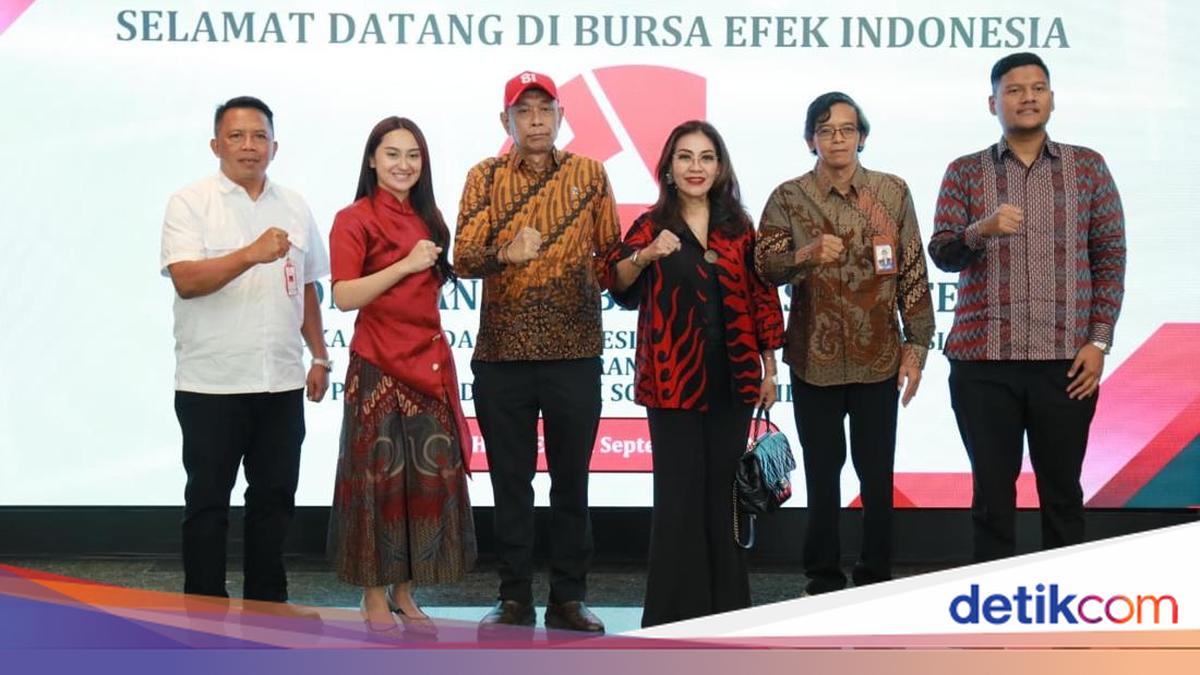
The Deputy Minister of Social Affairs, Agus Jabo Priyono, has expressed his appreciation for the Indonesian Disability Institution (Indisi) and the Indonesia Stock Exchange (IDX) for providing financial literacy training to 210 high school-level students. The participants represent seven special needs schools (SLB) from Jakarta and its surrounding areas.
He expressed hope that this training serves as an initial step towards realising an inclusive employment ecosystem, allowing persons with disabilities to obtain equal job opportunities to develop their potential, increase independence, and contribute to national development. “We want persons with disabilities to not only be beneficiaries of development but also to be active, independent, and productive participants in development with equal opportunities,” Agus Jabo stated in a release on Monday (21/09/2026).
He made these remarks while delivering a keynote speech during the Opening of the Second Trading Session at the Indonesia Stock Exchange (IDX) as part of the ‘Capital Market for Disability Friends’ event at the IDX Main Hall, Jakarta.
Agus Jabo explained that building an inclusive economy must begin with data. Currently, the government utilises a single data source, namely the National Socio-Economic Single Data (DTSEN). According to the DTS/DTSEN, there are recorded over 14 million persons with disabilities in Indonesia. “Therefore, when we speak about job opportunities for our brothers and sisters, our children with disabilities, we are essentially speaking about fulfilling the rights to equality, opportunity, and inclusive human development,” said Agus Jabo.
He noted that persons with disabilities possess diverse abilities, talents, and potential, much like the rest of society. However, the frequent issue is not their capability, but rather the existing barriers in the working environment, access to education, training, job information, and the recruitment process. “Therefore, our task is not merely to provide jobs for persons with disabilities, but to build a labour system that allows them to enter, stay, grow, and have equal opportunities to achieve career progression. Equality is a vital matter that must be understood by all Indonesians,” he emphasised.
Furthermore, Agus Jabo highlighted that the government has provided a strong legal foundation through Law Number 8 of 2016 concerning Persons with Disabilities. This law affirms the right of persons with disabilities to obtain employment provided by the government, State-Owned Enterprises (SOEs), and the private sector. “For the government, it is mandatory that 2 per cent of those working in such institutions must be persons with disabilities. For the private sector, it is 1 per cent,” he added.
Nevertheless, Agus Jabo assessed that regulation alone is insufficient to build an inclusive economy and employment equality. He argued that a change in approach is needed—moving from viewing persons with disabilities as recipients of aid to viewing them as subjects of development, professional workers, entrepreneurs, and economic actors. “Therefore, social and economic empowerment programmes must be increasingly directed towards the real needs of the working world. Skills training must be linked to market needs, vocational education must be connected to industry, job vacancy information must be accessible to persons with disabilities, and recruitment processes must be inclusive and free from discrimination. Once someone is employed, the workplace must provide reasonable accommodation and necessary accessibility,” he explained.
Agus Jabo also noted that the government cannot work alone in developing inclusive employment. This step requires collaboration from various parties. In this regard, the business world plays a crucial role in opening job opportunities and creating an inclusive working environment. “We need an inclusive employment ecosystem, not programmes that run in isolation. This ecosystem must start with good data collection, potential and needs assessment, skill enhancement, internships, job placement, workplace support, and finally, career and entrepreneurship development,” he said.
One such collaborative effort is realised through the partnership between Indisi and the IDX, which provides financial literacy and an introduction to the capital market and investment. Agus Jabo appreciated this collaboration and hoped the activity would serve as a tangible effort to build independence, confidence, knowledge, and future readiness for persons with disabilities. “This includes managing income, planning needs, saving, and understanding various financial options. Therefore, financial literacy is an important part of life skills. This spirit aligns with inclusive development,” he stated.
“I hope such collaborations continue to expand, not only in capital market literacy but also in the development of work skills, entrepreneurship, digital technology, financial planning, and various other fields that can strengthen the independence of persons with disabilities,” he continued.
Additionally, Agus Jabo advised the attending students that investment must begin with knowledge, rather than merely following trends. They were urged not to be easily tempted by promises of quick profits, but to recognise risks, study products, and ensure the use of reliable information sources.
Meanwhile, the President Director of the Indonesia Stock Exchange (IDX), Jeffrey Hendrik, emphasised that inclusion is a vital part of the development of the Indonesian capital market. He stated that the presence of the capital market should benefit as many people as possible, both existing investors and those who are not yet involved. Jeffrey expressed appreciation to Indisi and all parties providing attention to equal access for persons with disabilities, particularly in obtaining education and access to the capital market. “These young people have the same rights…”
Source: jawawa.id (https://jawawa.id/newsitem/deputy-minister-applauds-indisi-and-idx-for-providing-financial-literacy-to-210-students-with-disabilities-1790002599)
Originally published by detikcom (https://news.detik.com/berita/d-8673067/wamensos-apresiasi-indisi-bei-bekali-210-siswa-slb-literasi-keuangan), translated from Indonesian