
Deputy Manpower Minister Believes Several Labour Regulations Require Revision
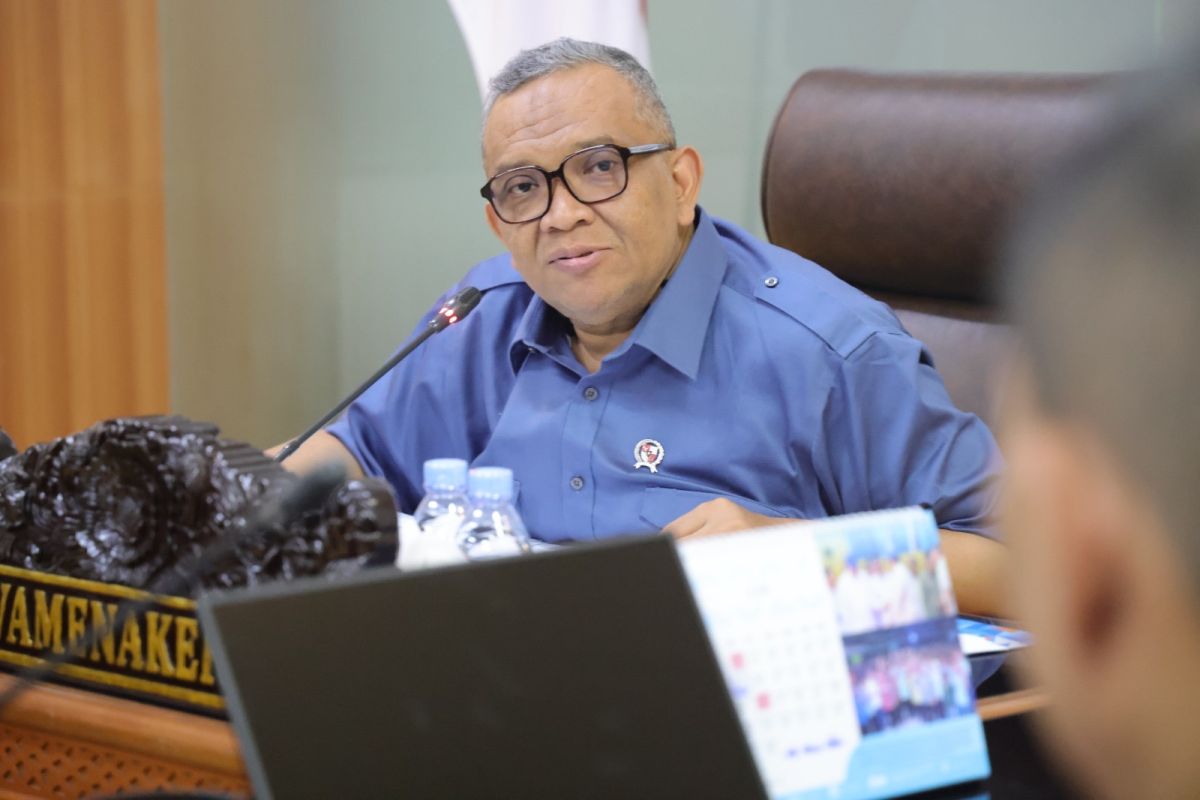
Jakarta (ANTARA) - Deputy Manpower Minister Afriansyah Noor believes that several regulations in the labour sector need to be revised to support worker welfare and advance domestic industry.
“There is the UAP Law still being used in our country. That is a Dutch law from 1930,” said Afriansyah during the III Congress of the Confederation of the Indonesian Labour Union (KPBI) in Jakarta on Sunday.
The 1930 UAP Law (Stoom Ordonnantie 1930) is a legal foundation inherited from the colonial era that remains in effect within Indonesia’s national legal system, containing guidelines for Occupational Health and Safety (K3) as well as licensing for various types of boilers and steam engines in Indonesia.
According to him, it is time for these colonial-era regulations to be updated to suit modern developments, similar to the action taken by the House of Representatives (DPR RI) in enacting the Domestic Workers Protection Law (PPRT), despite a 20-year wait.
“Meanwhile, the changes in the era are so significant, yet this UAP is still being utilised in both the mineral sector and other industrial companies. This is important, and hopefully, the 1930 UAP Law can be revised accordingly,” he stated. “Yes, this likely needs to be changed.”
In a meeting attended by Deputy Speaker of the House Sufmi Dasco Ahmad, National Police Chief General Listyo Sigit Prabowo, Minister of Environment Jumhur Hidayat, and other labour union leaders, Afriansyah emphasised the importance of collaboration in facing various challenges in the industrial and labour sectors.
The Ministry of Manpower, he said, must collaborate with relevant parties (DPR, National Police, and related ministries/agencies) to ensure that workers’ rights are fulfilled.
One such collaboration is being conducted with the Ministry of Trade regarding imported goods entering Indonesia, to ensure they do not hinder domestic production. Coordination regarding import regulations is also being carried out with the Ministry of Industry.
“We should also provide input to the Ministry of Industry so that this law is given maximum attention,” he explained.
Afriansyah added that collaboration between labour unions, the government, and the business world must move in unison to face the current situation, which is being impacted by global conditions.
A wave of layoffs (PHK) will also affect export companies that rely on imported raw materials, as the global situation has led to rising raw material costs.
“These layoffs will impact export companies, particularly those using imported raw materials which are certainly affected by rising prices. It is our hope that colleagues in the labour and trade unions also provide us with regular updates,” said Afriansyah.