
Deputy Interior Minister Reveals Importance of Ideology and Strategy for Regional Leaders
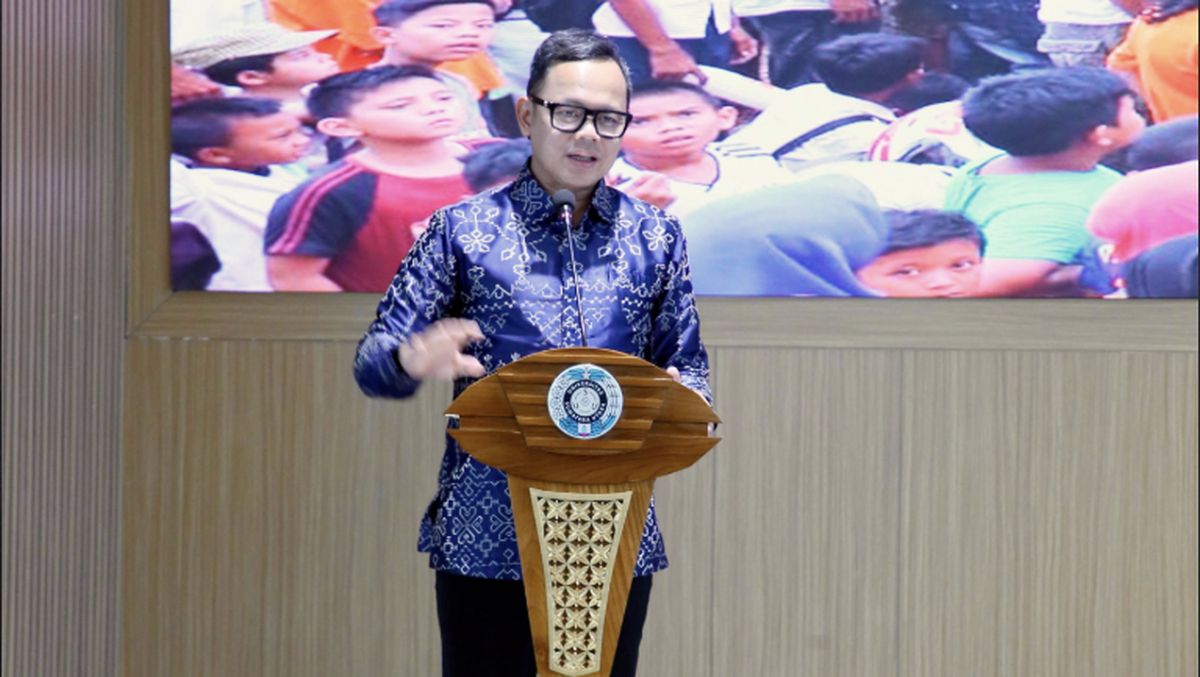
Deputy Interior Minister (Wamendagri) Bima Arya Sugiarto conveyed several qualities that regional leaders should possess. One of them is a strong ideology, along with directed strategies in running the government.
He delivered this during a public lecture at the Faculty of Social and Political Sciences (FISIP) of the University of North Sumatra (USU) in Medan City on Thursday (30/4/2026). He stated that this view is a reflection of his personal experience in leading a region.
According to him, a leader needs to have a clear development ideology, namely development that is environmentally friendly, sustainable, and inclusive. Thus, every policy taken not only solves short-term problems but also maintains sustainability for the future.
“So a leader must have an ideology. Must have the most fundamental thinking about the values believed in. If not, the leader will be tossed about,” said Bima.
Bima described this ideology as a guide in facing various issues during his tenure as Mayor of Bogor. He reminded that ideology alone is not enough. Those values must be translated into concrete strategies so that the community can benefit from them.
“A leader is an agent of hope. If that hope is not fulfilled, the leader is done. That’s why my term is ‘instalment of hope’,” he said.
Another important aspect, Bima continued, is the leader’s ability to manage various interests while remaining committed to the believed values.
“Being a leader must have boundaries. How far we tolerate things that do not align with conscience and values,” Bima stated.
Furthermore, it is about building support from various layers, from the community, the middle class, to the government apparatus. According to him, the skill to reach all these layers is the key to success in implementing development programmes.
Further, Bima stressed that leadership success is inseparable from the solidity of the bureaucratic team. He said leaders must be able to understand the character of the apparatus and build a collective work spirit.
Meanwhile, firmness is still required in certain situations to maintain principles and ensure the government runs effectively.
“The point I want to convey is, for a leader, there is a time to be a brother, to be a sibling, to be a friend. But there is a time to be a firm and stern father. Even the best leader must still have a killer instinct. Must be tough for one principle. Must be brave for the values believed in,” Bima concluded.
In that public lecture, Bima hoped that the younger generation, especially students, could understand that leadership is about values, strategies, and courage in making decisions for broader interests.