
Deputy Interior Minister Bima: Climate Change Challenges No Longer About Regulation, but Execution at the Local Level
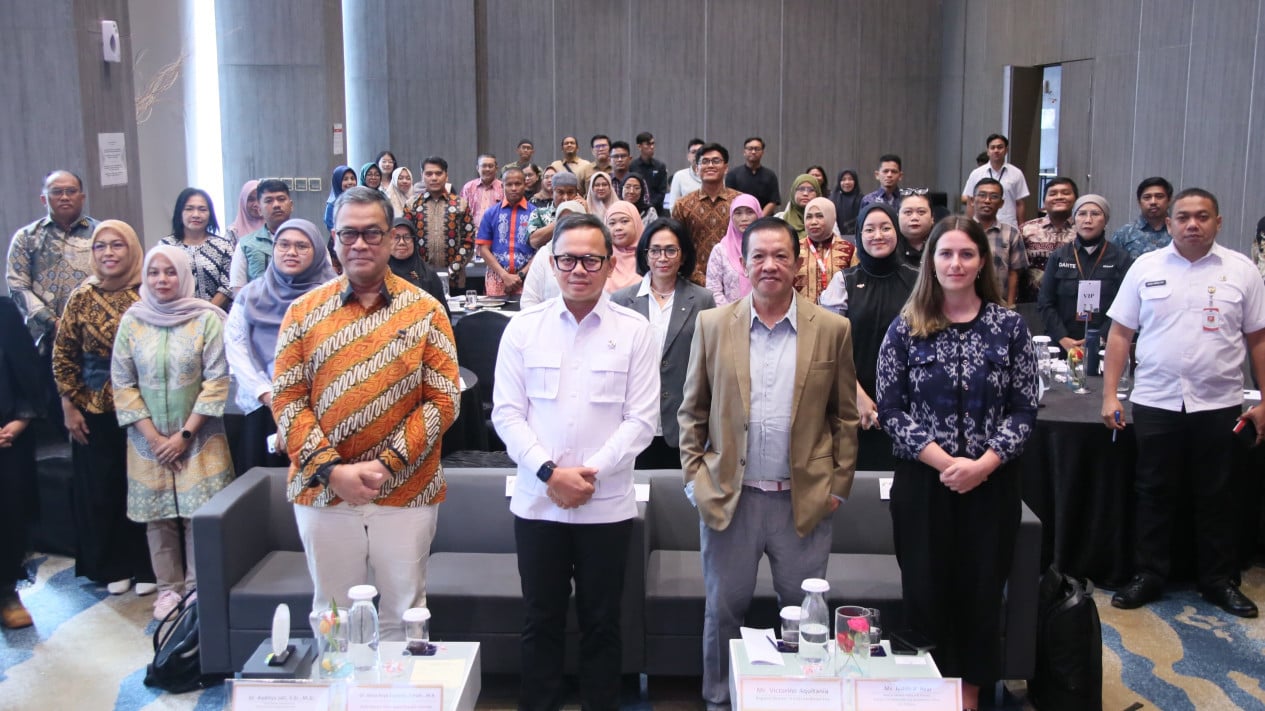
Deputy Interior Minister (Wamendagri) Bima Arya Sugiarto has emphasised that the main challenge in addressing climate change and realising inclusive development at the local level does not lie in the existence of regulations or policy commitments. According to him, the greatest challenge is in the aspect of implementation and strengthening governance systems at the local level.
Bima explained that Indonesia already has various policy frameworks, regulations, and strong international commitments to support sustainable development and net zero emission targets. However, these instruments have not yet been fully translated effectively into implementation at the local level.
“So, this execution is our heavy challenge [and] local governments are the key,” Bima said while delivering a keynote speech at the National Policy Dialogue and Workshop on Social Inclusion and Resilience in Asia (SIRA) at Grand Mercure Kemayoran, Jakarta, on Wednesday, 6 May 2026.
Bima explained that although various development indicators and indices show positive trends, there are still gaps between data achievements and field conditions. He assessed that the main problem lies in weak data integration, cross-sector coordination, and insufficient attention to vulnerable groups in planning and implementation of development.
“So, the urgency often stops only at the level of training, documents, or actually formalities in the budget,” he said.
Furthermore, Bima stressed that gender, inclusivity, and disability perspectives should not be viewed merely as additional programmes. According to him, these perspectives must be an integral part of the way the government formulates policies and ensures that all groups of society obtain equal access and benefits from development.
“This is [about] who gets access, who is involved, who then enjoys the benefits. This is a way of thinking to issue policies and income,” he stated.
On that occasion, Bima also highlighted the importance of strengthening the governance ecosystem at the local level in facing climate change challenges and inclusive development. According to him, several regions have demonstrated good practices through integrated approaches, community-based methods, to institutional strengthening involving multiple parties.
Bima exemplified Yogyakarta, which he assessed as having strong institutional strengthening and planning integration, from the planning process to programme implementation at the local apparatus level. In addition, Semarang was mentioned as having a community-based approach, while Surabaya was deemed successful in building integrated social services. He also touched on good practices in Makassar that elevate community-based approaches at the alley or neighbourhood level as spaces for strengthening social and environmental issues.