
Deputy Human Rights Minister Gathers Input for HAM Law Revision at Unesa Public Hearing
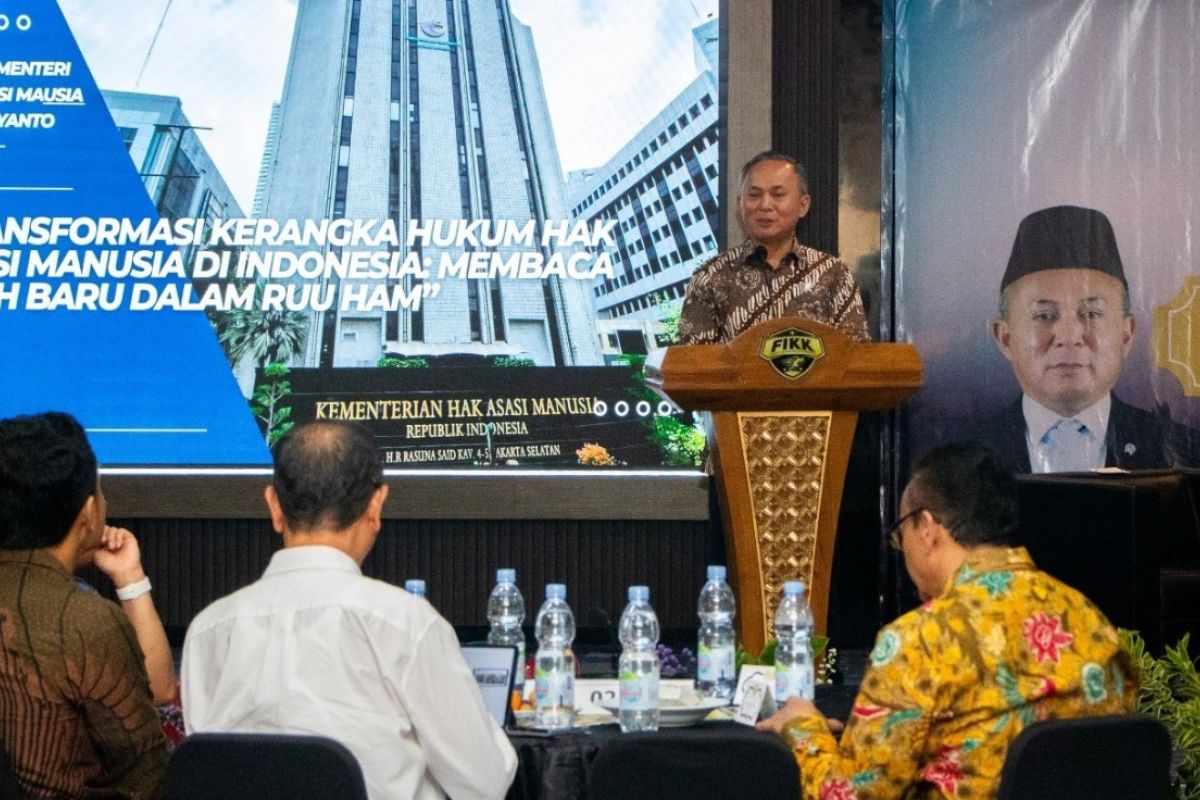
Surabaya (ANTARA) - Deputy Minister of Human Rights Mugiyanto gathered input from academics, students, civil society organisations, and government representatives during a public hearing on the revision of Law Number 39 of 1999 concerning Human Rights at Surabaya State University (Unesa) on Thursday. “The revision of the Human Rights Law is being carried out to accommodate various developments that have not been covered by the regulation, which has been in force for more than two decades,” Mugiyanto said. Several new issues proposed for inclusion in the amended law include digital rights, the right to a clean and healthy environment, protection for human rights defenders, and strengthening the government’s role as the primary duty bearer in the promotion of human rights. He said Unesa was chosen as the location for the public hearing because of its strategic role in preparing future educators who will contribute to reinforcing human rights values in society. “The Ministry of Human Rights is also open to cooperation with Unesa, including the establishment of a human rights study centre at the university,” he added. Furthermore, the government proposes strengthening the authority of national human rights institutions, namely the National Commission on Human Rights (Komnas HAM), the National Commission on Violence Against Women (Komnas Perempuan), the National Commission on Disabilities (KND), and the Indonesian Child Protection Commission (KPAI). This strengthening is aimed at ensuring that the recommendations issued by these institutions have greater binding force in advancing the protection and fulfilment of human rights in Indonesia. In the draft amendment, the government also proposes the establishment of a Human Rights and Democracy Endowment Fund to support various human rights and democracy strengthening programmes run by civil society organisations, academics, and regional communities in an open and competitive manner. Unesa’s Vice-Rector II for Legal Affairs, Administration, Finance, Resources, and Business, Bachtiar Syaiful Bachri, stated that changes to the human rights law are necessary to keep it relevant to contemporary developments, including technological advances, digital transformation, and changes in social relations. “Human rights are a fundamental foundation in the life of the nation and state. Therefore, regulations protecting citizens’ basic rights must be continuously evaluated and refined,” said the Unesa professor. Vice-Rector I for Education, Student Affairs, and Alumni, Martadi, welcomed the idea of establishing a human rights study centre on campus. “Every year, Unesa prepares thousands of prospective teachers. Human rights education can be an important provision before they enter schools, enabling them to educate students, parents, and the community. Human rights values have become part of the academic service governance at Unesa,” he said.