
Deputy Home Minister Urges Regional Governments to Prioritise Education to Boost Human Resources
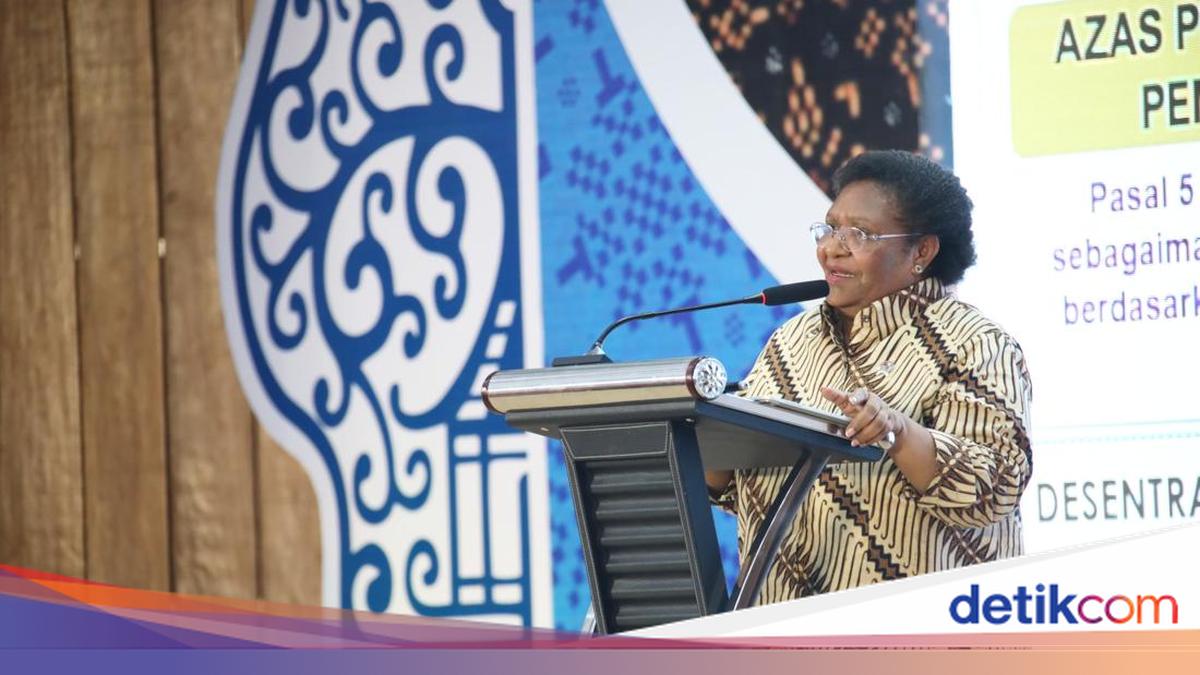
Deputy Minister of Home Affairs Ribka Haluk has reminded regional governments to prioritise basic services in education as the foundation for human resource development towards Golden Indonesia 2045. Ribka stressed that the provision of quality education services is a key prerequisite for producing human resources capable of meeting future development challenges. She stated that according to Law Number 23 of 2014 on Regional Government, particularly Article 12 paragraph (1), education is a mandatory government affair related to basic services. Therefore, regional governments have the responsibility to ensure every citizen obtains the right to education services fairly, equitably, and inclusively. “Education is the right of every citizen, including vulnerable groups. There are persons with disabilities, and our communities in pockets of extreme poverty,” Ribka said in a written statement on Thursday (2/7/2026). “They also need to receive services,” she continued. Nevertheless, Ribka assessed that the fulfilment of basic education services still faces various challenges. She noted that some regional governments have not yet optimally implemented the Minimum Service Standards, meaning education services have not fully reached the community. This situation is influenced by various factors, ranging from limited regional fiscal capacity and geographical challenges to poverty issues. “Of course, many things affect this, related to regional fiscal strength, then related to geographical challenges, security issues, many things. The problem of poverty, extreme poverty, this may affect everything,” Ribka explained. Therefore, the Ministry of Home Affairs continues to strengthen its guidance and supervision function over the administration of regional government so that the implementation of mandatory affairs proceeds according to regulations. These efforts are carried out through coaching, training, technical guidance, evaluation of regional development planning, and supervision of basic service implementation to optimise the application of Minimum Service Standards in the regions. Furthermore, Ribka highlighted the still high number of out-of-school children, especially in underdeveloped, frontier, and outermost regions, as well as areas with high poverty rates. This condition, Ribka said, shows that many children have not yet obtained their right to education, requiring attention and collaboration from all stakeholders. “This is our shared responsibility, both the central government and regional governments, which must be implemented by regional governments because this is the right of the nation’s children in isolated areas,” Ribka stated. Ribka added that regional governments also face various challenges in fulfilling basic education services, including budget constraints. However, she stressed that this condition should not be used as an excuse to sideline the fulfilment of the community’s right to education. “We know very well the situation of regional heads. But we cannot give up on that,” Ribka explained. She added that improving the quality of education cannot be done by the government alone. Collaboration is needed between the government, families, schools, communities, and various development partners so that access to education becomes more equitable and dropout rates can be reduced. “Education affairs are not only the work of the government. But how we engage the government, families, schools,” Ribka said. “So that the education system and cycle are truly well organised,” she concluded.