
Deputy Home Minister Ribka Haluk Urges Regional Governments to Prioritise Education
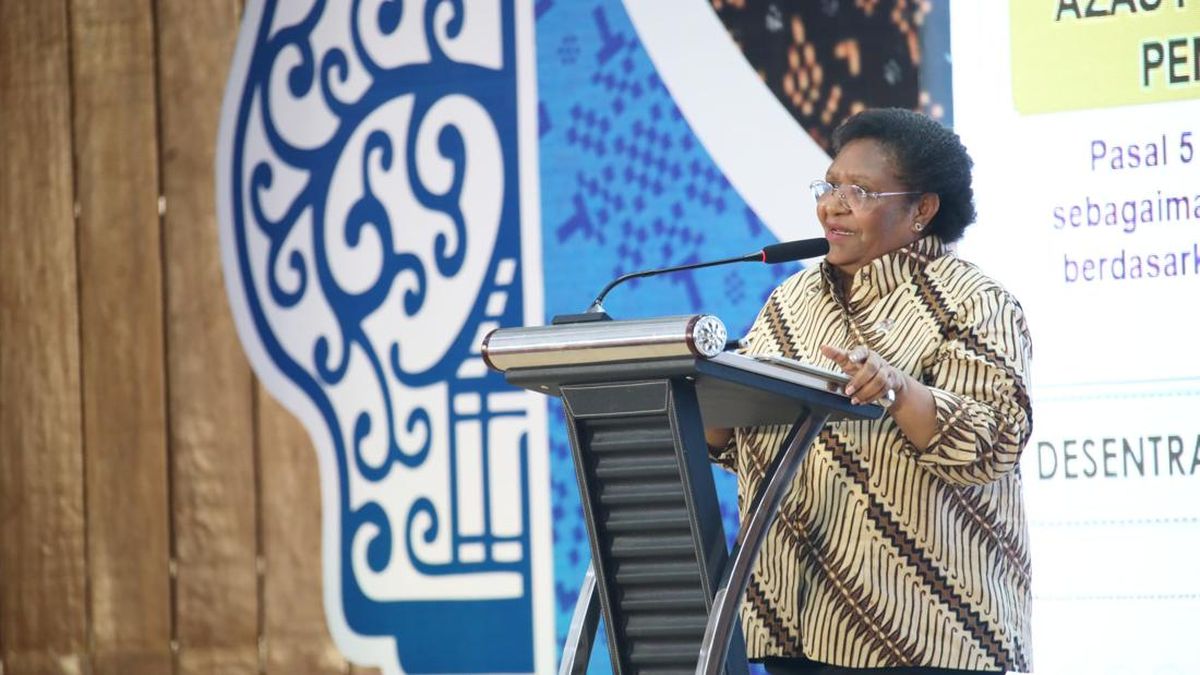
Local governments are being urged to make basic services in the field of education a top priority to strengthen the quality of human resources towards the Indonesia Emas 2045 vision.
This message was delivered by the Deputy Minister of Home Affairs, Ribka Haluk, during the 2026 Indonesia Education Conference at the Yogyakarta State University (UNY) Auditorium, Yogyakarta, on Thursday (2/7).
According to her, high-quality educational services are an essential prerequisite for producing human resources capable of facing future development challenges. Ribka emphasised that education is a mandatory government affair related to basic services, as regulated under Law Number 23 of 2014 concerning Regional Government, specifically Article 12, paragraph (1).
Consequently, local governments are obligated to ensure that every citizen obtains access to education in a fair, equitable, and inclusive manner. “Education is a right for every citizen, including those from vulnerable groups. This includes people with disabilities and those living in pockets of extreme poverty. They, too, must receive services,” Ribka stated on Thursday (2/7).
Nevertheless, Ribka noted that fulfilling basic educational services still faces various challenges. She stated that some local governments have not optimally implemented Minimum Service Standards (SPM), resulting in educational services not fully reaching the community. This condition is influenced by various factors, ranging from limited regional fiscal capacity and geographical challenges to issues of poverty.
“There are certainly many things that affect regional fiscal strength, as well as geographical challenges, security issues, and so on. Poverty and extreme poverty likely affect everything,” Ribka revealed.
Therefore, the Ministry of Home Affairs (Kemendagri) continues to strengthen its coaching and supervisory functions regarding regional government administration to ensure that mandatory affairs are carried out in accordance with regulations. These efforts are conducted through coaching, training, technical guidance, evaluation of regional development planning, and supervision of basic service implementation to optimise the application of SPM in the regions.
Furthermore, Ribka highlighted the high number of out-of-school children, particularly in underdeveloped, frontier, and outermost (3T) regions, as well as areas with high poverty rates. This condition, according to Ribka, indicates that many children have not yet obtained their right to education, necessitating attention and collaboration from all stakeholders.
“This is a responsibility for all of us, both the central and local governments. It must be implemented by local governments because it is the right of the nation’s children in isolated areas,” Ribka said.
She added that while local governments face various challenges in fulfilling basic educational services, including budget constraints, she emphasised that these conditions must not serve as an excuse to neglect the public’s right to educational services. “We are very aware of the condition of regional heads. However, we cannot give up because of that,” she explained.
Ribka added that improving the quality of education cannot be achieved by the government alone. Collaboration is required between the government, families, schools, the community, and various development partners to ensure more equitable educational access and to reduce dropout rates. “The matter of education is not handled by the government alone. It is about how we engage the government, families, and schools. Therefore, this education system and cycle must be properly organised,” she concluded.
Source: jawawa.id (https://jawawa.id/newsitem/deputy-home-minister-ribka-haluk-urges-regional-governments-to-prioritise-education-1783000407)
Originally published by CNN Indonesia (https://www.cnnindonesia.com/nasional/20260702200934-25-1376228/wamendagri-ribka-haluk-minta-pemda-prioritaskan-pendidikan), translated from Indonesian