
Deputy Home Minister Inspects South Papua Infrastructure Projects to Ensure Targets Are Met
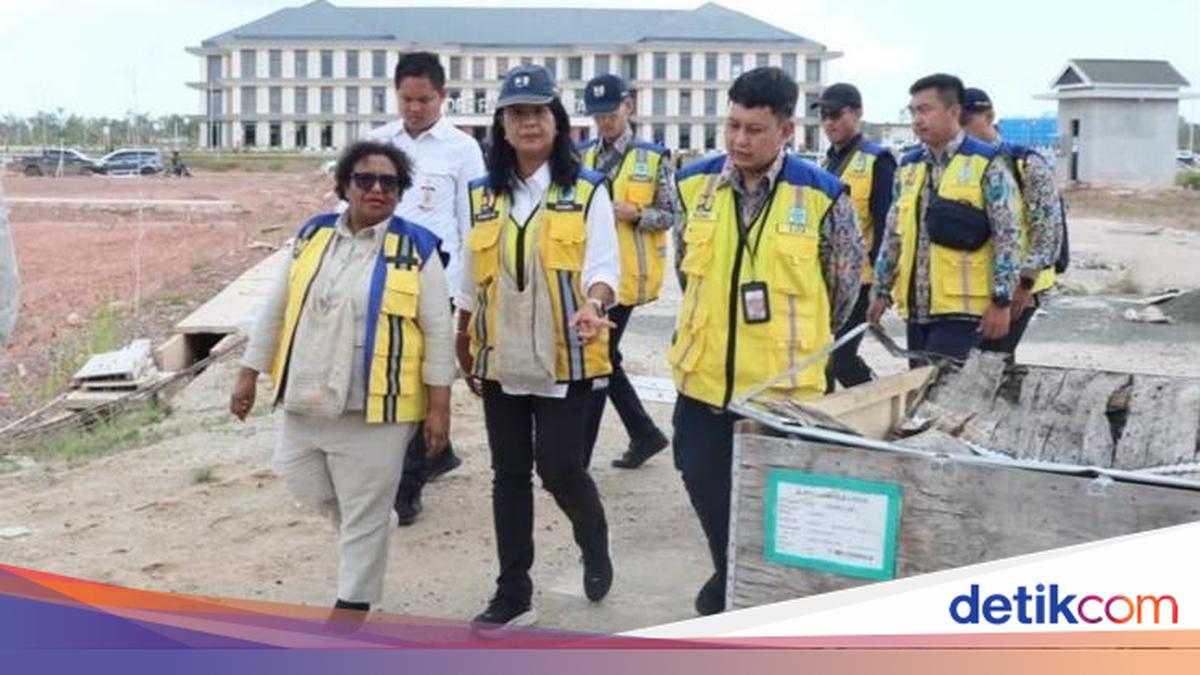
Deputy Home Minister Ribka Haluk accompanied Deputy Public Works Minister Diana Kusumastuti on an inspection of several strategic infrastructure developments in South Papua Province. The visit on Wednesday (16/7) aimed to ensure the acceleration of development remains on target, covering the construction of the government centre area, water resources infrastructure, irrigation networks, and coastal protection to support public services and development in the new autonomous region (DOB).
The series of activities began with a review of the construction of the DOB-Netto Bridge access road, which serves as the main route to the South Papua Central Government Area (KPP). Based on field reports, construction progress has exceeded the target and is projected to be completed ahead of schedule. Responding to this development, Haluk reminded that the acceleration must be accompanied by good work quality.
"This progress deserves appreciation. The most important thing is that the quality of work is maintained so that the public can immediately benefit from connectivity to the Central Government Area," Haluk said in a written statement on Thursday (16/7/2026).
Haluk and Kusumastuti then attended a coordination meeting at the South Papua Governor’s Office to discuss the acceleration of the KPP development. During the meeting, Haluk stressed that the central government continues to push for the KPP in the four new autonomous regions in Papua to be designated as National Strategic Projects (PSN).
"We are fighting together with the Minister of Home Affairs and Commission II of the Indonesian House of Representatives so that the KPP of the four DOB in Papua can be included as National Strategic Projects. The fiscal capacity of the new provinces’ regional budgets is still limited, so support from the state budget is very necessary," she said.
Following the meeting, the group inspected the construction of the South Papua Governor’s Office, the South Papua Regional House of Representatives (DPR) Office, and the South Papua Papuan People’s Assembly (MRP) Office. According to Haluk, the construction of government buildings must lead to improved public services.
"The presence of government buildings is not just about physical construction, but about ensuring public services become faster, easier, and closer to the community," she stated.
The inspection continued to the Efata Mayo Reservoir, which is projected to become a raw water source for the KPP while also supporting the agriculture and tourism sectors. Afterwards, the group reviewed the Waninggap Irrigation Area to ensure the readiness of irrigation infrastructure to support the rice field printing programme and agricultural land optimisation in Merauke Regency.
Regarding this, Haluk assessed that water resources infrastructure development is a crucial factor in strengthening national food security.
"The potential of this reservoir is enormous. If developed in an integrated manner, its benefits are not only for providing raw water but also for strengthening food security and encouraging community economic growth," she said.
Towards the afternoon, the group inspected the construction of coastal erosion protection at Lampu Satu Beach, which functions to protect the coastal area from abrasion.
"Coastal protection is very important to safeguard settlements, infrastructure, and the economic activities of coastal communities. Its handling must be carried out in stages according to the level of urgency," she said.
The series of visits concluded at the Merauke Time Capsule area. According to Haluk, the area holds historical value as well as tourism potential that must be maintained through infrastructure rehabilitation, additional lighting, and the handling of vandalism.
"The Time Capsule is an icon of Merauke. This area needs to be organised and maintained so that it remains a safe, comfortable public space that makes the people of South Papua proud," Haluk concluded.