
Deputy Home Affairs Minister Wiyagus Urges Use of Human Capital Index as Guideline for Regional Development Planning
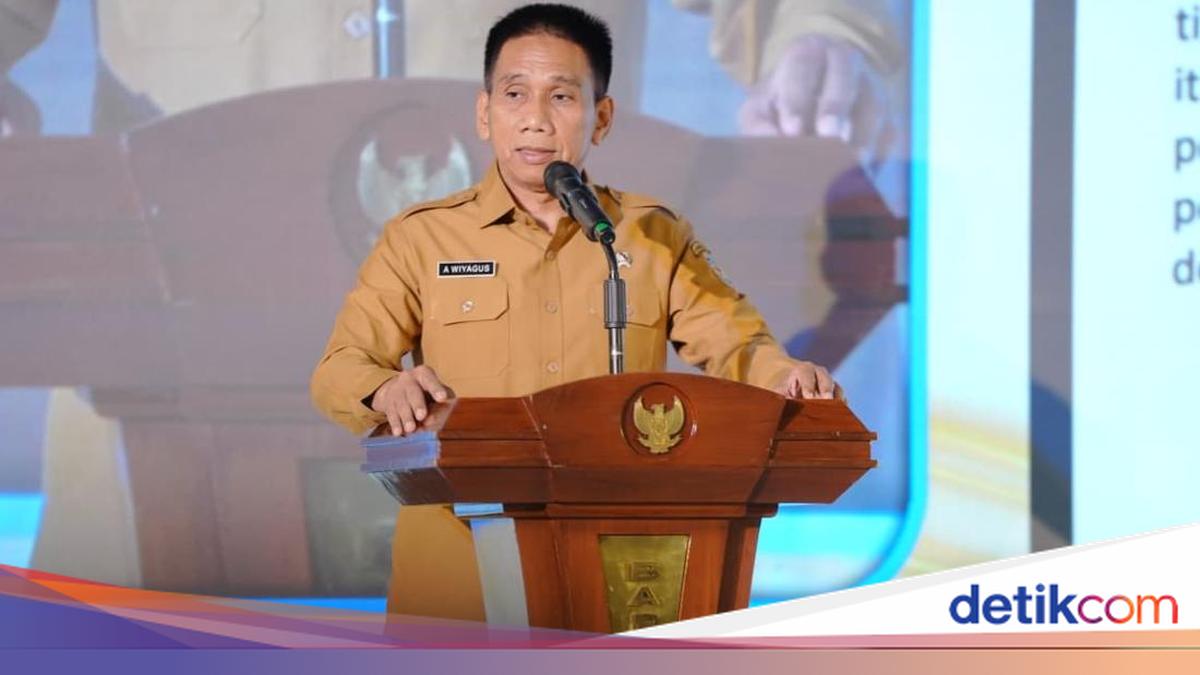
Deputy Minister of Home Affairs (Wamendagri) Akhmad Wiyagus is encouraging the use of the Human Capital Index (IMM) as an instrument for regional development planning. This is part of efforts to improve the quality of human resources (SDM) while narrowing disparities in development achievements between regions.
“The IMM is highly strategic and will certainly serve as a guideline for us in improving the quality of regional development, particularly in the education and health sectors,” Wiyagus said in a statement on Monday (31/8/2026).
He made the remarks at the launch of the 2025 Human Capital Index figures and the IMM Calculation Guidelines at the office of the Ministry of National Development Planning (PPN)/National Development Planning Agency (Bappenas) in Jakarta on Monday (31/8).
Wiyagus explained that the IMM measures human productivity potential through three main dimensions: survival, education, and health. These three aspects form the foundation for building a healthy, productive, and competitive workforce.
“The launch of the IMM figures and the IMM calculation guidelines will be a highly strategic moment to align understanding, strengthen evidence-based data, and integrate the IMM rigorously into regional planning documents,” he said.
Wiyagus believes IMM integration needs to be carried out across all stages of regional development planning, from the Regional Medium-Term Development Plan (RPJMD) and the Regional Government Work Plan (RKPD) to strategic plans of regional agencies, as well as budgeting and evaluation. In this way, IMM measurement results can serve as one of the bases for determining development intervention priorities.
He also stressed that human capital development must be carried out sustainably from the earliest stages of life. Therefore, strengthening the quality of education cannot be measured solely by years of schooling, but must also take into account the quality of learning. Likewise, health aspects need to be strengthened from early life to support human productivity in the future.
In line with this, the Ministry of Home Affairs will strengthen the synchronisation of central and regional government programmes, oversee the fulfilment of Minimum Service Standards (SPM), and strengthen regional institutional governance through the Republic of Indonesia Regional Government Information System (SIPD-RI).
Wiyagus said human development policies need to take into account the characteristics of each region, especially underdeveloped, archipelagic, and border areas. He expressed hope that a targeted approach based on regional conditions would be able to narrow gaps while strengthening the foundation of national human resources towards Indonesia Emas 2045.
“Let us make the IMM a compass, a direction-setter in our voyage towards Indonesia Emas 2045,” he concluded.
Source: jawawa.id (https://jawawa.id/newsitem/deputy-home-affairs-minister-wiyagus-urges-use-of-human-capital-index-as-guideline-for-regional-development-1788184358)
Originally published by detikcom (https://news.detik.com/berita/d-8642464/wamendagri-wiyagus-dorong-imm-jadi-pedoman-perencanaan-pembangunan-daerah), translated from Indonesian