
Deputy Home Affairs Minister Wiyagus: Demographic Dividend Must Foster Youth Leadership for Golden Indonesia 2045
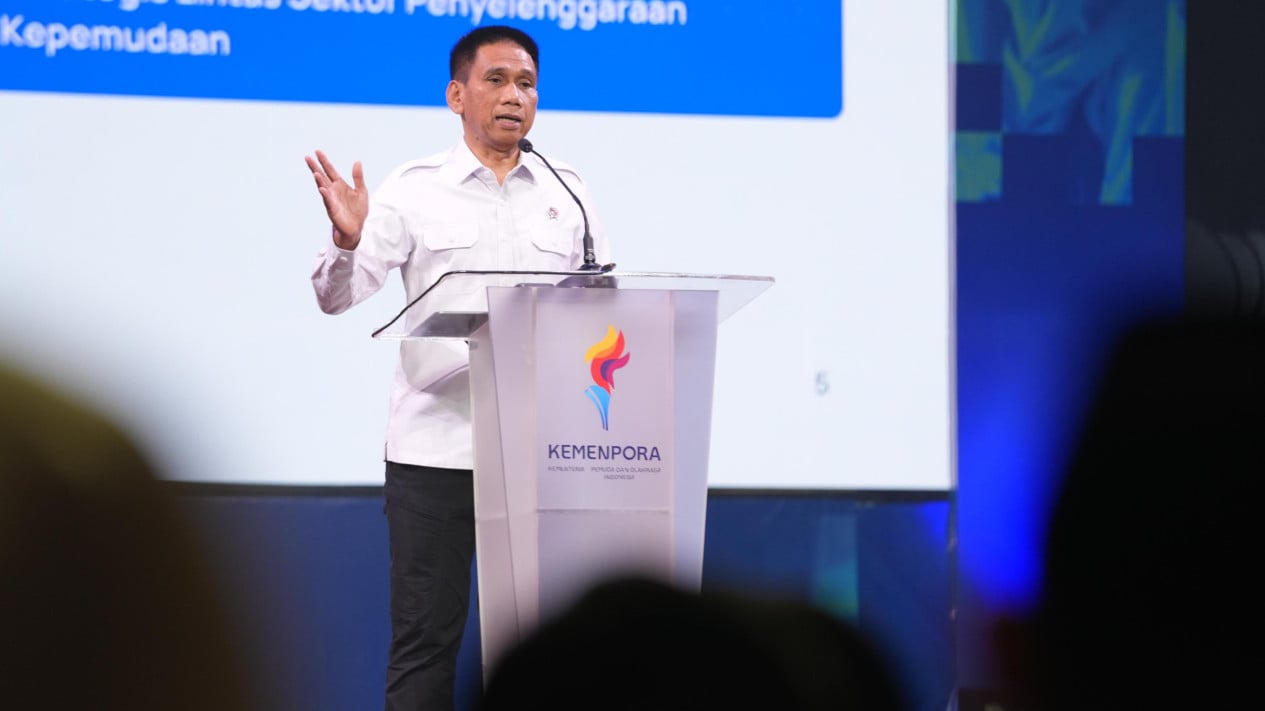
Deputy Home Affairs Minister Akhmad Wiyagus stressed that Indonesia must use its demographic dividend to prepare young people to become future leaders who are adaptive, innovative and able to solve problems in their communities. Such leadership is an important asset in achieving the vision of Golden Indonesia 2045.
Wiyagus made the remarks while delivering a speech at the Indonesia Youth Summit 2026, organised by the Ministry of Youth and Sports at the Jakarta Theatre in Taman Ismail Marzuki, Jakarta, on Friday (30 October 2026).
In his speech, Wiyagus invited participants to reflect on the history of Indonesia’s youth movement. He recalled that the National Awakening in 1908 and the Second Youth Congress in 1928 were driven in part by young people who were then around 18 to 28 years old. He said the participation of youth representatives from 38 provinces at the event reflected the spirit of unity and youth leadership seen at the Second Youth Congress.
He explained that today’s young people face challenges different from those of the independence struggle. Amid global uncertainty, a torrent of information and increasingly complex, non-linear problems, young people need integrity, resilience, adaptability and a spirit of collaboration. Wiyagus also emphasised the importance of maintaining a reading culture so that young people can understand information in depth and assess what they encounter.
Wiyagus said Millennials and Generation Z have an important role in shaping the country’s future. The demographic dividend must therefore be used to build young people’s leadership capacity, rather than remain merely a demographic potential.
“The demographic dividend must not simply pass us by; it must deliver a leadership dividend … leadership that is adaptive and innovative, and can also solve problems, at least in our respective communities,” he said.
Wiyagus added that the role of young people is explicitly set out in the fourth point of President Prabowo Subianto’s Asta Cita agenda, which emphasises strengthening human-resource development through education, health, and the empowerment of women, young people and people with disabilities. In line with this, youth affairs are a mandatory responsibility of regional governments, although not part of basic services. Regional governments should therefore include youth programmes in regional development planning documents and the strategic plans of regional government agencies, and allocate funding through their Regional Revenue and Expenditure Budgets (APBD).