
Deputy Home Affairs Minister Urges Strengthening of Regional Governments in Implementing Agrarian Reform
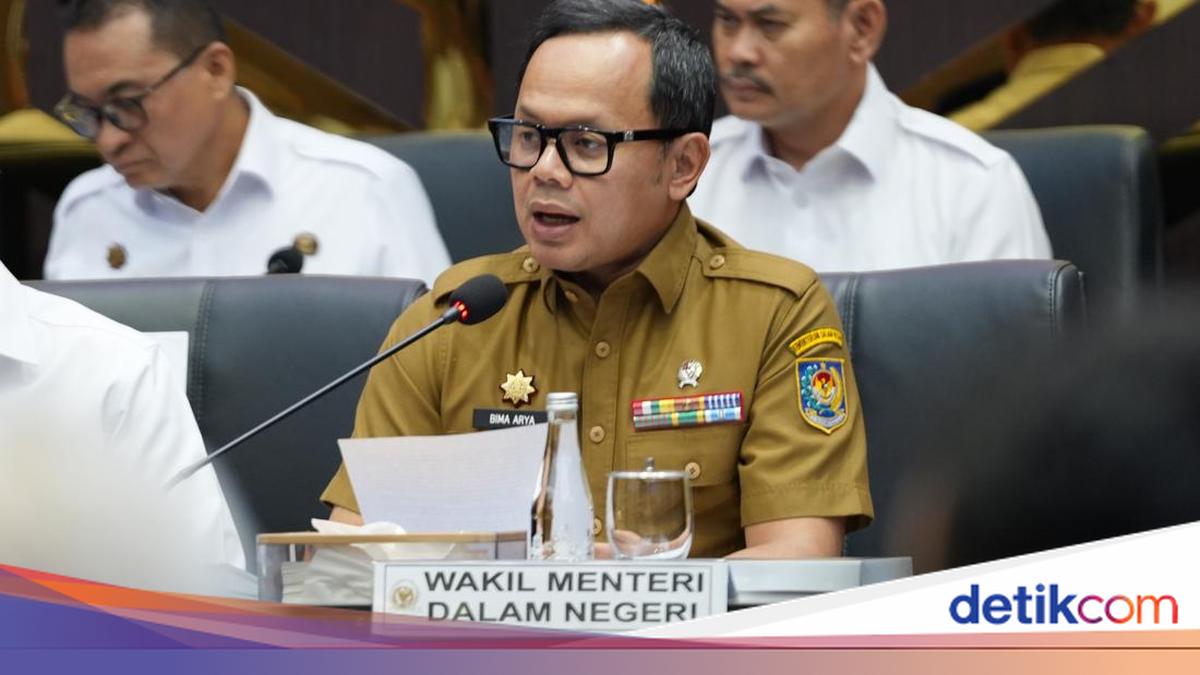
Deputy Minister of Home Affairs (Wamendagri), Bima Arya Sugiarto, is pushing for the strengthening of regional governments’ role in implementing agrarian reform. This role is to be carried out through the synchronisation of development planning, reinforcement of the Agrarian Reform Task Force (GTRA), financing support, and cross-ministerial/institutional coordination in resolving land issues.
“The Ministry of Home Affairs also issues the Regional Government Work Plan (RKPD) guidelines each year as guidance for all regional governments in carrying out their activities, including those related to agrarian reform,” Bima said in a written statement on Monday (7/9/2026).
He made the remarks during a working meeting to hear the views and input of relevant parties in the framework of drafting the Agrarian Reform Bill, held in the Legislative Body’s meeting room, Nusantara I Building, at the House of Representatives (DPR RI) in Jakarta on Monday (7/9/2026).
He explained that synchronisation of development planning is necessary so that central and regional government policies can run in harmony. To support this, the ministry provides technical guidance on development planning, including through the socialisation and monitoring of the acceleration of Regional Spatial Plans (RTRW) and Detailed Spatial Plans (RDTR) in the regions.
In addition, the role of regional heads is strengthened through the GTRA, which is chaired by the regional head with the Head of the National Land Agency (BPN) Regional Office serving as its day-to-day executor.
The GTRA is tasked with coordinating the provision of objects of agrarian reform and encouraging the resolution of agrarian conflicts in accordance with each region’s authority. The GTRA has now been established in 38 provinces and 311 regencies/cities.
He said that the limited fiscal capacity of regions needs to be considered in supporting empowerment programmes for communities receiving land certificates through agrarian reform. According to him, these limitations must be addressed through efficiency measures and financing support so that they do not become obstacles to programme implementation.
“We take the view that fiscal inequality between regions should not become an obstacle to agrarian reform activities. Therefore, we identify regions with low fiscal capacity so that they can not only pursue efficiency but also open up options for providing financial support,” he said.
He added that regional governments need to optimise various financing sources and not rely solely on Regional Own-Source Revenue (PAD). Among the schemes that can be utilised are creative financing, inter-regional cooperation, partnerships with business entities, and funding synergies with ministries and agencies.
In dealing with land issues, the ministry coordinates with relevant ministries and agencies to handle overlapping administrative boundaries, forest areas, Business Use Rights (HGU), and land data in accordance with their respective authorities. These efforts include, among others, updating data on villages and urban wards located within forest areas.
He also affirmed that regional governments must not unilaterally repurpose or take control of ulayat land where the existence of customary law communities and their ulayat rights has been recognised in accordance with laws and regulations. According to him, the protection of these rights must continue to be upheld in the implementation of investments and national strategic projects.
Meanwhile, the ministry is strengthening administrative order and village asset management through the Village Asset Management System (SIPADES). The system helps village governments carry out the inventorying, recording, bookkeeping, and monitoring of assets in a systematic manner, including information on land status and ownership. SIPADES is currently used by 21,074 villages, or around 28 per cent of the total 75,266 villages.
“We are ready to involve all the relevant components. The Ministry of Home Affairs will follow, support, and complement whatever is needed in the next stages of deliberation,” he concluded.
Source: jawawa.id (https://jawawa.id/newsitem/deputy-home-affairs-minister-urges-strengthening-of-regional-governments-in-implementing-agrarian-reform-1788796315)
Originally published by detikcom (https://news.detik.com/berita/d-8652975/wamendagri-dorong-penguatan-pemda-dalam-pelaksanaan-reforma-agraria), translated from Indonesian