
Deputy Home Affairs Minister Urges Renewable Energy to Expand Electricity Access in 3T Regions
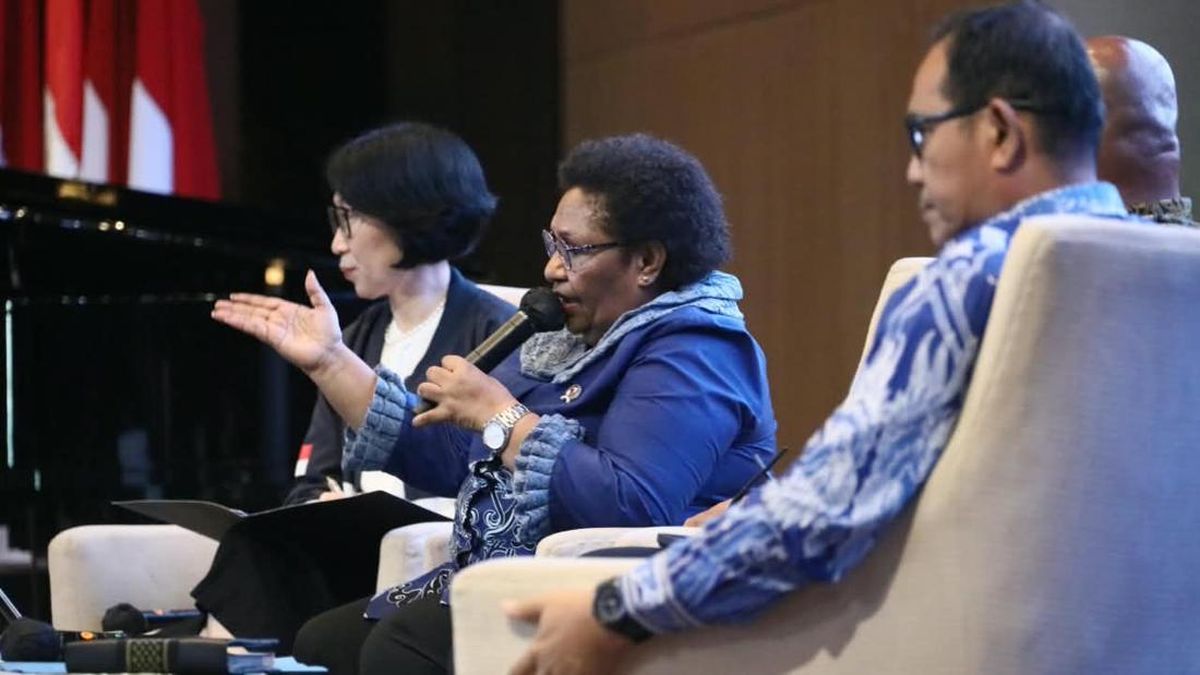
Deputy Home Affairs Minister Ribka Haluk has called for renewable energy based on local resources to be used to expand electricity access in underdeveloped, frontier and outermost (3T) regions.
Solar and hydropower resources are expected to help meet electricity needs in 3T communities. Difficult terrain, widely dispersed settlements and limited grid infrastructure make electricity provision in these areas costly.
Energy development should therefore be tailored to local conditions to overcome these challenges.
“Whether we like it or not, and whether we want to or not, the government must make a breakthrough in developing electricity in 3T regions,” Ribka said at the Energy Symposium, “National Energy Resilience Towards Sustainable Energy Self-Sufficiency”, at Grand Chapel, Pelita Harapan University, in Tangerang Regency, Banten, on Thursday (15 October).
Ribka said regulations were needed to make it easier to provide small-scale electricity supplies that are not connected to the main grid (off-grid). Such systems could give people in remote villages and border areas access to electricity from local energy sources.
She said regulatory support needed to be accompanied by effective coordination among ministries and agencies so that policies could be implemented locally.
Ribka specifically noted that regulations were still being drawn up on a sector-by-sector basis and were not well co-ordinated, making implementation difficult for regional governments.
“Perhaps we should review the regulations,” she said.
The Ministry of Home Affairs has a role in strengthening co-ordination between central and regional governments on energy planning, as well as facilitating the drafting of regional regulations that support investment in the sector.
Ribka also highlighted the importance of aligning the Electricity Supply Business Plan (RUPTL) with the National Medium-Term Development Plan (RPJMN), particularly to support development in 3T regions.
Alongside policy alignment, these efforts require funding. Ribka acknowledged that regional governments have differing fiscal capacities and that budget constraints affect their ability to build energy infrastructure.
She called for stronger partnerships involving regional governments, state-owned enterprises (BUMN) and regionally owned enterprises (BUMD).
Ribka also invited the Indonesian Christian Intellectuals Association (PIKI) to contribute through discussion forums and recommendations to the government. Such input, she said, could help shape plans for locally based renewable energy development and regulatory improvements to accelerate electricity provision in 3T regions.
“Cross-sectoral and inter-ministerial co-operation is very much needed as we develop and implement policies and programmes that serve the people,” she said.
Ribka stressed that electricity had become a basic necessity, including for people living in remote areas. Ensuring equal access to electricity is part of the government’s responsibility to extend the benefits of development to everyone and achieve social justice.
Source: jawawa.id (https://jawawa.id/newsitem/deputy-home-affairs-minister-urges-renewable-energy-to-expand-electricity-access-in-3t-regions-1792137095)
Originally published by CNN Indonesia (https://www.cnnindonesia.com/nasional/20261016134952-25-1416149/wamendagri-dorong-energi-terbarukan-buka-akses-listrik-di-daerah-3t), translated from Indonesian