
Deputy Home Affairs Minister Urges Regional Resilience Strengthening Amidst Global Challenges
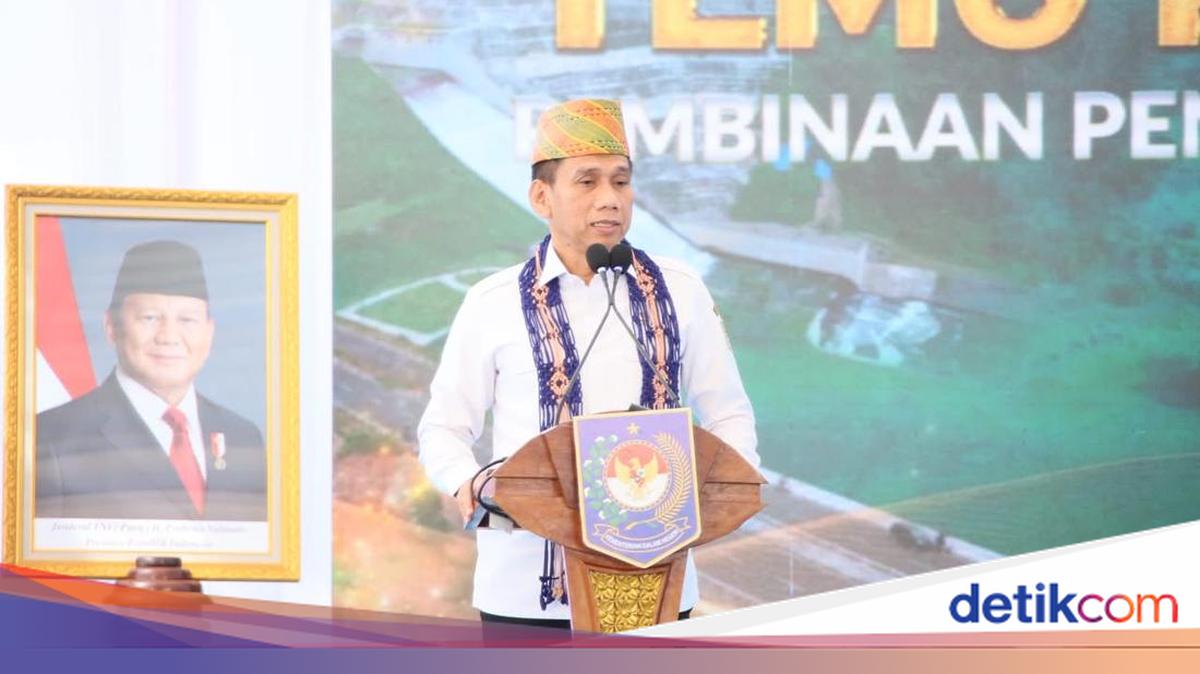
Deputy Minister of Home Affairs Akhmad Wiyagus has directed regional governments down to village administrations to strengthen regional resilience amidst global uncertainty. The approach involves implementing the Asta Cita agenda and village-based development. According to him, current geopolitical and global economic dynamics require close attention as they could potentially affect national resilience right down to the regional level. This was conveyed by Wiyagus while opening the 2026 National Workshop on Village Governance Development at the Konawe Regent’s Office in Southeast Sulawesi. ‘We certainly hope that all regional leaders, from the provincial and district levels down to the village level, can truly follow and understand whether this has implications for or contributes to national resilience, and then regional resilience from the provincial, district, to village levels,’ Wiyagus stated in a written release. The global condition, frequently marked by geopolitical conflict and economic competition between nations, demands that all levels of government strengthen their respective territorial resilience according to their own authority. This, of course, includes the village level, given its strategic position as the foundation of national development. Wiyagus affirmed that every national development agenda outlined in Asta Cita is closely linked to village governance. Therefore, the implementation of various priority government programmes must reach and provide tangible benefits to communities at the village level. ‘There is not a single Asta Cita agenda that is unrelated to village governance. Why? Because everything originates from the village. For this reason, I remind you once again, Asta Cita is not just to be memorised or merely understood, but it must truly be implementable so that the outcome is felt by our community at the village level,’ he asserted. According to Wiyagus, the success of village development is also determined by the regional government’s ability to optimise various national strategic programmes in accordance with each region’s potential. This step is deemed crucial not only for driving economic growth, strengthening food security, and creating jobs, but also for improving community welfare. At this forum, Wiyagus assessed the National Workshop as an important platform for strengthening the capacity of village apparatus while enhancing collaboration among village governments from various regions across Indonesia. ‘This is a highly strategic forum, not only for coordination, collaboration, and synergy, but also for sharing knowledge and capacity among each village administration throughout Indonesia. We should not be embarrassed to learn from a village government that has already succeeded, if indeed its potential is the same as that of a village administration in our own district,’ he said. Wiyagus also highlighted the importance of improving human resource quality, strengthening the integrity of the apparatus, and utilising information technology in supporting village development. According to him, such steps are necessary so that villages can address increasingly complex development challenges. Wiyagus affirmed the Ministry of Home Affairs’ commitment to continue facilitating regional governments in accelerating development, including bridging coordination with relevant ministries and institutions to support the implementation of national strategic programmes in the regions.