
Deputy Home Affairs Minister urges regional development to prioritise ecological justice
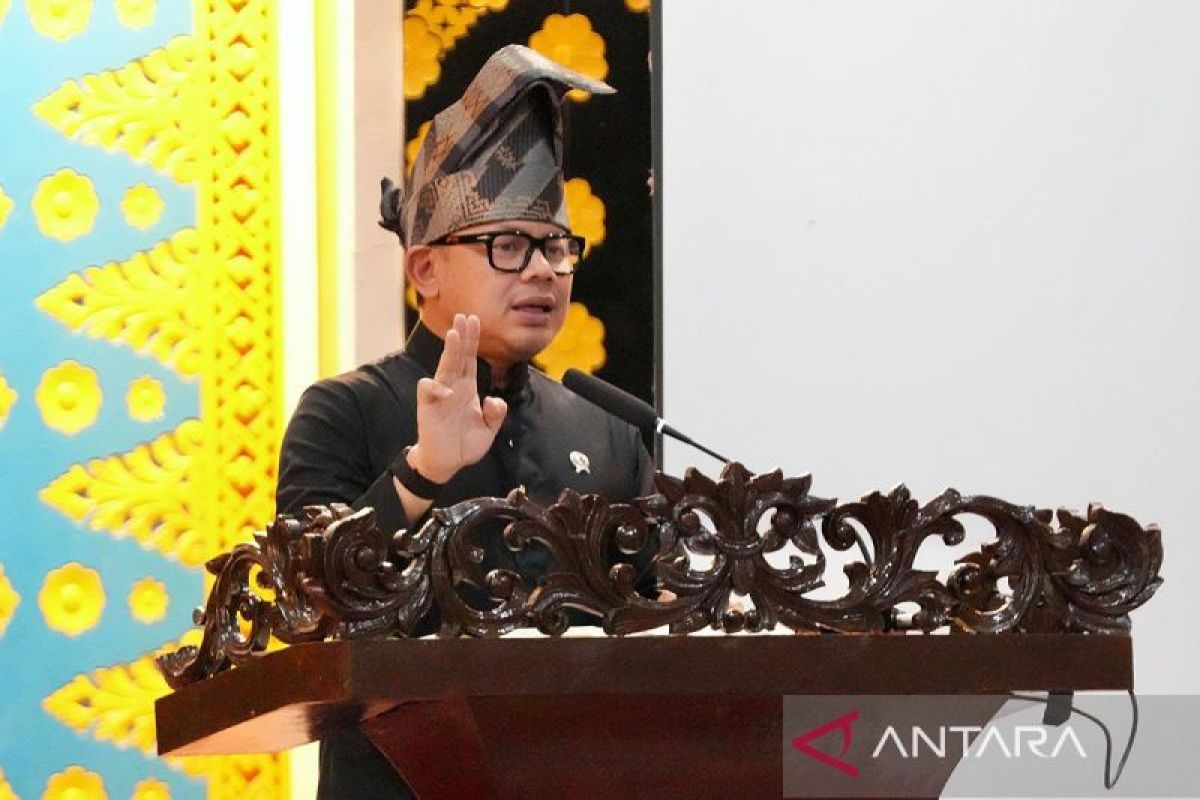
Deputy Home Affairs Minister Bima Arya Sugiarto has urged regional heads to change the development paradigm so that it is not solely oriented towards economic growth, but also takes into account social, cultural and ecological sustainability, as well as the benefits of development for future generations. This shift in perspective is considered important to prevent clashes between the interests of economic growth, indigenous communities and environmental conservation.
Bima stated that the challenge lies in ensuring every planning process involves meaningful participation and listening to indigenous leaders and long-standing ecological advocates. He said regional heads need a comprehensive outlook when formulating development policies. Policy should not focus only on popularity, meeting basic needs or regulation, but must also consider cultural heritage, natural wealth and customary law that has developed in the region. Therefore, public involvement is important in every decision related to the use of an area.
Bima encouraged the paradigm shift to be translated into concrete regional policies, including through accelerating the recognition of customary law communities via regional regulations. He noted that some regions already have regional regulations concerning indigenous communities but have not implemented them, while others do not yet have such regulations at all.
Beyond recognising customary law communities, Bima stressed the importance of integrating ecological balance principles into spatial planning. He said spatial planning must not be viewed merely as an administrative complement, but should serve as the foundation for the entire design of regional development.
Bima explained that the perspective on indigenous communities has continued to evolve. Previously seen largely as objects of development, they came to be regarded as groups needing protection. The view then shifted to positioning indigenous communities as rights holders, and now as the primary custodians or stewards of nature.
He said indigenous communities should not only be treated as objects but as subjects, and that the approach should move beyond regulation to collaboration and co-creation. The co-creation approach places communities as active participants in the development process, from designing, deliberating and implementing to jointly overseeing policy. Under this approach, indigenous communities are not merely accommodated but help determine the direction of development affecting their living spaces.
Bima also expressed appreciation for environmental activists who have contributed to protecting nature. He said the Indonesian Forum for the Environment (WALHI) and environmental activists can act as a bridge between indigenous communities, local wisdom and policymakers. He expressed hope that WALHI could serve as a bridge linking indigenous communities and local wisdom to relevant policymakers.
Bima affirmed that the Ministry of Home Affairs is ready to collaborate with regional governments, indigenous communities and environmental advocates to promote development that maintains balance while realising ecological justice.
Source: jawawa.id (https://jawawa.id/newsitem/deputy-home-affairs-minister-urges-regional-development-to-prioritise-ecological-justice-1787388819)
Originally published by Antara (Indonesian) (https://www.antaranews.com/berita/5706521/wamendagri-minta-pembangunan-daerah-perhatikan-keadilan-ekologis), translated from Indonesian