
Deputy Home Affairs Minister Urges Inclusive and Sustainable Development in Papua
A geocultural, multi-stakeholder and co-determinative approach is considered important to achieving peaceful, dignified and sustainable development in Papua.
Deputy Home Affairs Minister Ribka Haluk said development in Papua must take account of its social and cultural characteristics, geography and people’s needs so that policies are well targeted and deliver tangible benefits.
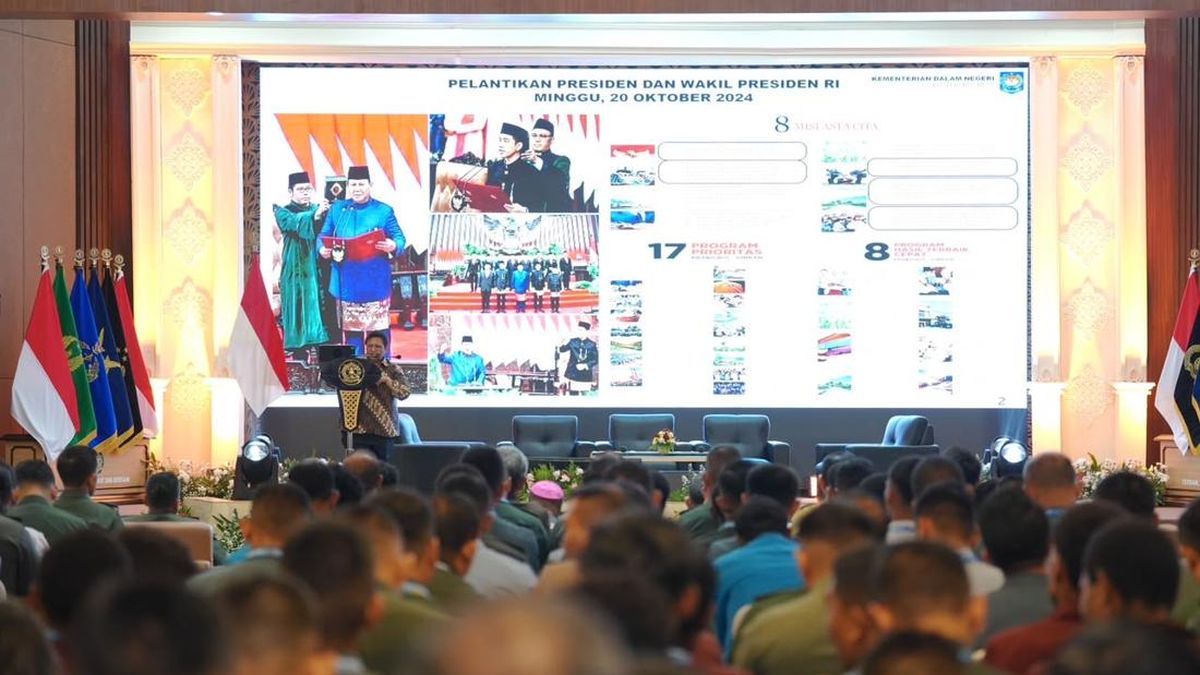
She made the remarks at a national seminar for participants in the 68th Regular Education programme at the Army Staff and Command School (Seskoad), entitled “Geocultural, Multi-Stakeholder and Co-Determinative Approaches to Achieving Peaceful, Dignified and Sustainable Development in Papua”, in Bandung, West Java, on Tuesday (3 November).
Ribka stressed that peace was the main hope of the people of Papua.
“Papuan people want peace,” she said.
A geocultural approach is important because Papua has a diverse range of ethnic groups, languages, customs and social structures, all of which need to be understood in the conduct of government.
Understanding the characteristics of local communities is therefore key to ensuring that policies and development programmes are accepted and respond to residents’ needs.
Papua’s geography also requires development models to be adapted to the characteristics of each area.
Ribka said mountainous, coastal, island, urban and border areas faced different challenges, particularly in transport, connectivity, logistics distribution and access to public services. Development policies therefore cannot be uniform without taking account of local conditions.
A multi-stakeholder approach, meanwhile, should involve all relevant parties, from central and regional governments to the Indonesian National Armed Forces and National Police, customary leaders, academics, businesses and communities. Each party should play a complementary role and contribute to Papua’s development.
“If all of this happens, everyone will feel that they have been included, and that each sector or stakeholder has a role and a contribution,” Ribka said.
She also highlighted the importance of maintaining consistency between development planning and implementation. Community aspirations gathered during the planning process must remain the point of reference when programmes are carried out.
This would ensure that policies do not change course and that their benefits are genuinely felt by the public.
Ribka further said strengthening development in Papua required effective coordination between the central government and regional administrations, including in implementing affirmative policies and administering special autonomy.
Co-operation among stakeholders is needed to align development programmes and prevent them from being hindered by sectoral interests.
She said the authority granted to regional governments needed to be used to its full potential through stronger co-ordination and collaboration. In her view, synergy was an important foundation for driving change and accelerating development in Papua.
“How do we provide a vision to the regions? The authority is already there; how it is used is up to the regional governments. This is the first point of departure for changing development,” she concluded.
Ribka expressed hope that geocultural, multi-stakeholder and co-determinative approaches would serve as a shared foundation for strengthening development in Papua.
With policies tailored to local conditions and collaboration among all stakeholders, development in Papua is expected to help create a peaceful, dignified and prosperous society.
Source: jawawa.id (https://jawawa.id/newsitem/deputy-home-affairs-minister-urges-inclusive-and-sustainable-development-in-papua-1793706899)
Originally published by CNN Indonesia (https://www.cnnindonesia.com/nasional/20261103174551-25-1422854/wamendagri-dorong-pembangunan-papua-yang-inklusif-dan-berkelanjutan), translated from Indonesian