
Deputy Home Affairs Minister Takes Direct Charge of Peace Process in Wamena Tribal Conflict
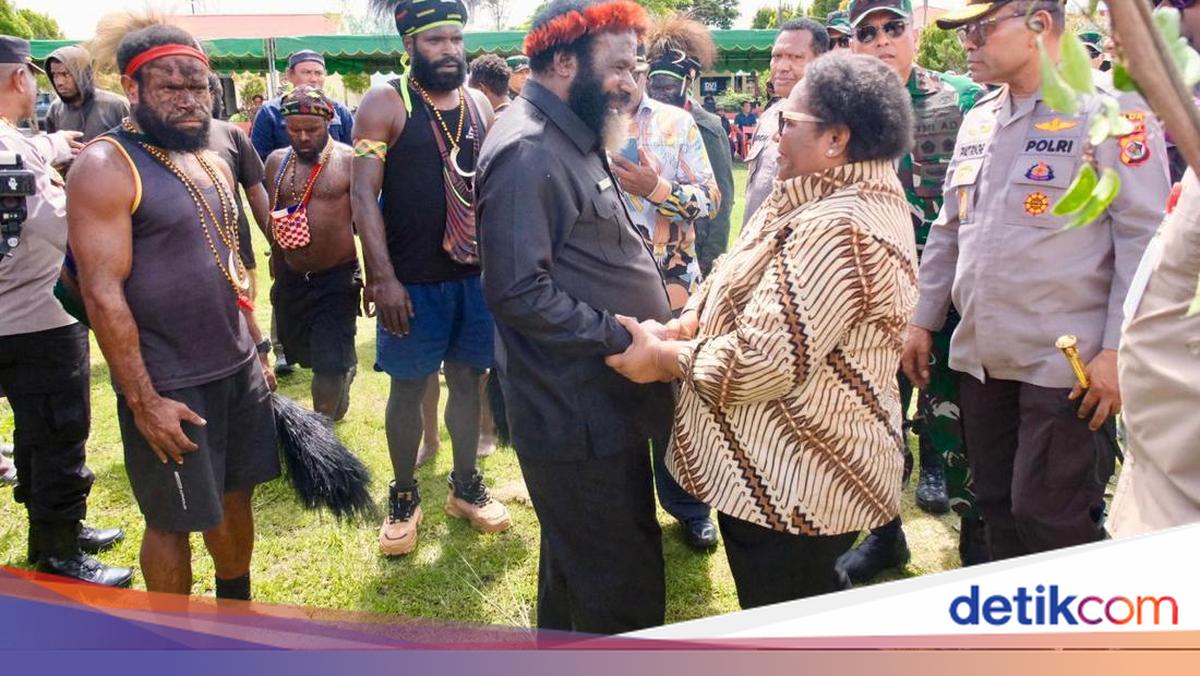
The peace process was marked by the adat ritual of patah panah (arrow breaking) as a symbol of the end of the conflict between the two sides. In addition, a peace declaration was signed in the presence of the central government, regional governments, and the Regional Leadership Coordination Forum (Forkopimda).
In her remarks, Ribka expressed appreciation to all communities and adat leaders who opened space for peace with humility and a generous spirit. ‘I cannot say much. I speak on behalf of the central government present in this city. From the outset, we have followed all the steps and everything undertaken by the regional government as well as by the community,’ she said in a press statement, on Saturday (23 May 2026).
She also conveyed a message from the Minister of Home Affairs, representing the President of the Republic of Indonesia, of appreciation and thanks to the people of Papua Pegunungan who have chosen the path of peace through adat-based approaches. As a Papuan woman of adat, Ribka said she was moved to see the conflict being resolved through adat by the leaders and communities. ‘I am crying, but I am happy because the elders could resolve this through adat with a big heart,’ she said.
Ribka asserted that security is a prerequisite for regional development. ‘If security is not good, the government cannot do anything. The region must be secure first before we can build,’ she said.
She also urged communities to prioritise resolving issues through family networks, adat leaders, religious figures, and village governments before resorting to violence. ‘Do not resolve with violence. It’s enough,’ she added.
Separately, the Governor of Papua Pegunungan, John Tabo, described the adat peace as an important step to halt the cycle of inter-tribal conflict that has repeatedly plagued the Papua Pegunungan region. He explained that the patah panah tradition is an important part of resolving adat wars inherited from ancestors. ‘Today we carried out a symbolic act of peace away from adat warfare by breaking weapons, namely arrows,’ he said.
He continued that adat-based conflict resolution must be carried out in full to prevent triggering new conflicts later. Therefore, the Papua Pegunungan Provincial Government will prepare regulations through Perdasi and Perdasus regarding the mechanism for resolving adat conflicts. ‘We will embed this in Perdasi and Perdasus so that such conflict handling has a functioning adat justice system,’ he said.
John Tabo also reminded local government not to resolve adat conflicts using public funds anymore. ‘Such issues must not be aided by paying the people with government funds. No. Stop. Resolve it through adat,’ he asserted.
On the occasion, he also urged all communities to maintain unity and protect the younger generation of Papua Pegunungan so that they remain rooted in the culture and adat values inherited from their ancestors.
The regional and central governments also pledged rehabilitation and reconciliation steps post-conflict, including addressing homes of residents affected by the tribal warfare.
The peace ceremony was attended by regents, Forkopimda officials at provincial and regency levels, the TNI-Polri, church leaders, adat leaders, and communities from across Papua Pegunungan.
Source: jawawa.id (https://jawawa.id/newsitem/deputy-home-affairs-minister-takes-direct-charge-of-peace-process-in-wamena-tribal-conflict-1779531570)
Originally published by detikcom (https://news.detik.com/berita/d-8501447/wamendagri-turun-langsung-kawal-perdamaian-konflik-suku-di-wamena), translated from Indonesian