
Deputy Home Affairs Minister stresses regional governments must not delay special autonomy fund disbursement
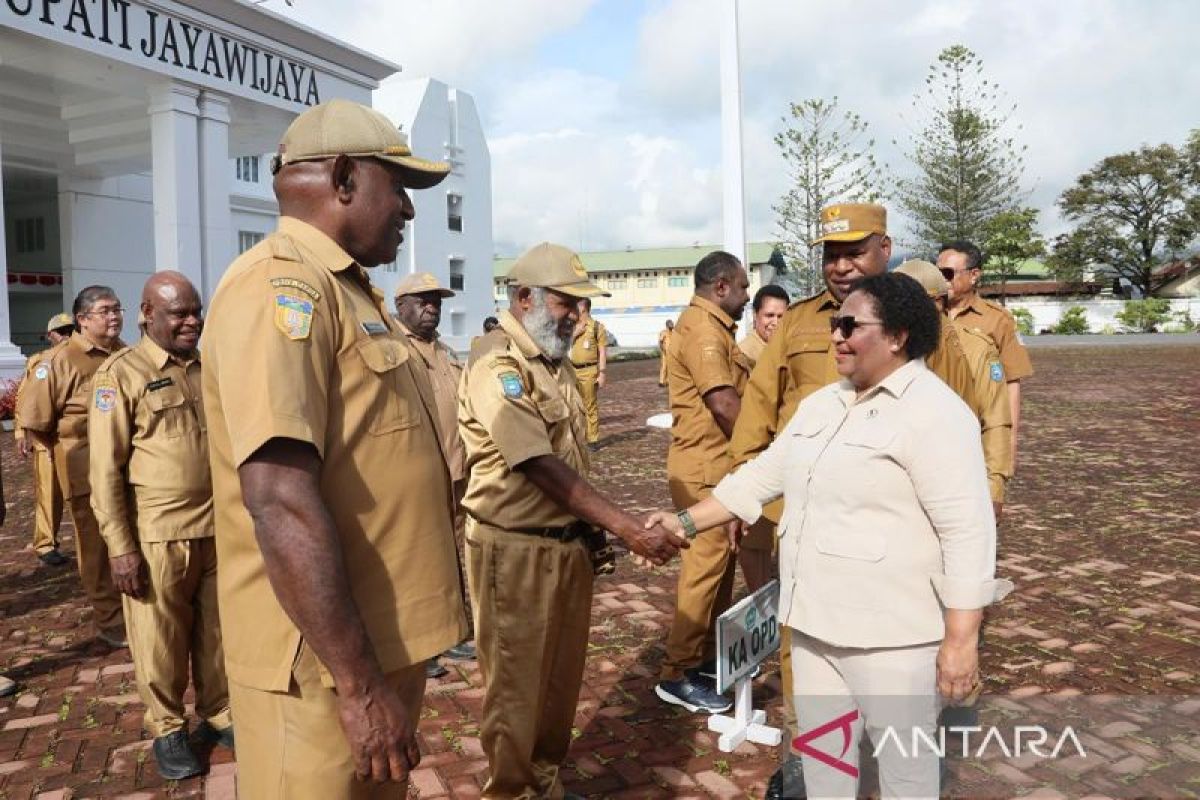
Deputy Home Affairs Minister Ribka Haluk has called on regional governments across Papua to immediately accelerate the disbursement of the second tranche of special autonomy (otsus) funds for the 2026 fiscal year.
The second tranche of otsus funds, amounting to 45 per cent, should have been disbursed by June at the latest, but as of August a number of regions had still not completed the process.
Speaking in Jakarta on Friday, Ribka stressed that such delays could no longer be justified by citing regulatory issues or limited human resources.
The disbursement mechanism and management stages for otsus funds have been established, so regional governments need to strengthen their commitment, consistency, and oversight functions to accelerate implementation.
“If we want to use regulatory reasons, if we want to use human resources reasons, those are classic excuses,” Ribka said in her statement.
Ribka made the remarks at the Evaluation Meeting on the Disbursement of the Second Tranche of Special Autonomy Funds for the 2026 Fiscal Year in the Papua Region, held online from the Ministry of Home Affairs office in Jakarta on Thursday (27/8).
According to data from the Directorate General of Fiscal Balance as of 24 August 2026, 19 regions in Papua had received the second tranche of otsus funds.
However, not all of those regions had received the full disbursement of otsus funds and additional infrastructure funds (DTI). Regional governments therefore need to complete all disbursement stages in accordance with the provisions.
Delays in budget realisation could affect the continuity of public services.
“If we do not realise this, what about our younger siblings studying abroad? What about education issues in those regions, what about health issues, what about hospitals, what about the basic services provided by regional governments?” she said.
Ribka therefore asked governors, regional secretaries, and technical regional apparatus to strengthen coordination, control, and oversight of otsus fund implementation.
She added that the problem of delays should also serve as material for evaluating the performance and capacity of regional government officials.
“Other regional governments are the same as us, and we are always in the spotlight. So, actually we need to improve ourselves and evaluate the performance of our apparatus,” Ribka said.
Moreover, special autonomy has been in place for 25 years. Ribka added that this period should have been accompanied by stronger regional government capacity to manage governance and budgets independently.
As a concrete step, Ribka confirmed that evaluation of otsus funds would be carried out more intensively by applying the ‘5T’ principles: timely, well-targeted, correct amount, correct recipient, and correct usage.
This measure is intended to enable faster monitoring of the progress of otsus fund disbursement and realisation, and to ensure that any obstacles are resolved promptly before they affect subsequent stages.
Through these efforts, every rupiah of otsus funds is expected to be realised appropriately and provide optimal benefits for the community.