
Deputy Home Affairs Minister Says Active Local Government Role Is Key to Faster Economic Growth
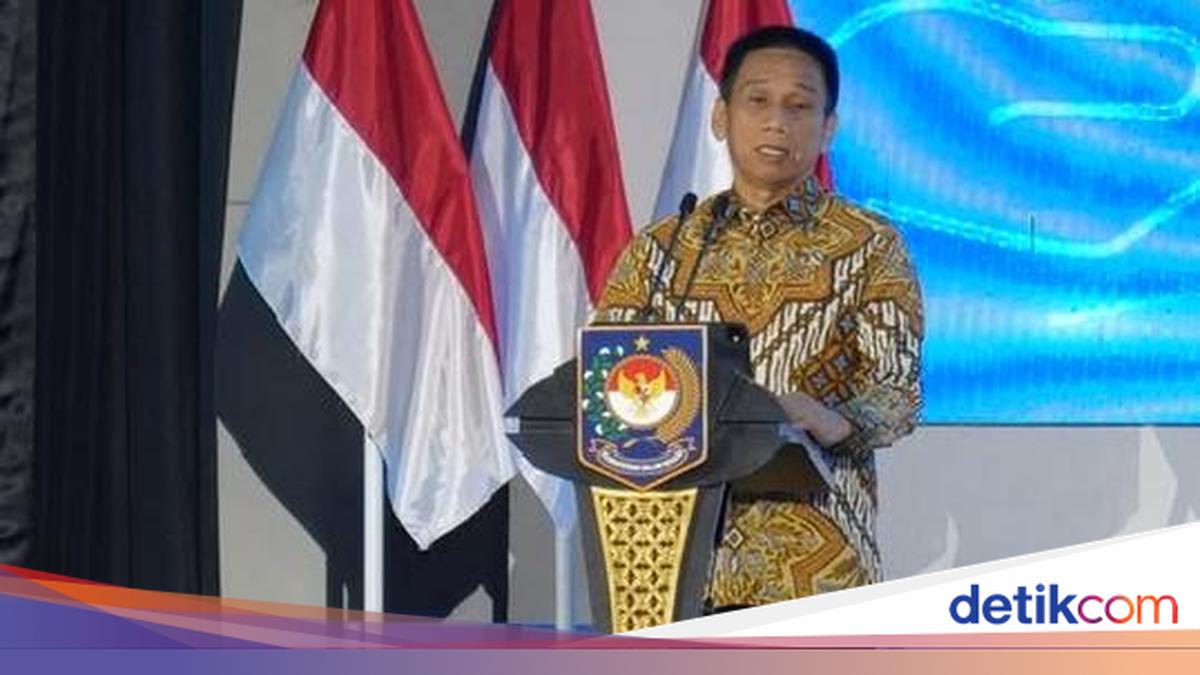
Deputy Home Affairs Minister Akhmad Wiyagus said the active role of local governments is one of the keys to accelerating national economic growth. National economic performance is the aggregate of results across all regions, he said, making cooperation between central and local government essential to maximising regional economic potential.
“National [economic growth] depends on local governments too. So we must continue to collaborate. Why? Because it is the aggregate performance of all local governments,” Wiyagus said in a written statement on Wednesday (25 November 2026).
He made the remarks at the 2026 Regional Economic Acceleration Forum for Sulawesi, held at the Four Points by Sheraton hotel in Manado, North Sulawesi, on Wednesday.
According to Wiyagus, regional leaders have the scope and authority to develop local potential through innovation, stronger resources and policies focused on public welfare.
This role is in line with the Constitution, particularly Articles 18 and 33 of the 1945 Constitution of the Republic of Indonesia, which provide the basis for regional autonomy and a national economy founded on the principles of economic democracy for the people’s prosperity.
He added that regional leaders also have a strategic role in translating national priority programmes, including President Prabowo Subianto’s Asta Cita. These include strengthening food and energy security, downstreaming natural resources, creating jobs and developing villages.
“I need to say this so regional leaders and all of you understand that your work makes a very significant contribution,” he said.
Wiyagus also stressed the importance of maintaining regional economic stability, particularly by controlling inflation. Although national inflation stood at 3.23 per cent in October 2026, several areas in Sulawesi still required attention because their rates were above the national target range.
He urged regional leaders to strengthen coordination through Regional Inflation Control Teams (TPID). Measures should also include regular monitoring of food prices and supplies, as well as closer interregional trade cooperation.
“Food inflation generally comes down to two things: insufficient supply and disrupted distribution,” he said.
In addition to controlling inflation, Wiyagus underlined the need to accelerate the execution of regional budgets (APBD). Timely and well-targeted government spending can increase the circulation of money in the community, sustain purchasing power and stimulate private-sector activity, he said.
Data compiled by the Ministry of Home Affairs’ Directorate General of Regional Financial Development as of 13 November 2026 showed that average revenue realisation across provinces, regencies and cities nationwide had reached 80.95 per cent, while spending realisation stood at 67.65 per cent.
He therefore asked regional leaders to review local government departments with low budget absorption to prevent programme implementation from being held up.
“Following the Minister’s message: if revenue is already high but spending is slow, retain the heads of the Regional Financial and Asset Management Agency and the Regional Development Planning Agency, but technically evaluate the heads of the regional departments. Why? Because they are holding up programme execution,” he concluded.
Also attending the forum were Deputy Head of Statistics Indonesia Sonny Harry Budiutomo Harmadi; Ministry of National Development Planning (Bappenas) Director for Government, Regional Finance and Transfers to Regions Anang Budi Gunawan; North Sulawesi Governor Yulius Selvanus Komaling; members of the North Sulawesi Regional Leadership Coordination Forum; and other relevant parties.
Source: jawawa.id (https://jawawa.id/newsitem/deputy-home-affairs-minister-says-active-local-government-role-is-key-to-faster-economic-growth-1795600492)
Originally published by detikcom (https://news.detik.com/berita/d-8769510/wamendagri-sebut-peran-aktif-pemda-jadi-kunci-percepat-pertumbuhan-ekonomi), translated from Indonesian