
Deputy Home Affairs Minister identifies five challenges for regional heads
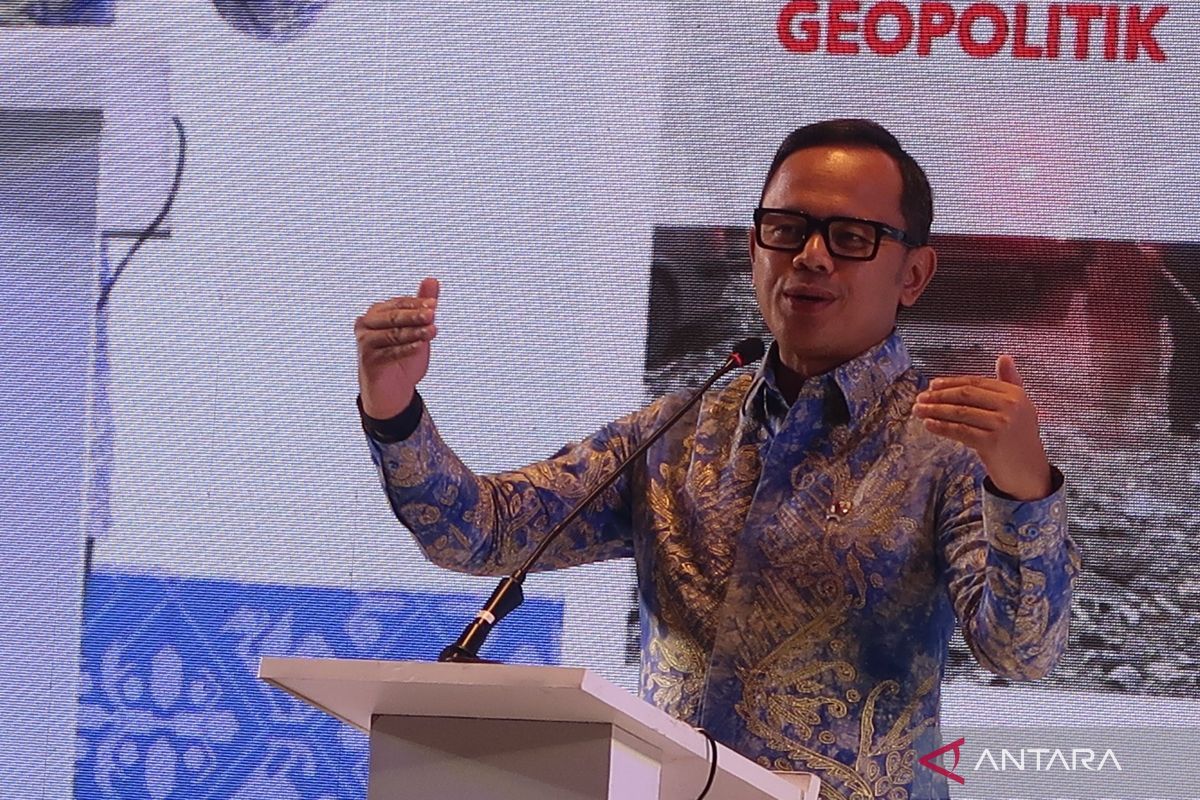
West Lombok, NTB (ANTARA) - Deputy Home Affairs Minister (Wamendagri) Bima Arya Sugiarto has identified five main challenges currently being faced by regional heads compared with previous periods.
“There are leaders who feel they are living in more difficult times than their predecessors, but in reality, every era faces the same challenges,” he said at the national congress of the Association of All Indonesian Provincial Governments (APPSI) in West Lombok, West Nusa Tenggara (NTB), on Thursday.
Bima outlined the five challenges, ranging from the impact of global geopolitics, the demands of implementing national priority programmes, fulfilling political promises, social media pressure, to the risk of becoming entangled in legal problems.
According to him, current global geopolitical dynamics are also influencing the conduct of regional governance throughout Indonesia.
Various developments in the conflict in the Strait of Hormuz region continue to be a concern for regional heads because of their potential impact on economic conditions, energy, and inflation.
“Never in history have regional heads paid as much attention to the Strait of Hormuz as they do now, following the news coverage live. Sometimes they are happy because it seems to be cooling down, then suddenly it flares up again like a couple in an on-off relationship,” Bima said.
The second challenge is the obligation of regional heads to safeguard various central government priority policies so that they run effectively in the regions.
This situation has never arisen before, as regional heads must ensure that various national programmes, such as the Red-and-White Village Cooperatives, Free Nutritious Meals, and the Red-and-White Fishing Villages, are properly implemented.
Yet at the same time, regional heads are also still required to fulfil the political promises made to their constituents during their election campaigns.
Bima said this situation constitutes the third challenge, which must be balanced with the implementation of the national agenda.
The fourth challenge is the media algorithms that constantly watch and greatly influence public perception of regional heads’ performance.
Media algorithms often make an event go viral in unexpected ways, and can even create negative perceptions despite the absence of any substantive wrongdoing.
“Never mind making a mistake these days - even being right can be wrong in the eyes of media algorithms,” Bima said.
The fifth challenge currently facing regional heads is the potential for legal problems that could ensnare them at any time.
Bima reminded regional heads to run governance properly and carefully in order to avoid falling into legal traps.
Law enforcement activities continue to be carried out by Indonesia’s anti-corruption bodies, namely the Corruption Eradication Commission (KPK), the National Police Criminal Investigation Department (Bareskrim Polri), and the Attorney General’s Office.
“Navigating these five challenges today is by no means easy, and we truly feel the inner concerns of regional heads. That is why regional heads must gather frequently and share their experiences,” he said.