
Deputy Home Affairs Minister Highlights Importance of Renewable Energy in 3T Regions
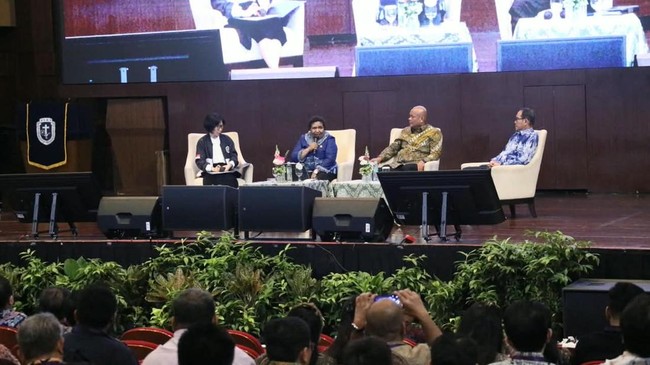
Jakarta, CNBC Indonesia – Deputy Home Affairs Minister Ribka Haluk has called for the use of renewable energy based on local potential to expand electricity access in disadvantaged, frontier and outermost (3T) regions. Solar and hydropower sources are expected to help meet the electricity needs of communities in these areas.
Ribka explained that difficult terrain, long distances between settlements and limited grid infrastructure make electricity provision in 3T regions costly. Energy development therefore needs to be tailored to the characteristics of each area to overcome these challenges.
Speaking under the theme “National Energy Resilience Towards Sustainable Energy Self-Sufficiency” on Thursday (15 October 2026), Ribka said the government was continuing to pursue new approaches to developing electricity infrastructure in 3T regions.
“Whether we like it or not, whether we want to or not, the government really must now take new steps to develop electricity infrastructure in these 3T regions,” Ribka said.
To support these efforts, Ribka stressed the need for regulations that make it easier to provide small-scale electricity without connecting to the main grid (off-grid). Such systems would allow people in remote villages and border areas to obtain electricity from local energy sources.
She said regulatory support must be accompanied by effective coordination between ministries and institutions so policies can be implemented in the regions. She pointed to rulemaking that remains sectoral and poorly coordinated, making implementation difficult for local governments.
“Perhaps we could review the regulations,” she said.
Ribka said the Ministry of Home Affairs had a role in strengthening coordination between central and local governments on energy planning, and in facilitating the development of regional regulations that support investment in the sector. She also highlighted the importance of aligning the Electricity Supply Business Plan (RUPTL) with the National Medium-Term Development Plan (RPJMN), particularly to support development in 3T regions.
In addition to policy alignment, these efforts require funding. Ribka acknowledged that local governments have differing fiscal capacities, while budget constraints affect their ability to build energy infrastructure. She therefore called for stronger partnerships involving local governments, state-owned enterprises (SOEs) and regionally owned enterprises (BUMDs).
Ribka also invited the Indonesian Christian Intellectuals Association (PIKI) to contribute through discussion forums and recommendations to the government. This input is expected to help shape measures to develop renewable energy based on local potential and improve regulations to speed up electricity provision in 3T regions.
“Cross-sectoral and inter-ministerial cooperation is very much needed to develop and implement policy programmes that benefit the people,” Ribka concluded.
Ribka stressed that electricity has become a basic need, including for people living in remote areas. Ensuring equal access to electricity is therefore part of the government’s responsibility to make sure development benefits reach all communities and advance social justice.
Source: jawawa.id (https://jawawa.id/newsitem/deputy-home-affairs-minister-highlights-importance-of-renewable-energy-in-3t-regions-1792137054)
Originally published by CNBC Indonesia (https://www.cnbcindonesia.com/news/20261016135949-4-776875/wamendagri-ungkap-pentinya-pemanfaatan-energi-terbarukan-di-daerah-3t), translated from Indonesian