
Deputy Home Affairs Minister Highlights Delays in Special Autonomy Fund Disbursement in Papua
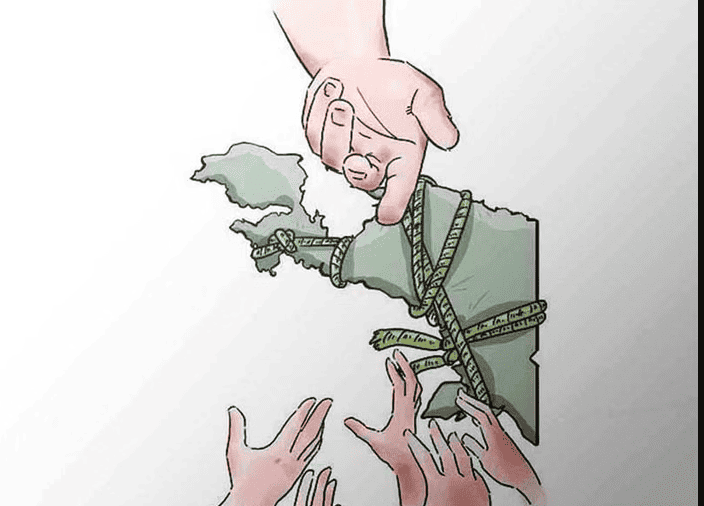
Deputy Home Affairs Minister Ribka Haluk has called on regional governments across Papua to immediately accelerate the disbursement of the second tranche of special autonomy (otsus) funds for the 2026 fiscal year. The second tranche, amounting to 45 per cent of the total, should have been distributed by June at the latest, but as of August several regions have yet to complete the process.
Speaking in Jakarta on Friday (28/8), Haluk stressed that such delays cannot continue to be justified by regulatory or human resource constraints. She said the disbursement mechanism and management stages for otsus funds have been established, and regional governments need to strengthen commitment, consistency, and oversight functions to expedite implementation.
“If we want to use regulation as an excuse, if we want to use human resources as an excuse, those are classic excuses,” Haluk said in her statement.
Haluk made the remarks during an online evaluation meeting on the disbursement of the second tranche of 2026 special autonomy funds in the Papua region, held from the Ministry of Home Affairs office in Jakarta on Thursday (27/8).
According to data from the Directorate General of Fiscal Balance as of 24 August 2026, 19 regions in Papua have received the second tranche of otsus funds. However, not all of these regions have received the full disbursement of otsus funds and additional infrastructure funds (DTI). Regional governments therefore need to complete all disbursement stages in accordance with regulations.
Haluk said the acceleration is important because otsus funds are allocated for various community needs, including education, health, hospitals, and other basic services. Delays in budget realisation could affect the continuity of these services.
“If we do not realise this again, what about our brothers and sisters studying abroad? What about education issues in the region, what about health issues, what about hospitals, what about the basic services provided by regional governments?” she said.
Haluk therefore asked governors, regional secretaries, and technical regional officials to strengthen coordination, control, and oversight of otsus fund implementation. She said the delay issue should also serve as an evaluation of the performance and capacity of regional government apparatus.
“Other regional governments are the same as us, and we are always in the spotlight. So, actually we need to improve and evaluate the performance of our apparatus,” Haluk said.
Moreover, special autonomy implementation has been running for 25 years. Haluk added that this period should be accompanied by stronger regional government capacity to manage governance and budgets independently.
As a concrete step, Haluk confirmed that evaluation of otsus funds will be carried out more intensively by applying the 5T principle: timely, targeted, correct amount, correct recipient, and correct use.
This measure is intended to enable faster monitoring of otsus fund disbursement and realisation, and to resolve obstacles before they affect subsequent stages. Through these efforts, every rupiah of otsus funds is expected to be realised appropriately and provide optimal benefits to the community.
Source: jawawa.id (https://jawawa.id/newsitem/deputy-home-affairs-minister-highlights-delays-in-special-autonomy-fund-disbursement-in-papua-1787914267)
Originally published by Media Indonesia (https://mediaindonesia.com/politik-dan-hukum/927104/wamendagri-soroti-keterlambatan-penyaluran-dana-otsus-di-tanah-papua), translated from Indonesian