
Deputy Home Affairs Minister Bima Reveals Seven Roles of Regional Governments in Accelerating the Energy Transition
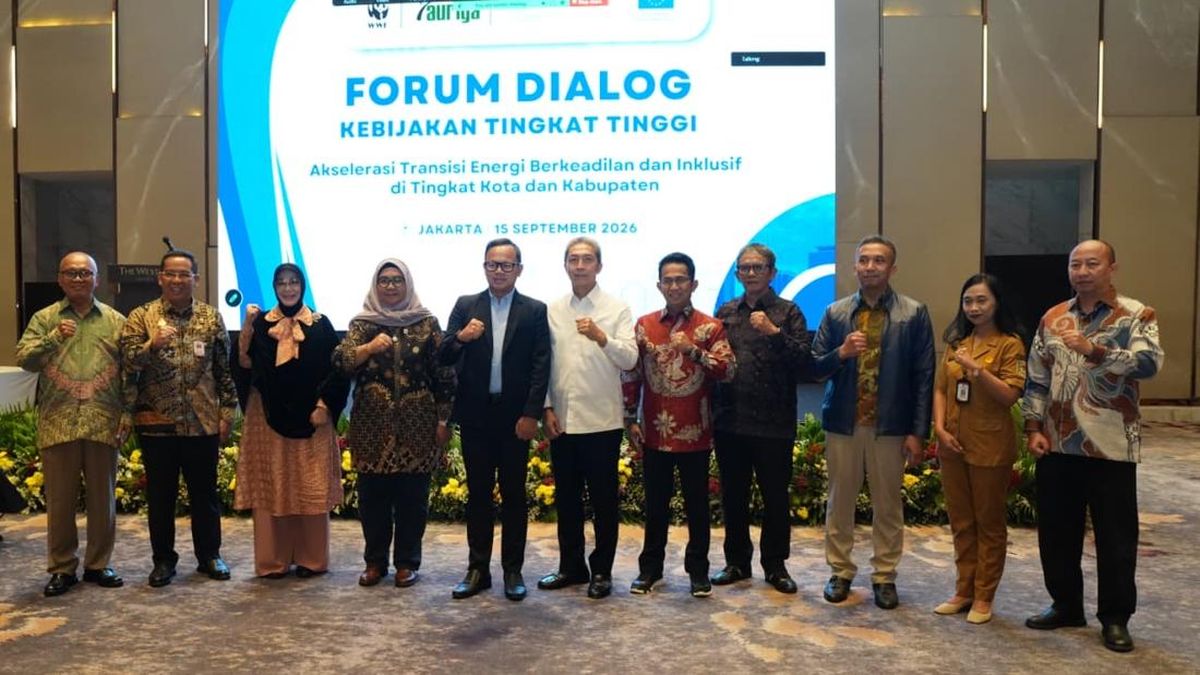
Deputy Minister of Home Affairs (Wamendagri) Bima Arya Sugiarto has stated that regional governments play a strategic role as the key to accelerating the energy transition.
He said the vision and mission related to the energy transition need to be translated by regional governments into concrete and measurable actions, with clear targets and indicators.
Bima delivered this message during his keynote speech at the High-Level Policy Dialogue Forum themed “Accelerating a Just and Inclusive Energy Transition at the City and Regency Level” at The Westin Jakarta on Tuesday (15/9).
“When it comes to the energy transition, the key truly lies with regional governments. Regional governments hold the territory, they also have the budget, they have the programme designs, and our Nationally Determined Contribution targets are genuinely determined and shaped by colleagues in regional government,” Bima Arya said.
Bima detailed seven roles for regional governments in strengthening energy resilience and reducing emissions through a just energy transition.
First, regional governments need a clear baseline as the foundation for policy-making. Therefore, compiling an accurate regional emissions inventory is essential to understand the starting conditions of each region.
Second, the results of that inventory can serve as the contribution of regional heads to data provision at the national level. Accurate regional data is needed to strengthen the picture of national emissions conditions.
Third, regional governments have a responsibility to draw up the Regional General Energy Plan (RUED), as mandated by law. The preparation of the RUED is needed so that energy policy in the regions can run in a synchronised and harmonious manner.
Fourth, regional governments need to move towards concrete action by controlling sectors that contribute to emissions, such as waste, while also promoting energy efficiency and low-emission public transport.
“So once the data and baseline are in place, we will know who the main contributors are. In big cities, for example, the contributors may be in transport, or in some areas it may be shared minivans, or in some areas it is industry in industrial zones. So we know which areas can be prioritised for action,” Bima explained.
Fifth, regional governments need to carry out adaptation based on local conditions, one example being the Climate Village Programme (ProKlim), to strengthen community resilience against the impacts of climate change.
To illustrate the importance of this step, Bima cited the practice of neighbourhood unit head (RT) Taufiq Supriadi Yusuf in Malaka Jaya, Duren Sawit, Jakarta.
According to Bima, the various initiatives undertaken by Taufiq have gone beyond his duties as an RT head, ranging from greening efforts and building tiered fish ponds, to composting and maggot processing, through to installing solar power generators.
“He manages 40 houses with great dedication, and now everyone comes to see him, and he has been invited to China to share his experience,” he said.
Sixth, regional governments need to open access to climate funding through partnerships with financing institutions in order to secure alternative sources of financing beyond the Regional Revenue and Expenditure Budget (APBD).
Seventh, regional governments need to promote green investment by attracting investment into small and medium-scale clean energy projects in their regions.
Bima then reiterated the importance of translating energy transition commitments in the regions into actions that can be measured and evaluated.
“We hope that regional heads will translate these commitments through measurable actions. There must be targets, there must be indicators,” Bima Arya concluded.
Source: jawawa.id (https://jawawa.id/newsitem/deputy-home-affairs-minister-bima-reveals-seven-roles-of-regional-governments-in-accelerating-the-energy-1789462488)
Originally published by CNN Indonesia (https://www.cnnindonesia.com/nasional/20260915142135-25-1404187/wamendagri-bima-ungkap-7-peran-pemda-dalam-percepatan-transisi-energi), translated from Indonesian