
Deputy Home Affairs Minister Bima Pushes for Strengthened Role of Regional Governments in Agrarian Reform
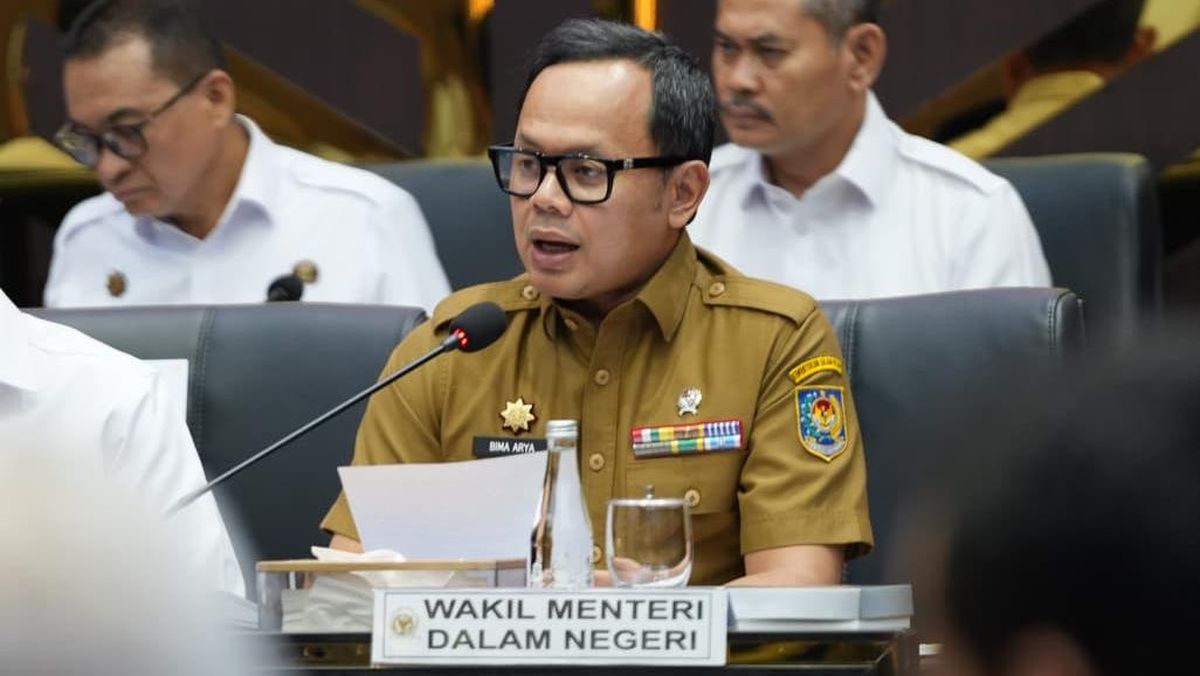
Deputy Minister of Home Affairs Bima Arya Sugiarto is pushing for a stronger role for regional governments in the implementation of agrarian reform.
That role is to be carried out through the synchronisation of development planning, strengthening of the Agrarian Reform Task Force (GTRA), financing support, and coordination across ministries and agencies in resolving land-related issues.
Bima Arya conveyed this push at a Working Meeting to Hear the Views and Input of Relevant Parties in the Framework of Drafting the Bill on Agrarian Reform, held in the Legislative Body’s meeting room at Building Nusantara I of the Indonesian House of Representatives (DPR RI) in Jakarta.
“The Ministry of Home Affairs also issues guidelines for the Regional Government Work Plan (RKPD) every year as a guide for all regional governments in carrying out their activities, including those related to agrarian reform,” said Bima on Monday (7/9).
This planning synchronisation is needed so that the agendas of central and regional governments run in harmony. The Ministry of Home Affairs supports this effort through technical guidance on development planning, including the socialisation and monitoring of the accelerated preparation of Regional Spatial Plans (RTRW) and Detailed Spatial Plans (RDTR) in the regions.
In addition, the role of regional heads is strengthened through the GTRA, which is chaired by the regional head with the Head of the National Land Agency (BPN) Regional Office serving as its day-to-day implementer.
The GTRA is tasked with coordinating the provision of agrarian reform objects and encouraging the resolution of agrarian conflicts in accordance with each region’s authority. To date, GTRAs have been established in 38 provinces and 311 regencies/cities.
Bima said the limited fiscal capacity of regions needs attention in supporting empowerment programmes for communities receiving land certificates from agrarian reform.
According to him, these limitations must be addressed through efficiency measures and financing support so they do not become obstacles to programme implementation.
“We take the view that fiscal inequality between regions should not become an obstacle to agrarian reform activities. For this reason, we are identifying regions with low fiscal capacity, so that they can not only pursue efficiency but also have the option of receiving financial support,” Bima said.
The Ministry of Home Affairs is also encouraging regional governments not to rely solely on Local Own-Source Revenue (PAD), but to make use of various financing sources and partnerships. These include creative financing, inter-regional cooperation, partnerships with business entities, and funding synergies with ministries and agencies.
In resolving land issues, the ministry coordinates with relevant ministries and agencies to handle overlapping administrative boundaries, forest areas, Cultivation Rights Titles (HGU), and land data in accordance with their respective authorities.
In practice, these efforts include, among others, updating data on villages and urban wards located within forest areas.
Bima reminded that regional governments must not repurpose or unilaterally take control of ulayat (customary) land where the existence of customary law communities and their ulayat rights has been recognised under the provisions of laws and regulations.
Protection of these rights must continue to be observed in the implementation of investments as well as national strategic projects.
On another front, the ministry is strengthening administrative order and village asset management through the Village Asset Management System (SIPADES), which helps village governments carry out inventory, recording, administration, and monitoring of assets in a systematic manner, including information on land status and ownership.
SIPADES is currently used by 21,074 villages, or around 28 per cent of the total 75,266 villages.
“We are ready to involve the relevant components. The Ministry of Home Affairs will follow, support, and complement whatever is needed in the next round of deliberations,” Bima Arya concluded.
Source: jawawa.id (https://jawawa.id/newsitem/deputy-home-affairs-minister-bima-pushes-for-strengthened-role-of-regional-governments-in-agrarian-reform-1788792799)
Originally published by CNN Indonesia (https://www.cnnindonesia.com/nasional/20260907204839-25-1401197/wamendagri-bima-dorong-peran-pemda-diperkuat-dalam-reforma-agraria), translated from Indonesian