
Deputy Governor Rano to Directly Monitor Old Town Revitalisation, Ready to Set Up Office There
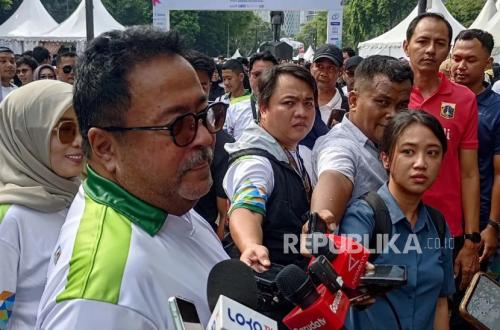
The Jakarta Provincial Government plans to revitalise the Old Town area. The area, located in West Jakarta, will remain a low emission zone (LEZ). Jakarta Deputy Governor Rano Karno, as Chair of the Old Town Revitalisation and Redevelopment Team, is ready to set up an office there to ensure the revitalisation project runs according to plan. Rano stated that the Jakarta Provincial Government is serious about revitalising the Old Town as an effort to restore Jakarta’s identity rooted in history and culture. “We have already formed working groups so that cross-sector coordination can be swift. Well, perhaps the location is already available, our plan is to, yes, design the interior. Maybe in one month we will move to the Old Town,” he said. The revitalisation will not change the Old Town’s designated function as a low emission area. In fact, they plan to introduce low-emission public transport in the area. “There is one format that we plan to build, perhaps the term is a tram in the Old Town,” he said at City Hall, Jakarta, on Thursday (9/4/2026). He mentioned that Jakarta once had public tram transport in the past. Even Rano admitted to having ridden a tram directly from the Harmoni area to Pasar Baru when he was 8 years old. “Actually, trams can reduce emissions. That’s one of the things we are (pursuing), but we must design it together with the MRT because that area will also become an MRT route,” he said. A LEZ is a form of restriction on motor vehicles in a certain area under specific conditions. The Old Town area was chosen as a pilot LEZ in Jakarta starting from 8 February 2021. Additionally, since 2023, the Tebet Eco Park area has also been designated as a low emission zone. The LEZ area itself can only be used by certain groups of people, namely pedestrians, cyclists, public transport, and vehicles with special low-emission stickers. The LEZ area cannot be traversed by vehicles that do not meet the requirements. The purpose of the LEZ is to support improvements in Jakarta’s air quality, which is partly influenced by the population of circulating vehicles. In addition, the public is expected to participate in reducing pollution by using public transport.