
Deputy Forestry Minister: Protected and Production Forests Strengthen Sustainability and Prosperity
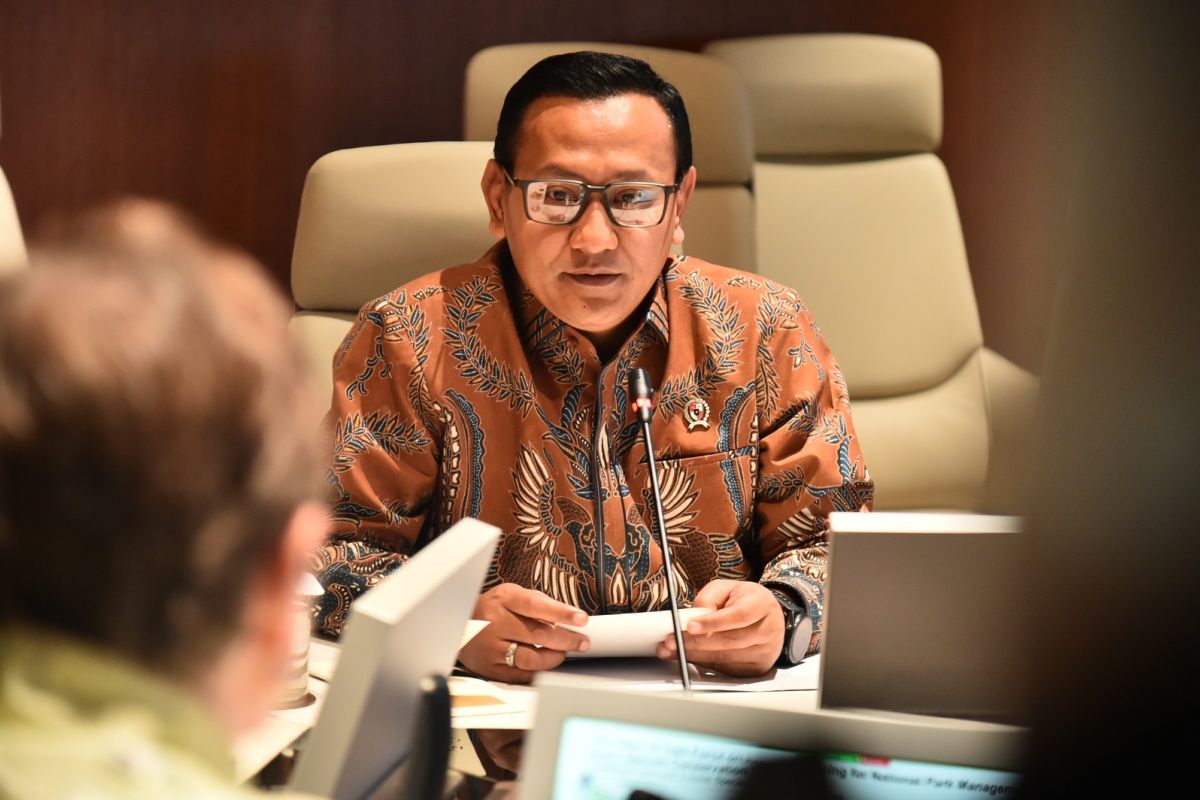
Jakarta (ANTARA) – Deputy Forestry Minister Rohmat Marzuki stressed that production and protected forests play a strategic role in strengthening sustainable forest management, achieving Indonesia’s FOLU Net Sink 2030 target and improving community welfare.
“Production and protected forests are not only vital to maintaining the balance of nature, but also a source of livelihood for millions of people. Their management must therefore be planned and measurable, and deliver tangible benefits for the environment, the economy and communities,” he said in a statement in Jakarta on Friday.
The Ministry of Forestry, through its Directorate General of Sustainable Forest Management (PHL) and with support from the Multistakeholder Forestry Programme (MFP) Phase 5, is drawing up the National Investment Plan for Production and Protected Forests 2026–2030.
Indonesia has more than 120 million hectares of state forest. Of this area, 66.7 million hectares, or 57 per cent, are production forests, while 29.1 million hectares, or 25 per cent, are protected forests.
Marzuki said the national deforestation rate had been reduced from 462,000 hectares in 2019 to 175,000 hectares in 2024.
Forest and land rehabilitation reached 217,974 hectares in 2024, while the broader rehabilitation target is 12 million hectares of degraded land.
The National Investment Plan is designed to bridge national policies—including the NDC, the National Forestry Plan (RKTN) and FOLU Net Sink—with concrete action on the ground and measurable impacts.
It has four main objectives: identify priority interventions; calculate funding requirements and carbon outcomes; map the roles of stakeholders; and prepare a portfolio of programmes ready for implementation.
In production forests, the plan is intended to ensure industrial raw material supplies, develop multi-business forestry and support the transition to renewable energy.
In protected forests, the focus is on maximising environmental and carbon services, protecting watersheds and establishing self-sustaining conservation funding.
The expected impact by 2030 is based on three pillars: Planet, Prosperity and People.
On the environmental front, the forestry sector is targeted to reach emissions of -140 million tonnes of CO2 equivalent.
Economically, forestry export value is expected to grow from a 2022 baseline of US$12.6 billion.
For communities, social forestry is targeted to expand from 8.1 million hectares to 12.7 million hectares, alongside stronger food and energy security based on village forests and protection of Indigenous peoples’ rights.
“Communities must be the main actors in protecting forests while also directly benefiting through social forestry, village forests and agroforestry,” Marzuki said.
Source: jawawa.id (https://jawawa.id/newsitem/deputy-forestry-minister-protected-and-production-forests-strengthen-sustainability-and-prosperity-1791514414)
Originally published by Antara (Indonesian) (https://www.antaranews.com/berita/5777982/wamenhut-hutan-lindung-dan-produksi-perkuat-kelestarian-kesejahteraan), translated from Indonesian