
Deputy Foreign Minister: UNCLOS remains relevant, focus should now be on enforcement
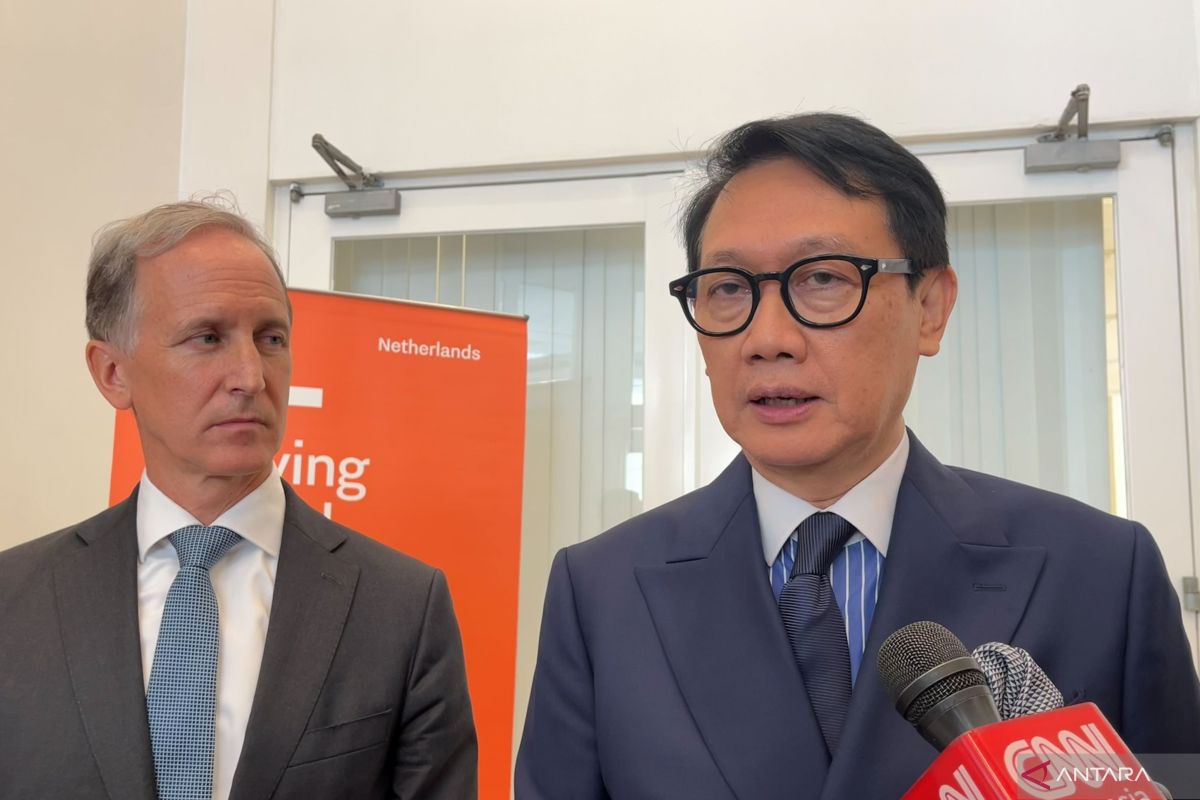
Jakarta (ANTARA) - The Indonesian Deputy Foreign Minister, Arif Havas Oegroseno, stated that the long-established international maritime laws are stable and do not need to be amended, suggesting that the current focus should instead be on their enforcement.
He noted that the implementation of international maritime law, such as the United Nations Convention on the Law of the Sea (UNCLOS), can still be adapted to developments in subsea infrastructure and maritime defence technology, such as Autonomous Underwater Vehicles (AUVs).
“In my view, there is no need for changes, because if we renegotiate the law of the sea convention, articles that are already secure might instead become open to further alteration,” said Havas when met following a symposium regarding the enforcement of UNCLOS in the modern era at the Netherlands Embassy in Jakarta on Monday.
“What is truly important is its implementation,” he added, responding to questions regarding whether international maritime law needs to be amended to remain relevant to current dynamics.
According to the Deputy Foreign Minister, the law of the sea convention does not specifically regulate ‘underwater vessels’ such as AUVs, but such vehicles are still recognised as ‘ships’ whose use is subject to international legal mechanisms.
Regarding subsea infrastructure, Havas stated that UNCLOS articles also regulate this, even though the document specifically refers only to ‘submarine cables’. However, because submarine cables—which are fundamentally part of subsea infrastructure—are regulated, other constructions such as power cables, data cables, and oil and gas pipelines located in waters can still be governed by those same rules.
“The challenges we face now are indeed more complex, but that does not mean the rules do not exist,” said Havas.
He also described UNCLOS as a balanced convention that regulates the rights of archipelagic states alongside rights of navigation, as well as technological and environmental issues. Consequently, Indonesia is committed to continuing its efforts to advocate for the enforcement of the international law of the sea through cooperation with like-minded nations and by creating derivative regulations within the national legislative system.
On the same occasion, the Netherlands Ambassador to Indonesia, Marc Gerritsen, stated that amidst current maritime developments, UNCLOS must remain the norm governing maritime issues and freedom of navigation worldwide.
“It is very important to maintain the norms contained within UNCLOS and to ensure that we translate them in a manner consistent with current developments,” said Ambassador Gerritsen.