
Deputy Finance Minister: The State Budget Can Be Innovative, but the Deficit Must Remain Below 3%
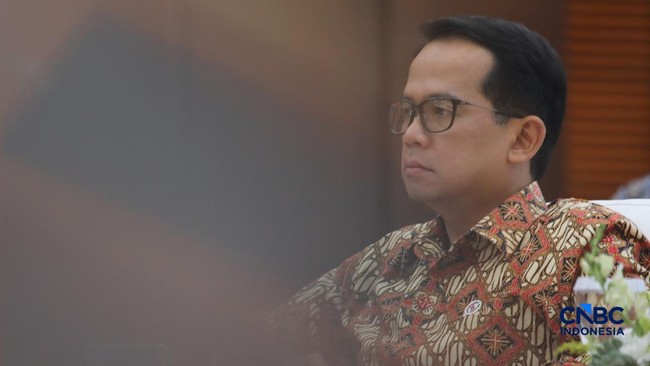
Deputy Finance Minister Nurkholisoh Ibnu Aman said there are four fiscal resilience priorities for facing uncertainty at home and abroad. The first is to strengthen state revenue. The Ministry of Finance is pursuing this through taxes, customs and excise, and non-tax state revenue (PNBP).
She said this could also be achieved by improving tax compliance, closing loopholes that lead to revenue leakages, broadening the tax base and reforming administration to make it more modern.
“Ultimately, tax is a service to the public. We must ensure that taxes are sufficient, but also fair and business-friendly,” Nurkholisoh said at the closing event of the National Symposium on State Finance on Wednesday (11 November 2026).
The second priority is spending quality. High-quality spending is not measured solely by how much of the budget is disbursed, she said, but also by where it goes, its impact on the public and who benefits from it.
The third is financing discipline, encompassing the deficit and debt. Sound public finances do not mean having no problems, she said, but being able to respond to risks and address potential threats to stability.
“We identify risks early and prepare mitigation instruments,” she said.
The fourth priority is innovative financing. This involves examining financial instruments the government has yet to use, such as financing partnerships with the private sector. The government is considering creative financing arrangements involving the state budget (APBN) and private companies. Transparency is essential so that costs and risks can be mitigated, she said.
The state budget amid uncertainty
Nurkholisoh stressed that uncertainty around the world has made management of the state budget much more challenging. Crude oil prices fluctuate daily, supply chains are unpredictable, and leadership changes take place in various countries, among other developments.
“Leadership changes in a region or a country have an impact. Geopolitics, trade policies and financial markets themselves are difficult to predict. And that is before we even consider long-term trends such as climate change,” she said.
The effects of uncertainty emerge gradually, she said. Over time, however, it can raise production costs, put pressure on the exchange rate and reduce people’s purchasing power. This puts pressure on the state budget from at least two directions.
When the global and domestic economies are uncertain, the first channel affected is state revenue, which comes under immediate pressure. The next is rising public need. The state budget must therefore remain flexible and responsive.
She outlined three main roles for the budget amid global and domestic uncertainty. First, it acts as a shield, or shock absorber. In the face of pressure, it must protect people’s purchasing power so external shocks do not immediately affect individuals and households.
Second, it is a driver. The budget should support priority programmes and economic growth, and help create jobs. Third, it safeguards fiscal sustainability. Although the budget must be flexible, the deficit must remain below 3% of gross domestic product (GDP).
“We can be creative and manoeuvre above that line, but below it we must keep to what we have promised. That is our credibility; that is stability,” she said.
Source: jawawa.id (https://jawawa.id/newsitem/deputy-finance-minister-the-state-budget-can-be-innovative-but-the-deficit-must-remain-below-3-1794394313)
Originally published by CNBC Indonesia (https://www.cnbcindonesia.com/news/20261111154311-4-784329/wamenkeu-apbn-boleh-kreatif-defisit-tetap-harus-di-bawah-3), translated from Indonesian