
Deputy Finance Minister explains why Indonesia must pursue 8% economic growth
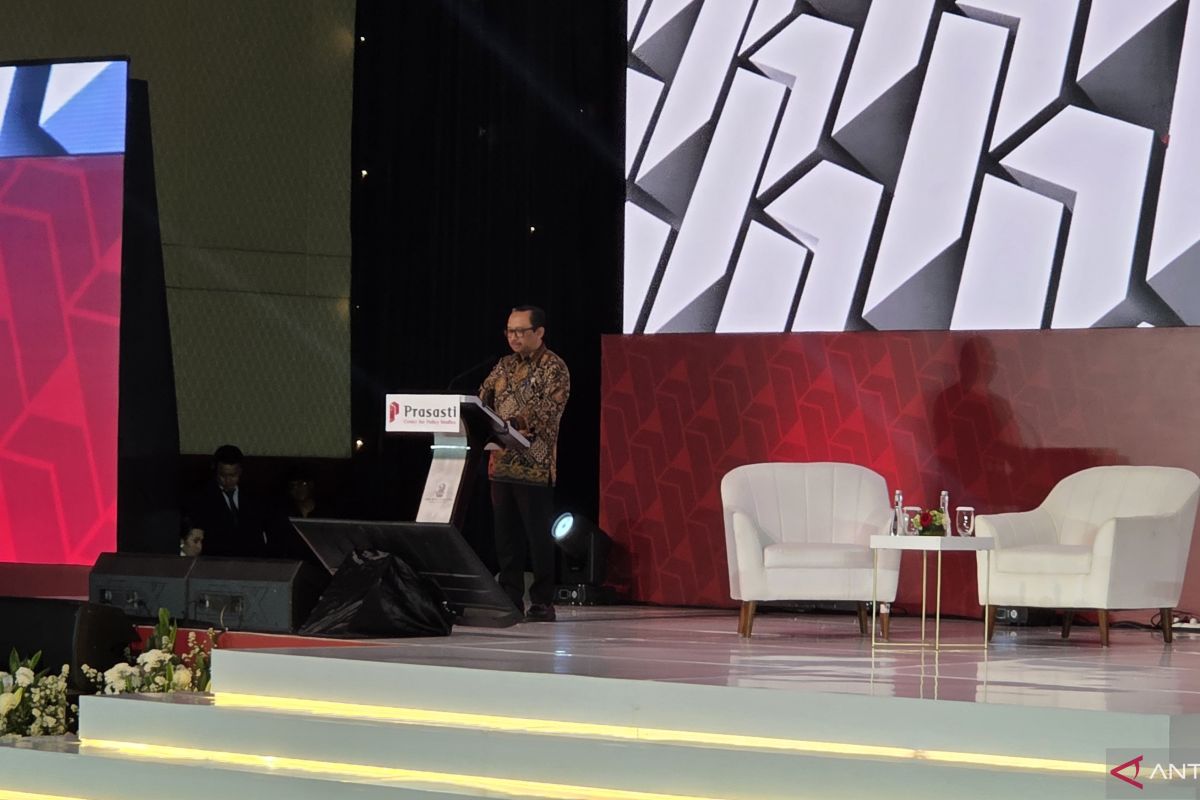
Jakarta (ANTARA) — Deputy Finance Minister Juda Agung has explained why Indonesia needs to pursue economic growth of up to 8%: to make the most of its current demographic dividend.
Juda said Indonesia had around 10–15 years to optimise this opportunity by raising labour productivity, improving the quality of human resources and creating jobs.
“Indonesia is facing a demographic opportunity that will not come around again and will not remain open for ever. Over the next 10–15 years, Indonesia still has the chance to benefit from a large workforce, a younger generation that is increasingly connected to technology, and a sizeable domestic market,” Juda said at the Prasasti Indonesia Policy Forum 2026 in Jakarta on Tuesday.
However, Juda said, a large working-age population would not automatically bring economic gains unless it was matched by adequate skills and employment opportunities.
If job creation lagged, skills did not meet demand and productivity grew slowly, the opportunity of this golden period would be missed.
“We must not become an ageing country before we become a wealthy one,” he said.
Juda outlined Indonesia’s demographic dependency ratio, which is projected to rise from 46.5 in 2025 to 46.8 in 2030, and then to 59.7 in 2045.
The increase indicates that the number of people outside working age will grow relative to the working-age population. This presents a challenge for Indonesia to maximise its demographic opportunity before the population enters an ageing phase.
Juda said Indonesia had limited time to benefit from its large working-age population before the population aged and the dependency ratio increased. With the demographic dividend available now, he said, the primary target should be 8% economic growth.
“If we do not act together, with a sense of urgency, to achieve 8% growth—both the state and the private sector—this opportunity will be lost,” Juda said.
Alongside making use of the demographic dividend, Juda said Indonesia needed to move away from dependence on low-value-added economic activity.
He said Indonesia needed to develop more complex industries, promote innovation, and strengthen links between education, research, technology and production.
Indonesia also needed to move beyond relying on natural resources and develop the capacity to process them into higher-value products.
“We must move from merely possessing natural resources to mastering the ability to process them; from producing goods to designing and developing high-value-added products; and from simply serving as a market for global products to becoming an important part of global value chains,” Juda said.
Source: jawawa.id (https://jawawa.id/newsitem/deputy-finance-minister-explains-why-indonesia-must-pursue-8-economic-growth-1791878143)
Originally published by Antara (Indonesian) (https://www.antaranews.com/berita/5783322/wamenkeu-ungkap-alasan-ri-perlu-kejar-pertumbuhan-ekonomi-8-persen), translated from Indonesian