
Deputy Finance Minister: 2027 State Budget to Drive Expansive Economic Growth
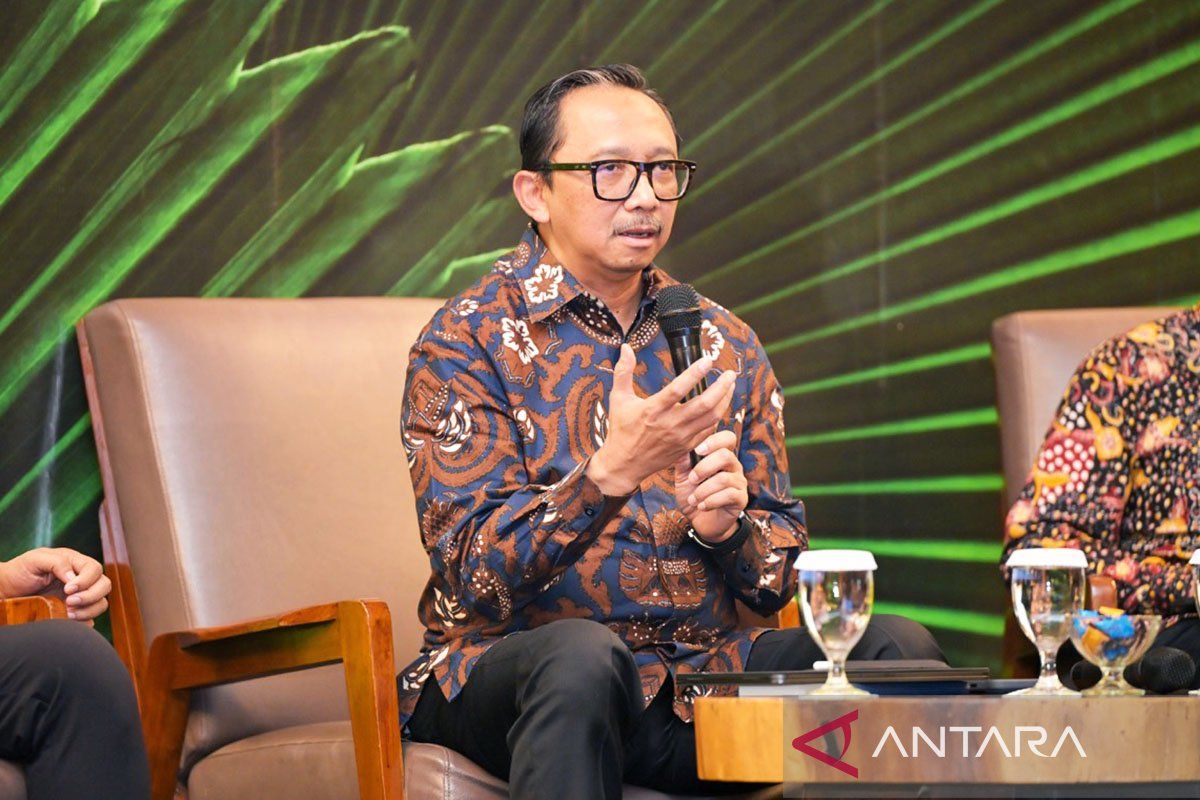
Jakarta (ANTARA) - Deputy Finance Minister Juda Agung stated that the policies and priorities of the 2027 State Budget (APBN) will be directed towards driving expansive economic growth while remaining measurable. He announced that the 2027 budget will carry the theme ‘Grow Higher, Prosper Faster’.
“The 2027 APBN will be positioned as a source of economic growth with three main functions: to grow the economy, to protect the community, and to support economic transformation,” he said during the 2026 Ministry of Finance Media Gathering, according to an official statement in Jakarta on Friday.
According to Juda Agung, the ‘to grow’ function will be realised through budget policies that stimulate economic activity and investment, while supporting the government’s priority development agenda and sustainable economic growth. Meanwhile, the ‘to protect’ function is aimed at ensuring the budget protects the public, maintains purchasing power and welfare, and encourages economic empowerment.
As for the ‘to transform’ function, it will be implemented by strengthening the foundations of long-term economic growth through investment, the development of downstreaming (hilirisasi), and industrialisation.
To support these three functions, the Deputy Finance Minister revealed that the government is preparing a sustainable state revenue strategy. On the taxation side, the Directorate General of Taxes intends to expand the tax base by utilising data and technology, optimising the Coretax system and the Compliance Risk Management Integrated Risk Engine, increasing supervision of strategic and high-risk taxpayers, strengthening tax law enforcement, and optimising tax incentives.
Regarding customs and excise, the revenue strategy will involve optimising the prevention and eradication of illegal exciseable goods, intensifying tobacco excise (CHT) policies and import duties on certain commodities, expanding the revenue base for export duties and excise goods, strengthening customs valuation and goods classification, enhancing export facilitation, downstreaming, and regional growth, as well as improving services and governance.
Furthermore, regarding Non-Tax State Revenue (PNBP), he stated that the authorities will optimise revenue from the natural resources sector through improved governance, strengthening the Mineral and Coal Information System (SIMBARA), and increasing environmentally friendly added value. The quality of PNBP services will also be improved through standardisation, innovation, digitalisation, and service simplification, while ensuring increased compliance through strengthened supervision and law enforcement.
“This is expected to strengthen our revenue sources,” he said.
On the financing side, the government intends to maintain the 2027 APBN deficit at a level of 2.4 per cent of Gross Domestic Product (GDP). The financing strategy will prioritise the optimisation of domestic sources to reduce vulnerability to external shocks. The 2027 budget financing policy will be directed towards controlling the deficit and financing within safe and sustainable limits, using debt financing as an anticipatory measure, and implementing active cash and debt management.
Additionally, the government aims to optimise the roles of Danantara, Special Mission Vehicles, Public Service Agencies, and the Sovereign Wealth Fund, increase access to financing for Low-Income Communities (MBR), and optimise the Budget Surplus (SAL) as a buffer to mitigate uncertainty.
“The main strategy is to remain focused predominantly on domestic financing, which is relatively less vulnerable to global volatility. Our Government Securities (SBN) are currently only about 13-14 per cent foreign-owned, whereas ten years ago, nearly 40 per cent were held by foreigners. This certainly reduces vulnerability in our money and foreign exchange markets,” the Deputy Finance Minister concluded.