
Deputy Environment Minister Stresses Waste Sorting as Key to Achieving NDC Targets
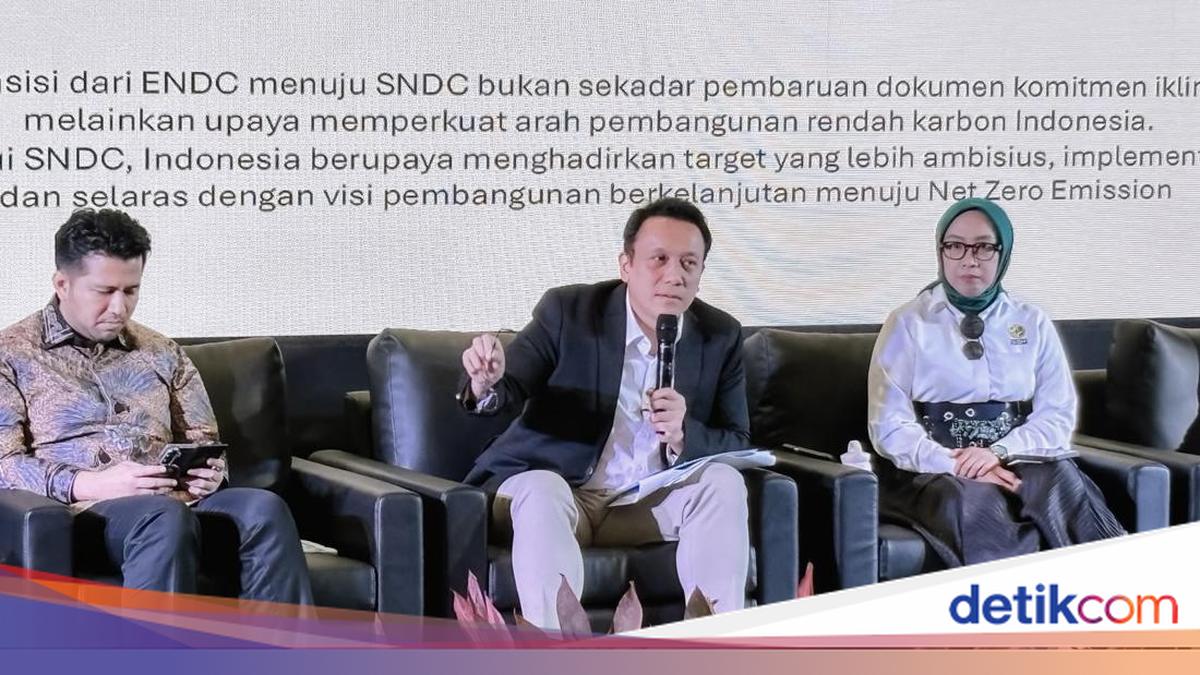
Deputy Minister of Environment and Deputy Head of the Environmental Control Agency (KLH/BPLH), Diaz Hendropriyono, has stressed the importance of waste sorting as the key to achieving emission reduction targets in the waste sector, as stipulated in Indonesia’s Nationally Determined Contribution (NDC). “What I want to highlight is that waste management methods like WTE and RDF plants risk not functioning without proper sorting. So, what is done upstream, like sorting, may seem trivial, but its impact is significant, including on our NDC achievement,” Diaz said in a written statement on Monday (15/6/2026).
Diaz made the remarks during the Ministerial Dialogue on Climate Change: Accelerating NDC Achievement through Carbon Economic Value. The event was part of the 2026 World Environment Day commemoration organised by KLH/BPLH at the JICC in Jakarta. Diaz explained that KLH/BPLH is the agency responsible for achieving the waste sector targets in the NDC. Given the large emission reduction targets that must be met, various strategic efforts and measures are required to realise them. “For the waste sector, the custodian is KLH, and there is a target to reduce 40 million tonnes from the waste sector. This is done through various methods from upstream to downstream,” Diaz clarified.
At the upstream stage, Diaz stated that emission reduction efforts in the solid waste subsector are carried out by strengthening composting practices supported by waste sorting from the source. “First, we do composting and sorting. In the Rorotan area, there is an RDF Plant, and we have begun implementing a sorting programme in North Jakarta. After sorting, the waste can be turned into slurry that will later be taken to maggot breeders,” he explained. In addition to the household level, KLH/BPLH is also promoting good waste management practices in the Nutrition Fulfilment Service Units (SPPG) and Sekolah Rakyat (People’s Schools). In this way, the President’s national priority programmes also contribute to waste reduction and emission control efforts. “For SPPG and Sekolah Rakyat, we are promoting composting there to improve composting methods,” he said.
For larger volumes of waste generation, KLH/BPLH is preparing technologies such as waste-to-energy (WTE) and RDF capable of processing 1,000 to 2,500 tonnes of waste per day. “WTE has been widely discussed, and batch 1 is complete. Batch 2 is currently in the auction process at Danantara, including Jogja, Bogor Raya, and others. As for RDF in Rorotan, they have started operating again for 800 tonnes per day; I think it just needs to be scaled up,” Diaz concluded.